 Sarasota Roofing
 Rosemary District Homes Take a Beating From the Coast
Rosemary District sits close enough to Sarasota Bay that its homes deal with a combination of stresses most inland neighborhoods never see. Salt-laden air moves in off the water and settles into anything porous. Summer storms bring wind-driven rain that finds every gap in a siding system. And Gulf Coast sun beats down on exterior walls essentially year-round, breaking down pigments, sealants, and lesser building materials faster than most homeowners expect. None of these forces are dramatic on their own, but stacked together, decade after decade, they're exactly why siding in this part of Sarasota County ages differently than siding in a drier, more sheltered climate.
Wind-Driven Rain Is the Real Enemy, Not Just Rain
A straight-down summer shower is not what damages siding. It's the sideways rain that comes with tropical storms and hurricane-adjacent weather, driven at an angle by sustained winds, that pushes moisture up under laps, around trim, and into any seam that wasn't detailed correctly the first time. Once water gets behind siding, it doesn't matter how good the surface material is — the sheathing, framing, and insulation underneath start absorbing damage that isn't visible from the curb.
UV and Salt Air Compound Each Other
On their own, UV exposure and salt air are each hard on exterior materials. Together, they're worse. UV breaks down surface coatings and adhesives, which opens tiny cracks and pores. Salt-laden humidity then works its way into those openings, accelerating fading, chalking, and in some materials, swelling or delamination. Homes in Rosemary District, close enough to the bay to catch that salt air regularly, need a siding system engineered for both problems at once — not just one or the other.
What This Neighborhood's Housing Stock Means for a Siding Job
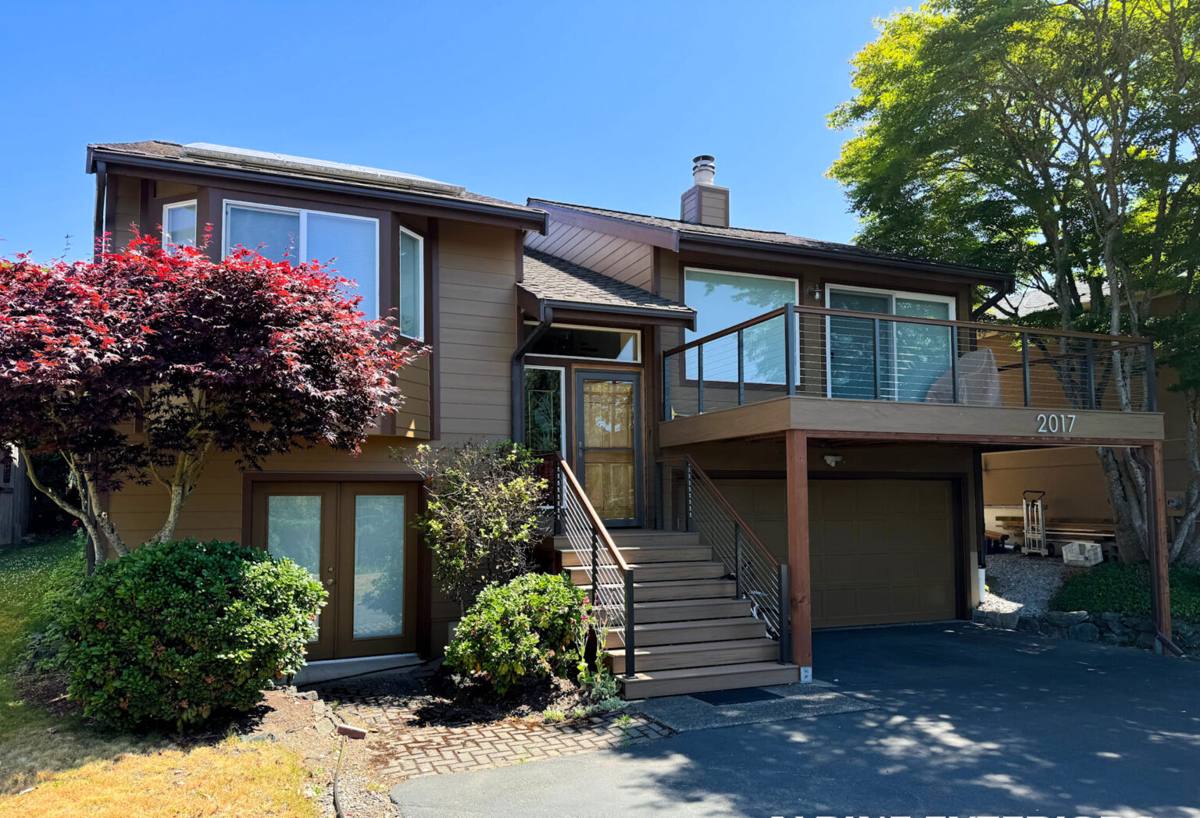
Rosemary District is one of Sarasota's older in-town neighborhoods, and it shows in the mix of housing you'll find — historic bungalow-style homes alongside newer infill construction, often on tighter lots with mature trees providing shade and, occasionally, debris. That mix matters for how a siding replacement gets planned and executed.
Older Homes: Know What's Under the Existing Siding
On an older home, we don't assume anything about what's behind the current siding until we pull it off. Original sheathing, old insulation, and decades of prior patch jobs can all be hiding moisture damage, rot, or repairs that were never done to code. A correct replacement treats tear-off as a diagnostic step, not just demolition — and budgets time to address what's found rather than covering it back up.
Newer Construction: Confirming It Was Built to Current Wind Standards
Newer homes in the neighborhood are usually built to more current wind-load requirements, but siding installation quality still varies by builder and by crew. Even a newer house can have fastening schedules, flashing details, or house-wrap laps that don't meet what Sarasota County's wind zone actually calls for. We check installation quality on newer homes just as carefully as we inspect older ones — age doesn't guarantee it was done right.
What a Correct Siding Replacement Actually Involves
Siding replacement is often talked about like it's just swapping one exterior surface for another. In a coastal wind zone, it's more accurate to think of it as rebuilding a weatherproofing system, with the visible siding as the last layer of several that all have to work together.
The Weather-Resistive Barrier and Flashing Come First
Before any siding goes back up, the weather-resistive barrier gets installed with correct overlaps, and flashing gets integrated at every window, door, and penetration — not caulked over as an afterthought. This is the layer that actually keeps wind-driven rain out of the wall assembly if water gets past the siding itself, which it eventually will on any home given enough years and enough storms.
Fastening Has to Match the Wind Zone, Not a Generic Spec
Fastener type, spacing, and embedment depth all change based on local wind-load requirements — and Sarasota County's requirements are not the same as a generic national default. Using a standard fastening pattern because it's faster, rather than the pattern engineered for this specific wind zone, is one of the most common corners cut in siding work and one of the hardest for a homeowner to catch after the fact.
Trim, Caulking, and Transitions Are Where Failures Start
Most siding failures don't start in the field of the wall — they start at transitions: around windows, at corner boards, where siding meets the foundation, and at roof-to-wall intersections. Getting these details right takes more time than running field siding, which is exactly why they're the details most likely to get rushed on a job that's priced to move fast.
Why We Only Install James Hardie Fiber Cement
We don't install vinyl siding, LP SmartSide, Cemplank, Allura, or primed wood products like spruce or cedar. That's a deliberate standard, not a lack of options, and it's worth explaining honestly rather than just stating it.
Vinyl is affordable and low-maintenance in mild climates, but it softens and can deform in sustained high heat, and in a strong coastal wind event it's more prone to cracking or blowing off than fiber cement. Wood products like cedar or primed spruce look good initially, but they require ongoing maintenance — repainting, sealing, and monitoring for moisture and insect damage — that most homeowners underestimate, and Sarasota's humidity accelerates the maintenance cycle. Engineered wood products like LP SmartSide perform reasonably well when installed and maintained precisely to spec, but they're wood-based, meaning moisture management at every seam and cut edge is non-negotiable, and any lapse in maintenance shortens their service life. Other fiber cement brands like Cemplank and Allura are legitimate competitors to Hardie, but we've standardized on one manufacturer so our crews install to one spec, one set of details, and one warranty structure — consistently, every time.
James Hardie's fiber cement is non-combustible, holds paint and factory-applied ColorPlus finishes far longer than field-painted alternatives, and Hardie engineers specific product formulations — its HZ5 line — for exactly the climate conditions Sarasota deals with: high humidity, intense UV, and moisture exposure. It's also backed by a strong transferable warranty, which matters to Rosemary District homeowners who may sell in a market where buyers are increasingly asking what siding is on a home and how old it is.
Comparing Siding Options for a Bay-Adjacent Sarasota Climate
| Material | UV / Fade Resistance | Moisture Behavior | Maintenance | Wind Performance |
|---|---|---|---|---|
| James Hardie Fiber Cement (HZ5) | Strong — factory ColorPlus finish | Stable, engineered for humid climates | Low | Strong when installed to spec |
| Vinyl | Fades and chalks over time | Not moisture-absorbent, but seams can leak | Low | Can crack or detach in high wind |
| LP SmartSide / Engineered Wood | Fair — needs coating upkeep | Wood-based; sensitive to sustained moisture | Moderate to high | Good if properly sealed and maintained |
| Cedar / Primed Spruce | Fades and grays without upkeep | Absorbs moisture; needs sealing | High | Depends heavily on installation and upkeep |
This is a general comparison, not a claim that every competing product will fail — it's why, weighing all of these factors together for our climate, we chose to build our business around one system rather than offering several.
Our Siding Replacement Process
Every siding replacement follows the same disciplined sequence, whether it's a small bungalow or a larger newer build.
- On-site inspection of existing siding, trim, and any visible signs of moisture intrusion
- Full tear-off, with sheathing inspected and repaired as needed before anything new goes up
- Weather-resistive barrier installed with correct laps and integrated flashing at all penetrations
- James Hardie fiber cement siding installed to manufacturer specification and Sarasota County wind-load requirements
- Trim, caulking, and transition details finished and inspected before cleanup
- Final walkthrough with the homeowner before the job is considered complete
What to Expect Before Work Starts
- A written scope that specifies the Hardie product line, profile, and color being installed
- Clear communication about what tear-off may reveal and how unexpected repairs would be handled
- A realistic timeline that accounts for weather delays, which are common during Florida's wetter months
- Protection of landscaping, walkways, and adjacent structures for the duration of the work
- A clean job site at the end of each work day, not just at project completion
Why Local Experience in This Specific Area Matters
A crew that regularly works Rosemary District and the surrounding in-town Sarasota neighborhoods brings something a crew from outside the area doesn't: familiarity with the permitting process through the City of Sarasota, comfort working on tighter in-town lots with mature tree canopy overhead, and an eye for matching new siding to the character of a neighborhood that mixes historic and newer homes. That local familiarity shows up in small ways — knowing how to stage material delivery on a narrow lot, anticipating inspection timelines, and understanding how Sarasota's building department wants documentation handled — that add up to a smoother project for the homeowner.
What Siding Replacement Typically Costs Here
Costs vary based on the size of the home, the condition of the sheathing underneath the existing siding, the Hardie product line and profile chosen, and the complexity of trim and architectural detail. Rather than quote a number that doesn't apply to your home, we walk every property in person and give a written estimate based on what we actually find — including flagging, upfront, anything that could add cost once tear-off begins.
| Cost Factor | Why It Matters |
|---|---|
| Home size and wall complexity | More corners, gables, and transitions mean more labor and trim work |
| Sheathing condition | Rot or moisture damage found during tear-off adds repair scope |
| Hardie product line and profile selected | HZ5 lap, shingle, and panel products vary in material cost |
| Existing siding removal | Multiple layers or difficult-to-remove materials add labor time |
| Access and site conditions | Tight in-town lots and mature landscaping can affect staging and timeline |
Signs Your Rosemary District Home May Need Siding Replacement
Not every siding problem calls for full replacement, but a few signs consistently point that direction rather than toward a simple repair: soft or spongy spots when you press on the siding, visible warping or buckling, paint that won't hold no matter how often it's redone, cracking that keeps returning in the same spots, or a musty smell along an exterior wall that suggests moisture is already inside the assembly. If you're seeing any of these on a Rosemary District home, it's worth having someone look at what's happening underneath, not just what's visible on the surface.
If you'd like an honest read on your home's siding, we're glad to come take a look. There's no cost and no pressure — just a straight assessment of what your home actually needs, backed by a written estimate you can take your time deciding on.