 Sarasota Roofing
 Why This Decision Is Different in Sarasota
Every roof eventually reaches the point where repairs stop making sense and replacement becomes the smarter investment. In most parts of the country, that decision comes down to simple age and wear. In Sarasota County, it's more complicated. Our roofs take a beating from three directions at once: intense, near-constant UV exposure that breaks down roofing materials faster than in northern climates, wind-driven rain during summer storms that finds every weak point in flashing and underlayment, and salt air drifting in off the Gulf that accelerates corrosion on metal components and fasteners. A roof rated for 20-25 years in Ohio might realistically deliver 15-18 good years here before it needs serious attention.
That's not a reason to panic about your roof's age. It's a reason to know what to actually look for, rather than going by a number on a calendar. This page walks through the signs that matter, the difference between a repair and a replacement situation, and what typically drives the cost when replacement is the right call.
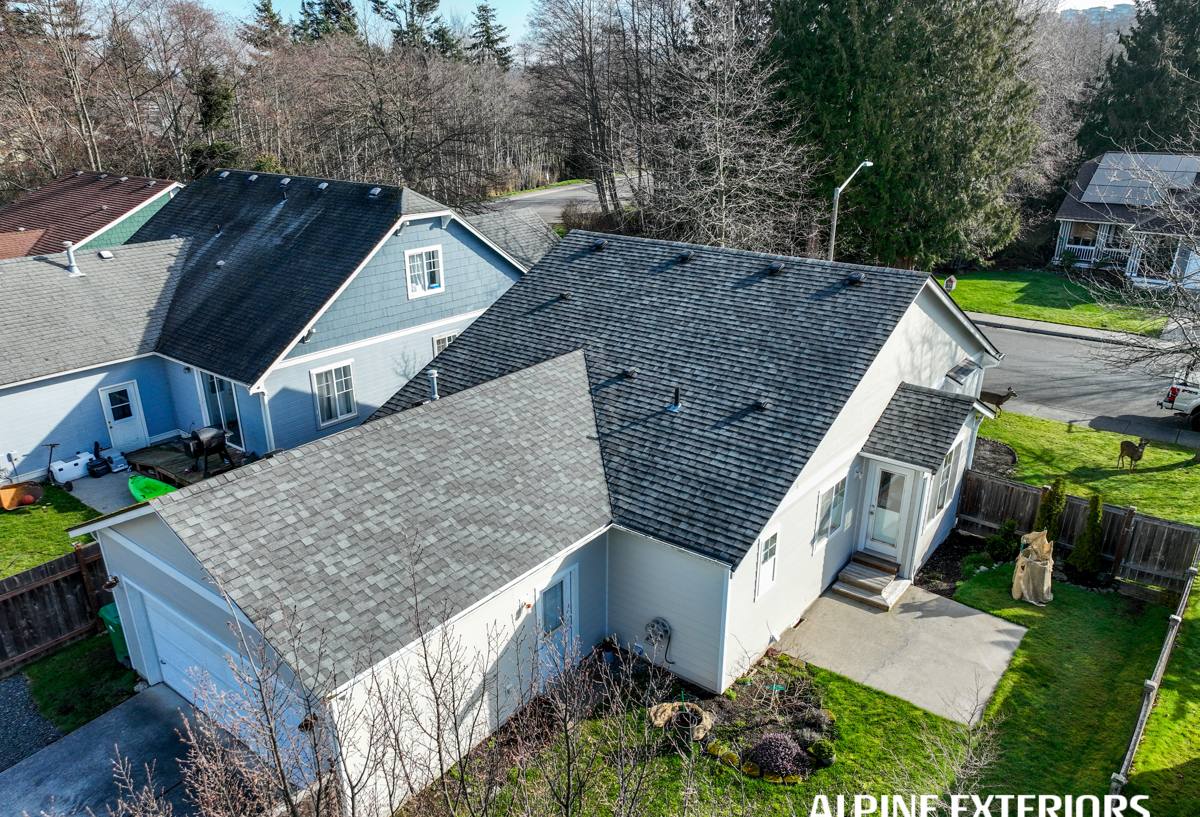
Signs Your Roof Is Telling You Something
From the Ground
You don't need to get on the roof to catch most warning signs. Walk around your house and look up.
- Shingles that are curling, cupping, or have visibly lost their granules (the roof looks patchy or the color has faded unevenly)
- Missing shingles or tiles, especially after a storm with high winds
- Sagging areas anywhere on the roofline, which can indicate structural or decking problems underneath
- Dark streaks or moss/algae growth, which usually points to trapped moisture
- Visible daylight through the attic when you check from inside, or gaps around vents and chimneys
From Inside the House
Some of the most reliable signs show up in the attic or on your ceilings, not on the roof itself.
- Water stains or discoloration on ceilings or upper walls, even small ones
- A musty smell in the attic, which often means moisture is getting trapped somewhere in the system
- Sunlight visible through the roof deck when you're in the attic during daylight
- Sagging or soft spots in the roof decking when walked or pressed on
- Noticeably higher cooling bills, which can mean your attic insulation or ventilation has been compromised
Repair or Replace? How to Tell the Difference
Not every one of the signs above means you need a full replacement. A single area of storm damage, a few missing shingles, or one section of failed flashing is often a straightforward repair. The judgment call comes when problems are spread across the roof rather than isolated to one spot, or when the underlying materials (not just the surface) have started to fail.
| Situation | Usually a Repair | Usually a Replacement |
|---|---|---|
| Damage location | Isolated to one section or area | Spread across multiple sections of the roof |
| Roof age | Under roughly 10-12 years | Approaching or past the material's expected lifespan for our climate |
| Leak history | First occurrence, clear single cause | Recurring leaks in different spots over time |
| Decking condition | Solid, no soft spots | Soft, spongy, or visibly rotted in multiple areas |
| Granule loss / wear | Minor, localized | Widespread, roof surface looks uniformly aged |
| Insurance/storm damage | Limited to specific impact points | Extensive, affecting large sections or the underlayment |
A straight answer from a contractor should include which category your roof falls into and why, not just a recommendation. If a contractor tells you that you need a full replacement, ask them to show you specifically what they're seeing that rules out a repair.
What Roofing Material You Have Changes the Math
Asphalt Shingles
The most common roofing material in our area, and generally the most affordable to install. In Sarasota's UV and heat, standard asphalt shingles tend to show wear sooner than their rated lifespan suggests, especially on south- and west-facing slopes that get the most sun. Architectural (dimensional) shingles hold up somewhat better than basic three-tab shingles and are worth the modest cost difference for coastal Florida homes.
Tile Roofing
Very common on Sarasota homes, and for good reason: concrete and clay tile handle UV exposure and salt air well, and the tile itself often outlasts the underlayment beneath it. This is an important distinction — when a tile roof "fails," it's frequently the felt or synthetic underlayment underneath that has degraded, not the tiles themselves. That means a tile roof replacement sometimes involves reusing sound tiles over new underlayment, which can affect the cost picture compared to a full teardown.
Metal Roofing
Metal roofing performs well against wind uplift, which matters here, but salt air exposure means fastener quality and coating type matter more in Sarasota than they would inland. We pay close attention to fastener specification and coating systems on metal installations specifically because of our coastal environment — cutting corners here is where premature corrosion problems start.
Flat or Low-Slope Roofing
Common on additions, lanais, and some commercial-style residential construction. These systems rely heavily on proper drainage and membrane condition, and our heavy summer rain volume means ponding water or a compromised membrane turns into interior damage faster than it would with a steep-slope roof.
What Drives the Cost of a Roof Replacement
Every roof is different, so we won't put a number here that doesn't apply to your house. But the main factors that determine cost are consistent, and understanding them helps you evaluate any quote you receive.
- Roof size and complexity — square footage, plus how many valleys, hips, dormers, and penetrations (vents, chimneys, skylights) the roof has
- Material choice — asphalt shingle, tile, and metal have different material and labor costs, and tile/metal generally cost more upfront but longer between replacements
- Decking condition — if plywood decking underneath has rotted or delaminated, it needs to be replaced before new roofing goes down, which adds cost that's hard to know until the old roofing comes off
- Pitch and access — steeper roofs and roofs with difficult access take longer and require more safety setup
- Code requirements — Sarasota County follows Florida Building Code wind and uplift standards, and a full replacement typically has to meet current code even if the original roof didn't
- Permit and inspection requirements — a legitimate reroof requires a permit and inspections, which is part of the cost of doing it correctly
Insurance and Storm Timing Considerations
Many Sarasota homeowners end up dealing with roof replacement decisions after a named storm or a significant wind event, when insurance may be part of the conversation. A few honest points worth knowing going in: insurance typically covers sudden damage from a specific event, not gradual wear from age and UV exposure, so a 20-year-old roof with general wear is a different conversation than a roof damaged in a specific storm. If you believe you have storm damage, document what you see and get it evaluated promptly — delaying can complicate a claim and allow minor damage to turn into a bigger problem through additional rain exposure.
We're also seeing more insurance carriers in Florida tightening requirements around roof age and condition for renewal or new policies. If your roof is getting older, it's worth finding out where it stands before a renewal forces the issue.
Maintenance That Extends Roof Life
Whether you're years away from replacement or trying to decide if now is the time, a few habits genuinely extend a roof's useful life in our climate:
- Keep gutters and valleys clear of debris so water doesn't pool or back up under roofing materials
- Trim back overhanging tree limbs that drop debris and hold moisture against the roof surface
- Have the roof inspected after any major storm, even if you don't see obvious damage from the ground
- Address small leaks immediately rather than waiting — water finds the path of least resistance and damage spreads
- Check attic ventilation periodically, since poor airflow traps heat and moisture that ages roofing materials faster
A Practical Checklist Before You Decide
- Do you know the age and material of your current roof?
- Have you checked the attic for stains, daylight, or soft decking recently?
- Is damage isolated to one area, or showing up in multiple places?
- Has your homeowner's insurance flagged the roof's age or condition?
- Have you gotten a written, itemized inspection from a licensed contractor — not just a verbal estimate?
If you're unsure where your roof stands, the honest first step is a real inspection, not a guess based on age alone. We're happy to take a look, tell you plainly whether you're looking at a repair or a replacement, and walk you through what we find — no pressure, no hard sell. Reach out using the form below to schedule a free estimate.