 Sarasota Roofing
 Board & Batten Siding in University Park
University Park is one of the more established planned communities along the University Parkway corridor, known for its mix of traditional, coastal, and craftsman-style homes set around mature landscaping and golf course frontage. Board and batten siding shows up often in this kind of neighborhood because the vertical lines and crisp shadow lines suit both classic and modern coastal exteriors, and it reads as a step up from flat lap siding on porches, gables, and accent walls. When it's installed correctly with the right material, it holds that look for decades. When it's installed with the wrong material or the wrong technique, Sarasota's climate finds the weak points fast.
This page focuses on one thing: board and batten siding, done right, on homes in University Park. Not a general siding overview — the specific decisions that matter for this style, in this part of Sarasota County.
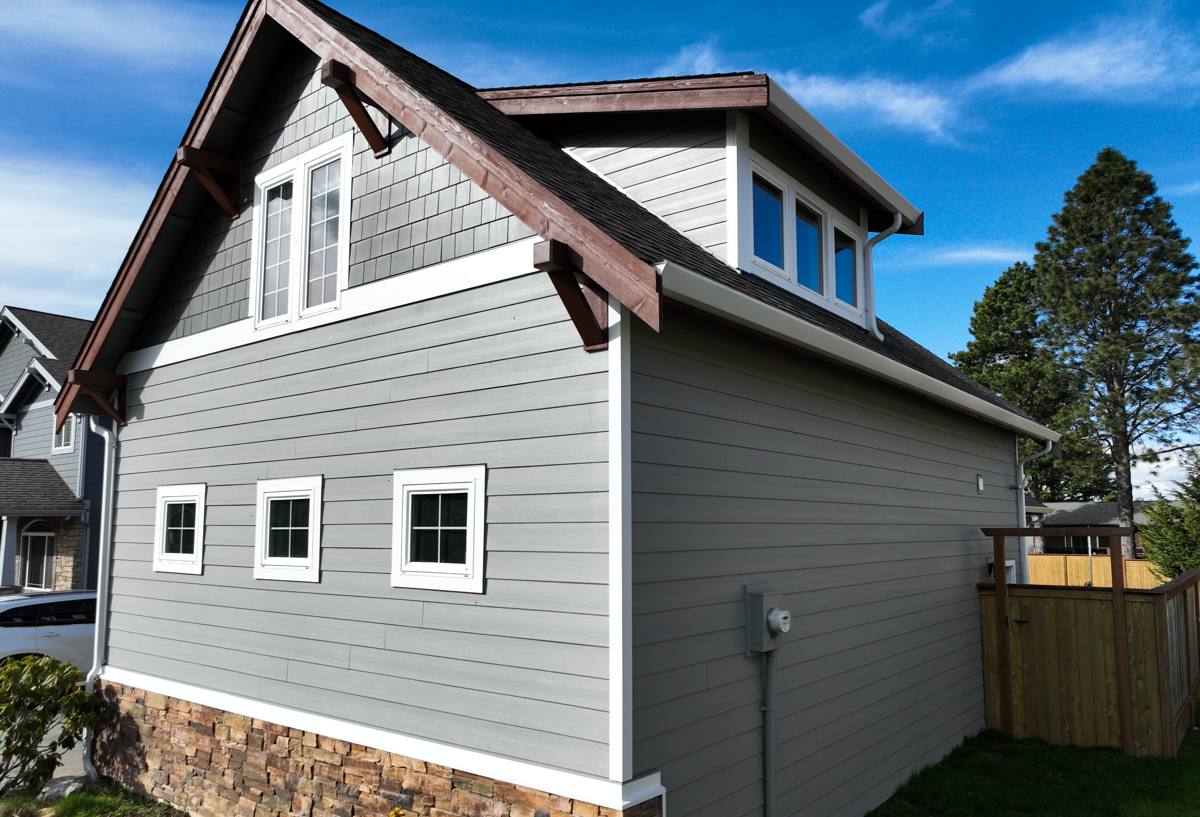
What This Climate Does to Vertical Siding
Board and batten has more seams than lap siding — every board edge and every batten strip is a joint, and every joint is a place water, wind, and UV can get to work. In University Park, that means a few things every homeowner should understand before choosing a material or a contractor:
- Hurricane-force wind puts direct pressure on vertical panels and tests every fastener and batten attachment point. A loose batten or an under-fastened board is what fails first in a storm, not the field of the siding.
- Wind-driven rain gets pushed sideways and upward under battens and at butt joints if the assembly wasn't flashed and gapped correctly behind the boards.
- Year-round intense UV breaks down paint film, resins, and adhesives faster here than in most of the country, which shows up as fading, chalking, and joint failure on lower-grade products well before their rated lifespan.
- Salt air, even at University Park's inland distance from the coast, accelerates corrosion on fasteners and trim and degrades organic materials faster than dry, inland climates.
None of this means board and batten is a bad choice for a Sarasota home. It means the material and the installation both have to be built for this environment, not just for the look.
Why We Install James Hardie Board & Batten — and Not the Alternatives
Sarasota Roofing Co installs one siding system: James Hardie fiber cement. For board and batten specifically, we use Hardie's vertical panel and batten system, engineered in the HZ10 product line for Southeast humidity, heat, and storm exposure. We don't install LP SmartSide, vinyl board and batten, Cemplank, Allura, or primed spruce or cedar boards, and we think that's worth explaining rather than just stating.
Vinyl board and batten
Vinyl is affordable and low-maintenance in mild climates, but it's a thin extruded plastic product that expands and contracts significantly with Sarasota's heat swings. On a vertical profile with more panel edges exposed to wind, that movement combined with hurricane-force gusts is a real liability — vinyl can crack, warp, or pull loose at fastening points in ways solid fiber cement doesn't.
Engineered wood (LP SmartSide) and wood-look composites
Engineered wood siding uses a wood-strand core with a resin coating, which performs well in many parts of the country. In a humid, wind-driven-rain climate, any breach in that coating — a cut edge, a fastener hole, a scratch — gives moisture a path into the wood core, and once that starts, it doesn't reverse. It's a maintenance-dependent product in a climate that punishes missed maintenance.
Traditional cedar or primed spruce board and batten
Real wood board and batten is the historical original for this look, and it can look excellent. But solid wood in Sarasota's humidity and UV needs a disciplined repainting and caulking schedule to keep water out of the joints and battens, and salt air accelerates weathering on top of that. Most homeowners underestimate that maintenance burden until the boards start cupping or the paint starts failing at the seams.
Competing fiber cement brands (Cemplank, Allura)
Fiber cement as a category is the right call for this climate — it's non-combustible, dimensionally stable, and doesn't rot. We standardized on James Hardie specifically for its ColorPlus factory finish (a baked-on finish that resists the fading and chipping intense Florida UV causes on field-painted or lower-grade finishes), its HZ climate-specific engineering, and a warranty structure we can stand behind and that transfers to a future buyer — which matters in a resale-active community like University Park.
What a Correct Board & Batten Installation Actually Involves
Board and batten is less forgiving of shortcuts than standard lap siding because the vertical orientation and batten strips create more places for water to enter if the details are wrong. A correct installation includes:
- Proper drainage plane and rainscreen gap behind the panels, not boards fastened flat against the house wrap — this gives any moisture that does get behind the siding a way to drain and dry out.
- Correct fastener type, spacing, and embedment into structural framing or sheathing, sized for our wind exposure category, not generic minimum-code fastening.
- Flashing at every horizontal transition — window and door heads, roof-to-wall intersections, and the base of the wall — so water is directed out, not trapped behind the panels.
- Battens installed with expansion clearance and sealed correctly at the top, not just caulked shut, so the assembly can move seasonally without cracking the joint.
- Factory-cut and factory-finished edges used wherever possible, with any field cuts recoated per manufacturer spec so bare fiber cement isn't left exposed to weather.
- Manufacturer-specified clearances from roof lines, decks, and grade, which matter more on vertical board profiles where water runs straight down the face of every joint.
Skipping any one of these doesn't usually cause a visible problem in year one. It shows up in year three or four as staining, soft spots, or paint failure at the joints — and by then it's a tear-off, not a touch-up.
Our Process for a University Park Project
1. On-site assessment
We look at your home's existing wall assembly, current siding condition, exposure (how much direct wind and sun a given elevation gets), and any moisture issues already present before we talk about materials.
2. Design and material selection
We help you choose panel width, batten spacing, and ColorPlus finish to match the architectural character of your home and, where relevant, any community design expectations. Many planned communities in this part of Sarasota County, including sections of University Park, have HOA or architectural review guidelines for exterior changes — we're glad to prepare the documentation you may need to submit for approval.
3. Tear-off and prep
Old siding comes off, the wall is inspected for hidden damage, and any needed sheathing or moisture-barrier repair happens before a single new board goes up. This is the step that gets skipped when a job is priced too low, and it's the one that determines whether the new siding lasts.
4. Installation to manufacturer spec
Rainscreen, flashing, fastening, and batten installation are done to James Hardie's published specifications for our wind zone — not shortcuts to save labor hours.
5. Final inspection and cleanup
We walk the finished job with you, confirm every detail before we consider it complete, and register your James Hardie warranty in your name.
Board & Batten Material Comparison
| Material | Wind/Storm Durability | Moisture Behavior | UV/Fade Resistance | Maintenance Burden |
|---|---|---|---|---|
| James Hardie fiber cement (HZ10) | Engineered for Southeast wind exposure | Non-combustible, doesn't rot; won't swell from moisture | Baked-on ColorPlus finish resists fading | Low — occasional wash and joint check |
| Vinyl board and batten | Can crack, warp, or pull loose in high wind | Doesn't rot, but seams can let water behind panels | Fades and becomes brittle under sustained UV | Low, but limited repair options once damaged |
| Engineered wood (LP SmartSide) | Moderate — depends on fastening and coating integrity | Vulnerable at cut edges, fastener holes, and coating breaches | Coating can chalk and wear over time | Moderate to high — coating and edge maintenance matter |
| Traditional cedar/primed spruce | Moderate — sensitive to wind-driven rain intrusion at joints | Absorbs moisture; prone to cupping and rot without upkeep | Requires repainting on a fixed cycle | High — disciplined repainting and caulking schedule required |
Maintenance and Longevity in a Coastal Climate
Even the right material benefits from basic upkeep. For a James Hardie board and batten installation in University Park, that means an occasional rinse to clear salt air residue and pollen, a visual check of caulked joints and batten tops once or twice a year, and prompt attention to any landscaping or irrigation spray hitting the wall directly. That's a meaningfully lighter list than what wood or engineered wood siding demands in this climate, and it's part of why the total cost of ownership over 20-plus years tends to favor fiber cement even when the upfront installed cost is comparable to other quality options.
What to Check Before Hiring a Board & Batten Contractor
- Do they specialize in fiber cement, or is board and batten a side offering alongside vinyl and wood?
- Will they specify rainscreen/furring behind the panels, or fasten directly to the house wrap?
- Can they explain their flashing details at window heads, roof lines, and wall bases before you ask?
- Are they a factory-certified James Hardie installer, and do they register the manufacturer warranty in your name?
- Do they have direct experience with the permitting and, where applicable, HOA approval process for homes in this area?
- Will they put fastener spacing, batten spacing, and finish selection in writing before work begins?
If you're weighing board and batten siding for a home in University Park, we're happy to walk the property, talk through what your specific elevations need, and put together a straightforward, no-pressure estimate. Use the form below to get started.