 Sarasota Roofing
 Gulf Gate Estates Homes Take a Real Beating From Sarasota Weather
Gulf Gate Estates is an established, well-shaded Sarasota neighborhood with a mix of home ages and siding types, and like every property in this part of Sarasota County, it sits directly in the path of everything the Gulf Coast throws at a house: hurricane-force wind gusts, wind-driven rain that gets pushed sideways into walls, relentless UV exposure nearly every month of the year, and a steady dose of salt air off the coast. Siding here isn't just a cosmetic layer, it's the first line of defense between that climate and the wood framing, sheathing, and insulation behind it. When it fails, the damage usually isn't visible until it's expensive to fix.
This page covers what fiber cement siding installation actually involves for a Gulf Gate Estates home, why we install only James Hardie products, what a correct installation includes, what typically drives the cost, and what separates a proper job from one that looks fine on move-in day but fails within a few storm seasons.
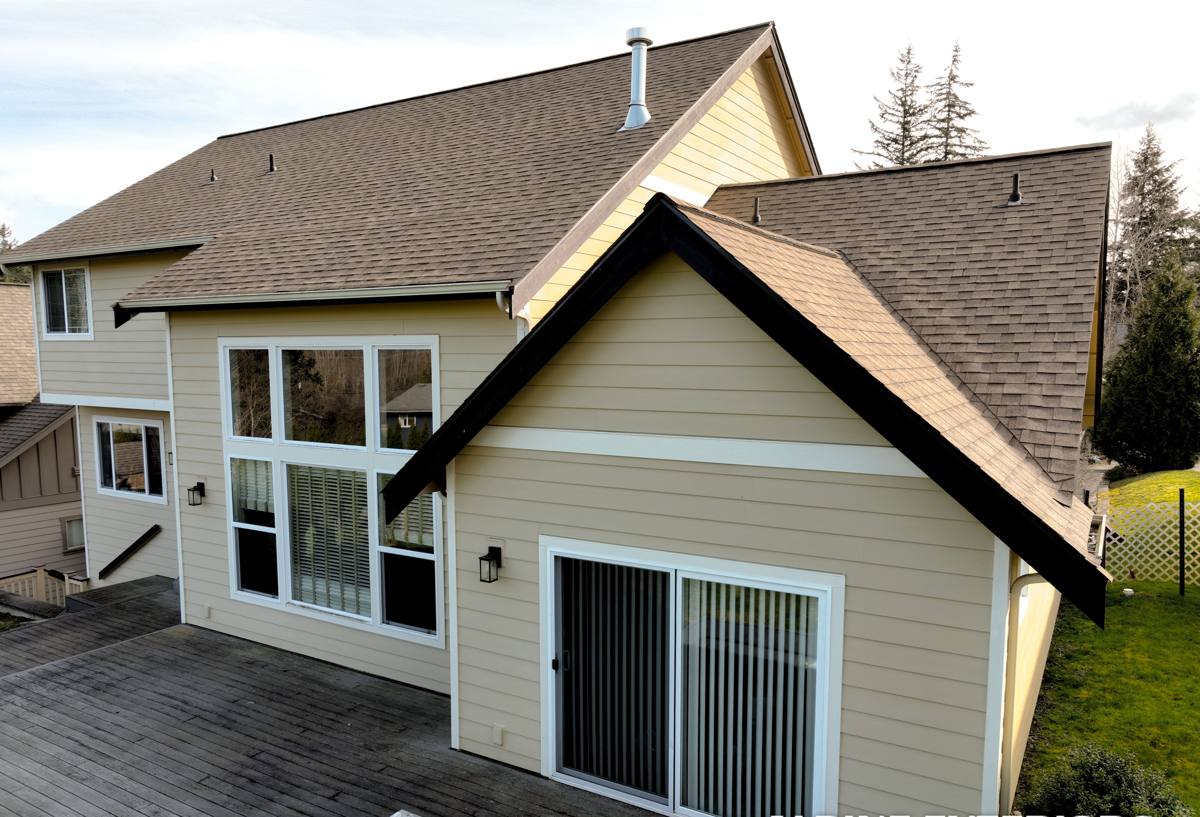
What Sarasota's Climate Actually Does to Siding
Hurricane-Force Wind Loads
Sarasota County sits in a wind-borne debris region, and siding on a Gulf Gate Estates home has to survive gusts that can rip loose panels, tear off poorly fastened trim, and drive water behind anything that isn't sealed correctly. Wind doesn't just push on siding, it creates uplift and pressure differentials at corners, eaves, and joints, which is exactly where cheap installations fail first.
Year-Round UV Exposure
Florida sun is intense in every season, not just summer. Siding materials that rely on surface paint or a thin factory coat tend to chalk, fade, and lose their finish years before a homeowner expects to repaint. UV breakdown is also what causes many engineered wood products to lose their protective coating and become vulnerable at the edges.
Wind-Driven Rain and Moisture Intrusion
Because Gulf Coast storms rarely drop rain straight down, water gets forced sideways into seams, laps, and fastener points. A siding system is only as good as its flashing, weather-resistive barrier, and installation detailing, all of which do the real work of keeping water out during a driving rainstorm.
Salt Air and Corrosion
Even away from the immediate waterfront, Sarasota's salt-laden air accelerates corrosion of fasteners, trim, and any hardware that isn't rated for coastal exposure. Over time, this is what causes streaking, staining, and premature hardware failure on siding systems that weren't built with the coast in mind.
Why We Install Only James Hardie Fiber Cement Siding
We do not install vinyl siding, LP SmartSide, Cemplank, Allura, or primed wood products, and that is a deliberate standard, not a sales pitch. Vinyl siding softens, warps, and can pull away from the wall in sustained wind events; it also has real limits on how dark a color it can be finished in without heat-related warping in direct Florida sun. Engineered wood products such as LP SmartSide use a wood-strand core that, however well treated, remains vulnerable at cut edges and fastener penetrations if moisture gets in behind it, which is a harder standard to guarantee in a climate with this much wind-driven rain. Alternative fiber cement brands may perform reasonably well on paper, but James Hardie is the manufacturer with the deepest track record in Florida specifically, purpose-engineered HardieZone product lines for humid, high-UV, storm-prone climates, and a factory-baked ColorPlus finish backed by a real, transferable finish warranty.
None of this means other products are junk. It means that for a coastal Sarasota County home, the trade-offs of vinyl and engineered wood, ongoing maintenance, moisture sensitivity, and shorter realistic service life, aren't trade-offs we're willing to install and stand behind. Fiber cement is non-combustible, dimensionally stable, and holds up to wind, sun, and moisture in a way that fits this climate.
What a Correctly Installed Fiber Cement Siding Job Actually Involves
Site Prep and Old Siding Removal
A proper job starts with removing the existing siding down to the sheathing, not installing over it, so the crew can inspect for hidden rot, soft sheathing, or prior water damage that needs to be corrected before anything new goes up. Skipping this step is one of the most common shortcuts that leads to problems years later.
Weather-Resistive Barrier and Flashing
A code-compliant weather-resistive barrier goes over the sheathing, with flashing detailed correctly around every window, door, and penetration. This layer, not the siding itself, is what actually stops wind-driven rain from reaching the framing if water gets past the outer surface.
Fastening, Clearances, and Caulking
James Hardie siding has specific fastening patterns, nail spacing, and minimum clearances from the roofline, decks, and grade that are written into the manufacturer's installation instructions for a reason: get them wrong and you can void the product warranty and create entry points for moisture. Proper caulking at seams and trim, using the right sealant, matters just as much as the fastening itself.
ColorPlus Finish vs. Field Painting
Whenever possible, we install ColorPlus factory-finished siding rather than field-painting on site. The factory finish is baked on under controlled conditions and holds color and adhesion far longer than a field-applied coat exposed to Florida humidity while curing.
Choosing the Right HardieZone Line for Gulf Gate Estates
James Hardie engineers its siding by climate zone, and Sarasota falls into the warm, humid HZ5 zone, where moisture resistance and heat performance matter more than freeze-thaw durability. Beyond climate zone, the siding also comes in several plank profiles and reveals, from traditional lap siding to shingle-style panels, so it can match a range of home styles found throughout Gulf Gate Estates without sacrificing the performance built into the HZ5 formulation. The table below compares how fiber cement stacks up against the alternatives we don't install, specifically for the conditions a Gulf Gate Estates home deals with.
| Factor | James Hardie Fiber Cement | Vinyl Siding | Engineered Wood (e.g. LP SmartSide) |
|---|---|---|---|
| Wind performance | Engineered and tested for high-wind regions | Can deform or detach in sustained high winds | Generally solid, but seams are more failure-prone |
| Moisture tolerance | Non-combustible cement composition, dimensionally stable | Doesn't absorb moisture but traps it behind the panel | Wood-strand core vulnerable at cut edges and fasteners |
| UV and color stability | Factory ColorPlus finish resists fading and chalking | Can fade and, in dark colors, warp from heat | Relies on surface coating that wears over time |
| Salt air performance | Composition and finish hold up well near the coast | Can streak, stain, and become brittle over time | Coating breakdown accelerates coastal wear |
| Warranty structure | Strong, transferable manufacturer warranty | Varies widely by manufacturer and grade | Typically shorter and more exclusion-heavy |
Our Process, Start to Finish
- Free on-site inspection and estimate, including a look at your current siding, trim, and any moisture or rot concerns.
- Product and color selection, walking through HardieZone lines, plank profiles, and ColorPlus finish options that suit your home.
- Removal of existing siding and inspection of the sheathing underneath, with any repairs addressed before moving forward.
- Installation of the weather-resistive barrier and flashing at every window, door, and penetration point.
- Fiber cement installation to James Hardie's fastening, clearance, and sealing specifications.
- Final walkthrough with the homeowner and cleanup of the site.
What Affects the Price of a Fiber Cement Siding Project
Every fiber cement siding project is priced around a handful of concrete factors, and understanding them helps you evaluate any estimate you receive, including ours.
- Total square footage of exterior wall area and the home's number of stories
- Condition of the existing sheathing once the old siding comes off
- Plank profile and reveal chosen, such as traditional lap, shingle-style, or panel
- Amount of trim, corner detail, and architectural features around windows and doors
- Whether the job uses a ColorPlus factory finish or requires field painting
We walk through each of these during the on-site estimate so you know exactly what's driving your number, not just a flat price per square foot.
Signs Your Gulf Gate Estates Home May Need New Siding
Not every siding problem is obvious from the street. A quick self-check can tell you whether it's worth having a professional take a closer look:
- Visible warping, buckling, or gaps between siding panels or at trim joints
- Soft or spongy spots when you press on the siding, especially near the bottom courses
- Paint that's chalking, peeling, or fading unevenly across the same wall
- Recurring mold, mildew, or dark streaking that comes back soon after cleaning
- Rising cooling bills that suggest moisture or air leaks behind the siding
- Rust streaks around fasteners or trim hardware
- Cracked or missing caulk at seams, windows, and corners
Why Hiring a Crew That Already Works This Neighborhood Matters
A crew that regularly works Gulf Gate Estates and the surrounding Sarasota area already understands the local permitting and inspection process, the wind and moisture conditions specific to this part of the Gulf Coast, and the kind of siding failures that show up on homes here versus further inland. That familiarity shortens the guesswork on your project, from the initial inspection through final sign-off, and it means the crew showing up at your door has installed this exact product system on homes facing the same weather yours does.
Maintaining Fiber Cement Siding in a Coastal Climate
James Hardie siding is low-maintenance compared to wood or vinyl, but low-maintenance doesn't mean no maintenance in a salt air environment. A periodic rinse to clear salt residue and pollen buildup, a visual check of caulking at seams and trim after storm season, and prompt attention to any cracked caulk or loose trim will keep the system performing the way it's designed to for decades. It's also worth a quick walk-around after any significant tropical storm or hurricane to check for loose trim, damaged caulk, or debris impact, since catching a small issue early is far cheaper than letting water find its way behind the siding. Because the ColorPlus finish is factory-applied, most homeowners never need to repaint, which is one less maintenance task in a climate that's hard on painted surfaces.
If you're in Gulf Gate Estates and want a straight answer on whether your current siding is holding up or due for replacement, we offer free, no-pressure estimates. Fill out the form below and we'll take a look and walk you through your options.