 Sarasota Roofing
 Siding That Has to Work Harder in Downtown Sarasota
A house in Downtown Sarasota deals with a different set of conditions than a home twenty miles inland. Sitting close to Sarasota Bay and the Gulf, downtown properties take on salt-laden air that never really lets up, intense UV that runs nearly year-round instead of just a few summer months, and the real possibility of hurricane-force wind and wind-driven rain during storm season. Siding here isn't just a finish — it's the first line of defense for the wall assembly behind it, and it gets tested more often, and harder, than siding almost anywhere else in the country.
That's the backdrop for every siding decision a downtown homeowner makes. The material has to hold its shape and color under constant sun, resist moisture intrusion when rain comes in sideways, and stand up to corrosion-accelerating salt air without turning into a maintenance project. This page focuses specifically on fiber cement siding — what it needs to do in this exact setting, what a correct installation looks like, and why the crew doing the work matters as much as the product itself.
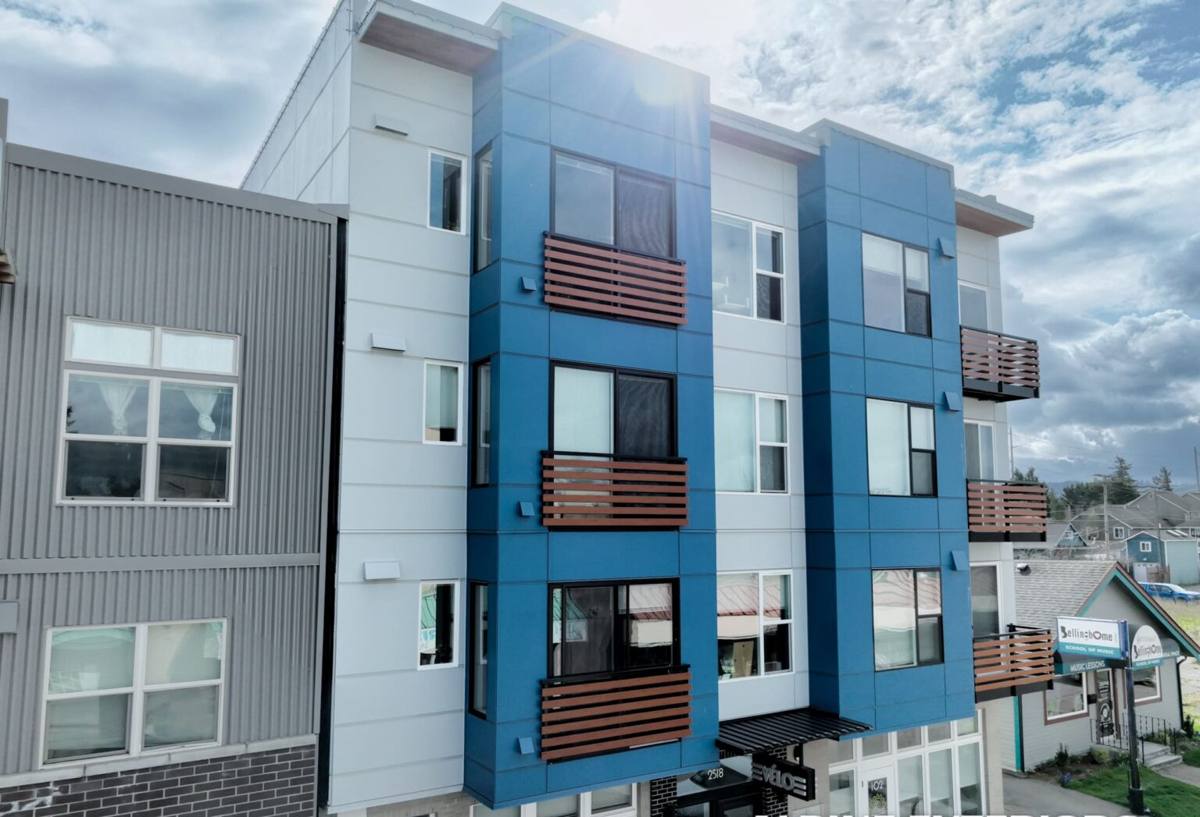
What Downtown Sarasota's Housing Stock Means for a Siding Job
Downtown Sarasota is a mix of older bungalow and Mediterranean-influenced homes alongside newer infill construction, often on lots that sit closer together than in outlying suburban areas. That combination creates a few practical realities that shape how a siding job actually gets done:
- Tighter lots mean less room for material staging, scaffolding, and dumpster placement — a crew needs a plan for that before day one, not on the fly.
- Older homes may have irregular framing, settled foundations, or non-standard wall dimensions that a cookie-cutter install approach doesn't account for.
- Some downtown blocks fall within historic or architectural review areas, which can affect approved siding profiles, exposure widths, or trim details.
- Mature tree canopy in parts of downtown adds shade and debris considerations that don't apply on a wide-open suburban lot.
None of these are dealbreakers, but they all affect the estimate, the timeline, and sometimes the permitting process. A crew that has actually worked in the neighborhood plans for these things up front instead of discovering them mid-project.
Why We Install Only James Hardie Fiber Cement
We install James Hardie fiber cement siding exclusively. We don't install vinyl, LP SmartSide, Cemplank, Allura, primed spruce, or cedar. That's a deliberate standard, not a marketing line. Fiber cement as a category — cement, sand, and cellulose fiber — holds its shape in heat and humidity better than wood-based products, and it doesn't behave like vinyl, which can warp or become brittle under sustained UV and temperature swings. Within fiber cement, James Hardie builds region-specific product lines, including an HZ5 formulation engineered for climates that cycle between wet and dry more aggressively than the national average — which describes the Gulf Coast well. Hardie also backs its ColorPlus factory finish with a dedicated finish warranty, separate from the product warranty, which matters in a climate where UV exposure is one of the main things that ages a paint job prematurely.
Other fiber cement brands exist, and some homeowners ask why we don't offer them as a lower-cost option. Our answer is straightforward: we've standardized our crews, our fastening schedules, our flashing details, and our warranty process around one product system so every job gets the same level of attention to detail. Mixing product lines means mixing installation specs, and in a climate this demanding, installation precision is where most long-term problems actually start.
How Fiber Cement Compares to What Else You'll See Downtown
| Material | Wind & Storm Performance | Salt Air / Humidity Resistance | Maintenance Over Time |
|---|---|---|---|
| James Hardie Fiber Cement | Rated for high-wind installation when installed to spec | Dimensionally stable; doesn't absorb and swell like wood-based products | Repaint/recaulk cycle is longer with factory ColorPlus finish |
| Stucco | Generally solid when properly applied and maintained | Can develop hairline cracking that lets in moisture over time | Periodic crack repair and repainting needed |
| Vinyl Siding | Can deform or detach in sustained high wind | Doesn't absorb moisture but can fade and become brittle under constant UV | Low upkeep but limited repair options once damaged |
| Wood / Engineered Wood Siding | Performance depends heavily on installation and upkeep | Absorbs moisture; prone to swelling, cupping, and rot in humid coastal air | Highest maintenance burden — regular sealing and repainting |
What a Correct Fiber Cement Installation Actually Involves
Fiber cement siding is only as good as the details behind it. In a climate that drives rain sideways and bakes caulk joints with near-constant UV, the installation specifics matter more than they would in a milder region.
Water Management Comes First
Before the first plank goes up, the wall needs a properly lapped water-resistive barrier, correctly integrated flashing at every window, door, and penetration, and a drainage plane that lets any moisture that gets past the siding find its way back out. Skipping or rushing this step is the single most common reason a siding job fails early — and it's invisible once the siding is on, which is exactly why it has to be done right the first time.
Fastening and Clearances
James Hardie specifies fastener type, spacing, and placement for a reason — get it wrong and you either compromise the wind rating or create stress points where cracking starts. Panels also need proper clearance from rooflines, decks, and grade to keep water from wicking up from below, a detail that's easy to shortcut and hard to spot after the fact.
Joint and Caulk Detailing
Every butt joint, corner, and trim intersection is a potential entry point for water if it's not caulked and detailed correctly. In Downtown Sarasota's UV load, using the right sealant and joint spacing extends the life of that detail considerably compared to a rushed job.
Our Process From Estimate to Finished Job
A siding job on a downtown property starts with a walk-around inspection — checking existing siding condition, wall assembly access points, trim and window details, and any historic or HOA review requirements that might apply to your specific block. From there we measure, account for waste and cut planning, and put together a written estimate that spells out product line, color, and scope, not just a lump sum.
On install day, tear-off of the old siding comes first, followed by an inspection of the sheathing underneath — this is often the point where hidden moisture damage from years of an underperforming wall system gets found and addressed before it's covered back up. Water-resistive barrier and flashing go in next, then the Hardie planks or panels themselves, followed by trim, caulking, and a final walkthrough where we go over every elevation with you before calling the job done.
Why Hiring a Crew That Already Works Downtown Matters
Downtown Sarasota isn't a generic suburban grid, and a crew that mostly works subdivisions elsewhere in the county can miss details that a downtown-experienced crew catches automatically. That includes knowing which blocks are likely to require architectural or historic review before materials are approved, planning around tighter parking and staging constraints, and understanding how Sarasota County's wind-load and building code requirements apply to an older structure versus new construction. It also means having already worked through the permitting process locally, which tends to move faster when the paperwork is familiar rather than assembled from scratch.
There's a practical trust factor too — a crew that's done multiple jobs in the same few blocks has a reputation to protect there, and neighbors talk. That's a different incentive structure than a crew driving in from outside the area for a single job and moving on.
What a Correct Job Should Include: A Homeowner's Checklist
- A written scope that names the specific James Hardie product line, plank exposure, and color — not just "fiber cement siding"
- Confirmation of water-resistive barrier and flashing work as a line item, not an assumption
- Fastener type and spacing called out, matching manufacturer specifications for your wind zone
- A plan for any historic or architectural review your block may require, handled before materials are ordered
- Clear terms on the ColorPlus finish warranty versus the underlying product warranty
- A final walkthrough of every elevation before the job is considered complete
Maintaining Fiber Cement Siding in a Coastal Climate
One of the practical advantages of James Hardie fiber cement is a lighter maintenance load than wood-based alternatives, but "low maintenance" doesn't mean "no maintenance," especially this close to the water. A yearly rinse to clear salt residue and organic buildup, a periodic check of caulk joints for UV-related cracking, and prompt attention to any impact damage go a long way toward getting the full service life out of the material. Catching a failed caulk joint or a hairline crack early is a small fix; letting it sit through a few more wet-dry cycles and storm seasons turns it into a bigger repair.
Get a Straight Answer on Your Downtown Sarasota Siding
If you're weighing a siding replacement on a downtown property, we're happy to take a look and give you a straightforward assessment — what condition your current siding and wall assembly are actually in, what a correct James Hardie installation would involve for your specific home, and what to expect for timeline and scope. Request a free, no-pressure estimate using the form below.