 Sarasota Roofing
 Why Siding Repair Looks Different in Venice
Venice sits on the Gulf side of Sarasota County, and that position means a home's exterior takes on more than ordinary Florida weather. Hurricane-force wind is a real design condition here, not a once-a-decade worry. UV exposure runs intense and nearly year-round, not just in summer. Rain rarely falls straight down when a storm is moving through — wind pushes it sideways into laps, joints, and trim. And salt-laden air off the Gulf works on fasteners, finishes, and seams whether a house is waterfront or several miles inland. Any one of those forces would age siding faster than a milder climate would. Together, they're the reason a siding repair job in Venice needs to account for more than the visible damage.
Salt Air and Corrosion
Salt in the air settles onto a home's exterior continuously, not only during storms, and it works on exposed metal — fasteners, flashing, trim screws — well before the corrosion is visible from the ground. A fastener that's lost holding strength doesn't announce itself; it shows up later as a board that's started to lift, a seam that's opened slightly, or a section of trim that's pulling away. Homes closer to the water generally see this faster, but Venice's overall coastal exposure means it's a factor across the area, not just on waterfront lots.
Intense, Year-Round UV
Florida's UV load is among the highest in the country, and siding takes that exposure on every south- and west-facing wall for most of the year. UV breaks down caulking and sealants first, drying them out and opening small gaps at joints and trim long before the siding material itself shows wear. On lower-grade materials, sustained UV also fades color unevenly and can make some products more brittle over time. Sun damage is usually gradual, but it's often the first crack — sometimes literally — in a wall assembly that otherwise held up fine.
Wind-Driven Rain
When a storm moves through, rain doesn't just fall on siding, it gets pushed into it — sideways and sometimes upward under eaves and at inside corners. That's a different load than ordinary rainfall, and it finds gaps that a garden-variety shower never would: an open butt joint, a poorly lapped seam, a fastener hole that's lost its seal. Wind-driven rain is the main way moisture gets behind siding in Venice, and it's often working its way into the wall assembly well before any staining shows up on the surface.
Hurricane-Force Wind Loads
Beyond the rain a storm carries, the wind itself is a structural load on siding. Repeated flexing during high wind events loosens fasteners over time, and a single severe event can pop boards or panels loose outright, especially where the original installation didn't quite meet fastening spec. Wind-borne debris adds impact damage on top of that. A siding system that's marginal to begin with tends to show its weak points after storm season, sometimes in ways that aren't obvious until the next one.
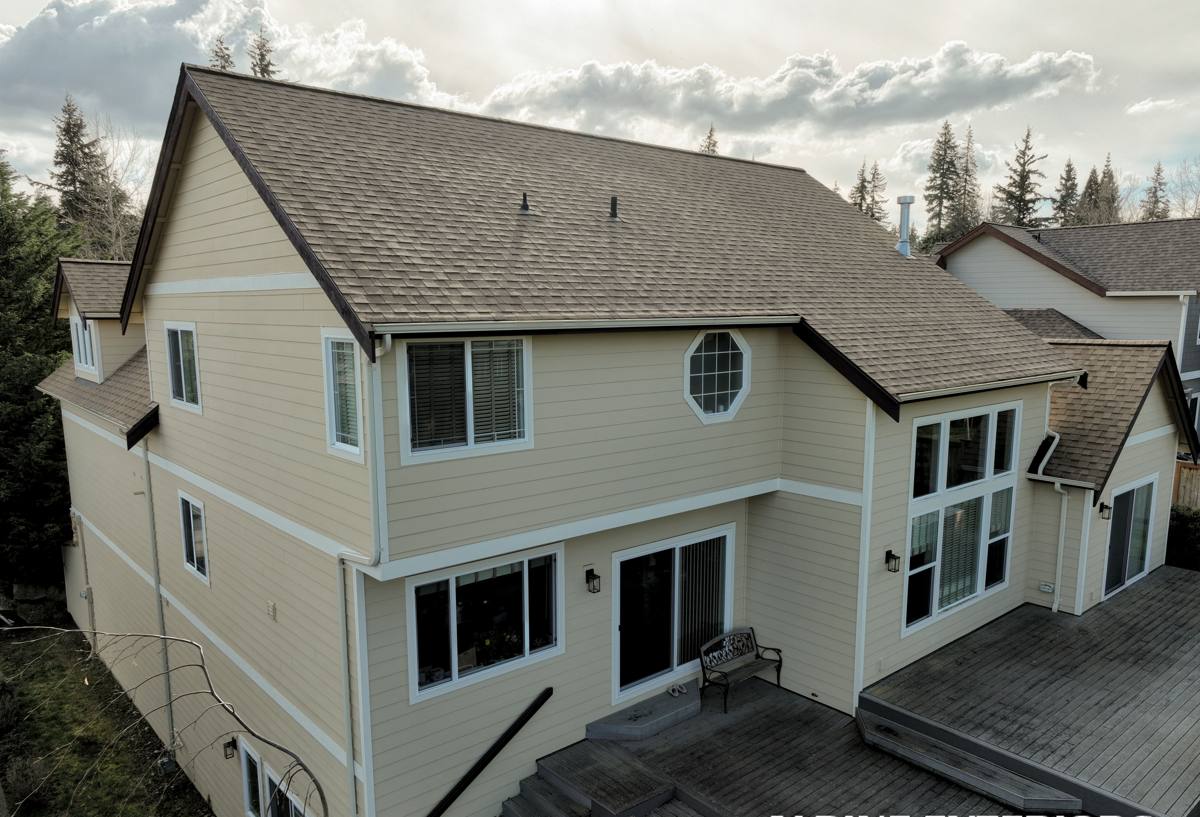
Cosmetic Wear or a Real Problem? Reading the Signs
Not every mark on a wall means the same thing, and telling cosmetic wear apart from a real moisture or structural issue is the first job of an honest inspection.
| What You See | Usually Cosmetic | Often a Real Problem |
|---|---|---|
| Faded or chalky color on an otherwise sound board | Yes — UV wear on the finish | Only if paired with cracking or softness |
| Hairline cracks at board ends or corners | Sometimes, if isolated and shallow | Often — a path for wind-driven rain to enter |
| Soft, spongy, or crumbling section of siding | No | Yes — moisture has already reached the material |
| Staining or dark streaks below a seam or trim piece | Rarely on its own | Usually — sign of water tracking behind the surface |
| Buckling, waviness, or a board that's pulled away slightly | No | Yes — fastening or substrate issue underneath |
| Peeling or bubbling paint at butt joints and trim | Cosmetic if caught early | Can indicate failed caulking and moisture intrusion |
Cosmetic wear can generally wait for routine maintenance. Anything soft, stained, or shifted usually can't — those are signs moisture has already gotten past the surface, and leaving it in place typically means the affected area grows before the next inspection.
Repair or Replace: How That Call Actually Gets Made
Homeowners often assume a siding problem means a full re-side, or the opposite — that a repair is always the cheaper, equally durable answer. Neither holds up consistently. The factors that actually decide it:
- How far the moisture has traveled. Damage isolated to a few boards or one wall section is usually a straightforward repair. Moisture that's tracked behind multiple courses or into the sheathing changes the math quickly.
- Age and material of the existing siding. Siding nearing the end of its practical service life may only have so many more repair cycles left before replacement is the more cost-effective path.
- Whether the original installation had a systemic flaw. If the underlying cause is a missing rain screen, poor flashing pattern, or wrong fastener spacing across the whole wall, patching one area only delays the same failure showing up somewhere else.
- Availability of a matching material. On some products, especially older or discontinued lines, an exact color or profile match isn't available, which affects whether a targeted repair will look right or whether a broader replacement makes more sense visually as well as structurally.
We'll give a straight answer on which category a given home falls into, including when a full re-side is genuinely the smarter option, rather than defaulting to whichever job is bigger.
How We Diagnose Siding Before Recommending a Repair
A repair scope that's actually worth paying for starts with a real inspection, not a guess from the driveway. That typically includes:
- Probing suspect boards and the surrounding area for soft spots, not just checking the section that's visibly damaged
- Checking house wrap, flashing, and weep details wherever they're accessible, since failures there are usually the actual cause of surface damage
- Inspecting fastener condition and spacing, especially around window and door openings and at corner boards
- Looking behind trim pieces and at inside corners, where wind-driven rain tends to concentrate
- Checking for moisture at the sheathing in areas adjacent to visible damage, since the affected area is often larger than what shows on the surface
- Reviewing caulking and sealant condition at joints and penetrations across the wall, not just the section being repaired
We walk through what we find honestly — what needs repair now, what's worth monitoring, and what's purely cosmetic — before putting together a scope.
What a Correct Repair Actually Involves
Matching Material and Profile
A repair that's supposed to blend in has to match board profile, exposure, and finish as closely as the product line allows. On some materials that's straightforward; on others, especially discontinued colors or older wood or engineered wood products, an exact match isn't always available, and we'll say so upfront rather than after the work is done.
Restoring the Water Management System
Siding is only one layer of a wall's defense against moisture. A correct repair restores the house wrap, flashing, and lap sequence behind and around the repaired area so water sheds the way it's supposed to, rather than just closing up the visible gap and leaving the underlying drainage path compromised.
Fastening and Sealing to Spec
Fastener type, placement, and spacing follow the manufacturer's installation requirements, not a rough approximation. Joints and penetrations get sealed with materials rated to hold up under sustained Gulf Coast UV and salt exposure, since a repair that uses a lesser-grade sealant tends to fail again well before the surrounding siding does.
Why Replacement Sections Are James Hardie
When a repair calls for new boards or panels, we install James Hardie fiber cement — it's the only siding product we install, on repairs and full installs alike. If a home already has Hardie siding, matching color and profile is usually reliable since it's a current, widely available product line with a factory-applied ColorPlus finish. If the existing siding is vinyl, wood, or an engineered wood product, we'll repair it where that's the sound and honest option, but we won't introduce a different material we don't stand behind just to patch a wall. On homes where damage is widespread enough that repair after repair is becoming the pattern, we'll say plainly that a full re-side in fiber cement is likely the more durable long-term answer — though that decision is always the homeowner's to make, not ours to push.
Repair Feasibility by Siding Material
How repairable a section of siding is — and how long that repair holds up in Venice's climate — depends heavily on what's already on the wall.
| Material | Typical Repairability | Common Issue in This Climate |
|---|---|---|
| Vinyl | Panel sections can be replaced, but color fades unevenly over time, making new panels stand out | Warping and brittleness under sustained UV and heat |
| Cedar or primed wood | Repairable, but ongoing maintenance burden is high near the coast | Moisture absorption, rot, and paint failure from salt air and humidity |
| Engineered wood (e.g. LP-type products) | Repairable if caught early; swelling at cut edges is a common failure point | Edge swelling and delamination if moisture reaches the substrate |
| James Hardie fiber cement | Individual boards replace cleanly; ColorPlus finish holds up well for color matching | Very durable against UV and moisture when installed to spec; failures usually trace to installation, not the material |
This isn't a case against repairing non-Hardie siding — plenty of repairs on other materials are worth doing and hold up fine for years. It's a factor in the repair-or-replace conversation, since a wall that's already showing widespread wear in a lower-durability material may be a better candidate for replacement than a fourth or fifth patch.
Maintenance That Keeps a Repair From Becoming a Recurring Job
- Rinse siding periodically to clear salt residue and organic buildup before it works into seams and finishes
- Inspect and refresh caulking at joints, trim, and penetrations on a regular schedule, since Florida UV degrades sealants faster than milder climates
- Walk the exterior after any significant storm to check for loosened boards, popped fasteners, or new gaps at trim
- Keep irrigation and sprinklers from hitting siding directly, since repeated wetting in one spot accelerates wear locally
- Trim back landscaping that traps moisture against a wall or blocks airflow and sun exposure needed to dry it out
- Address soft spots, staining, or gaps as soon as they're noticed rather than waiting for a scheduled inspection — moisture issues rarely stay small
Why a Crew That Already Works Venice Matters
A contractor who occasionally works this part of Sarasota County can still do a competent repair, but a crew that's out here regularly has a better read on how these specific conditions show up on real houses — which walls take the worst of the wind-driven rain, how fast salt air corrodes fasteners on a given lot, and what a storm-damaged section actually looks like once the trim comes off versus what it looked like from the ground. That experience shapes a more accurate inspection and a repair scope that addresses the actual cause rather than just what's visible. It also means fewer surprises once work is underway, because the estimate already accounted for how Venice's climate behaves rather than applying a generic checklist written for a different part of the state.
Get a Free, No-Pressure Estimate
Whether you're dealing with a specific problem — storm damage, a soft spot, a section that's pulling away — or just want a straight read on where your siding stands, we're glad to walk the property and explain what we find plainly, including if the honest answer is that it doesn't need much. Reach out using the form below for a free, no-pressure estimate.