 Sarasota Roofing
 Why Siding Fails Faster in Osprey Than It Does Inland
Osprey sits along Sarasota County's Gulf coast, and that location cuts both ways. It's part of what makes the area desirable, and it's also what puts extra stress on the exterior of every home here. Salt-laden air moves in off the water and settles on siding, trim, and fasteners year-round, not just during storm season. Add in near-constant humidity, intense UV exposure for most of the year, and the wind-driven rain that comes with Gulf coast weather systems, and you have a climate that tests siding in ways a lot of manufacturers' warranty language was never really written for.
Homes in Osprey range from older concrete block houses with siding added or replaced over the decades to newer construction built to current Florida Building Code wind standards. Whatever the age, the siding on a home in this part of Sarasota County is doing real work: keeping wind-driven moisture out of the wall assembly, protecting framing and sheathing from humidity intrusion, and holding up to sun exposure that fades and degrades a lot of exterior products faster than homeowners expect. When siding is the wrong product for this climate, or it was installed without attention to the details that matter here, problems show up early — sometimes within a few years, not a few decades.
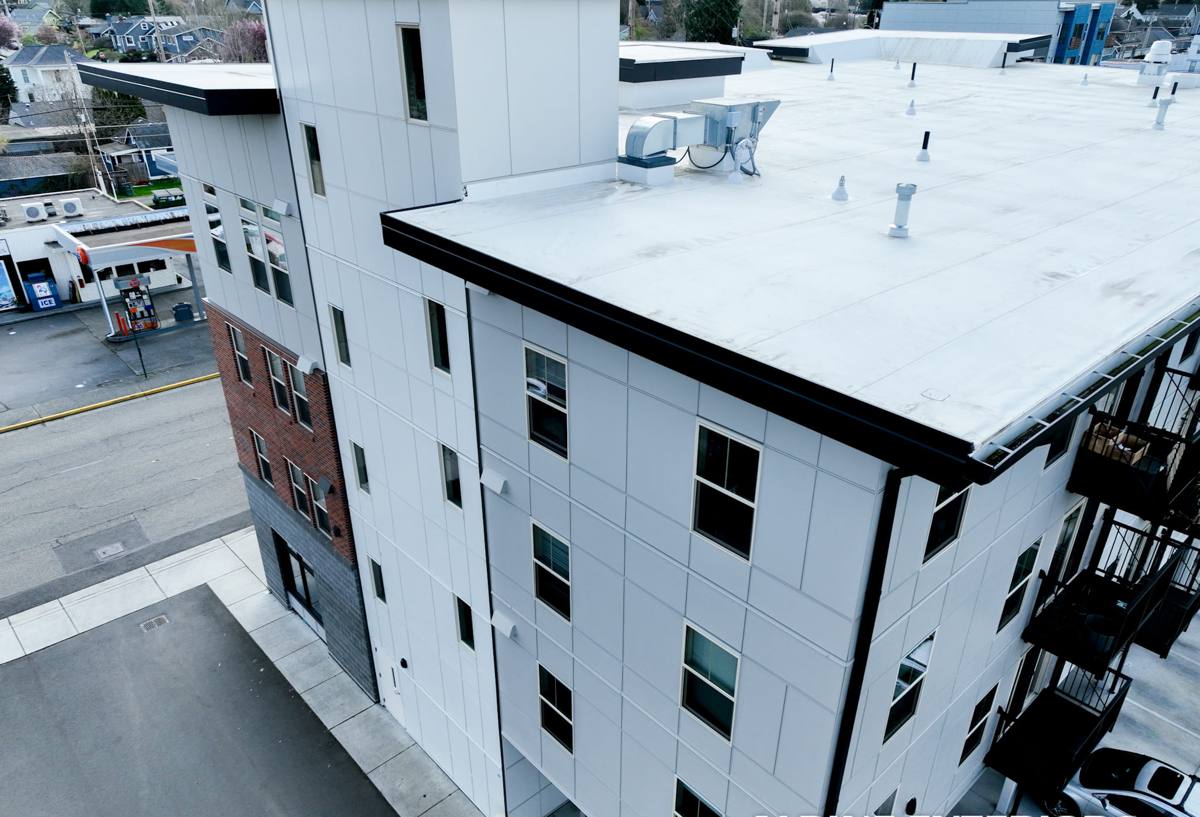
Signs an Osprey Home Needs Siding Replacement, Not a Patch
Not every siding problem calls for a full replacement, but in a coastal humidity zone like this one, small issues tend to point to bigger ones underneath. Homeowners in Osprey should take these signs seriously:
- Soft, spongy, or delaminating siding, especially near the bottom of walls or around window and door openings
- Visible warping, cupping, or buckling of panels or lap boards
- Paint that's peeling, bubbling, or failing faster than a normal repaint cycle would suggest
- Persistent staining, streaking, or a chalky residue that keeps returning after cleaning
- Soft drywall, musty odors, or visible mold on interior walls that back up to exterior siding
- Gaps at seams, corners, or trim where caulking has failed and isn't holding
Any one of these can be isolated. Several together, especially on a home more than 15-20 years old with the original siding still in place, usually means the underlying material or the original installation has reached the end of what it can handle in this environment.
What a Correct Siding Replacement Actually Involves
Siding replacement is not just swapping old boards for new ones. Done right, it's a full reset of the wall's ability to manage water and wind. That matters everywhere, but it matters more on the Gulf coast, where the margin for error is smaller.
Tear-off and inspection
Old siding comes off down to the sheathing, and that sheathing gets inspected for rot, soft spots, or prior water damage. This is the point where problems hiding behind old siding get found and fixed, not covered up with a new layer on top.
Weather-resistive barrier
A proper weather-resistive barrier goes on before any new siding, installed with correct overlaps and sealed penetrations. This layer is what actually stops incidental water from reaching the sheathing — the siding itself is the first line of defense, not the only one.
Flashing at every penetration
Windows, doors, hose bibs, vents, light fixtures — anywhere something interrupts the wall plane needs flashing detailed to shed water downward and outward. This is one of the most common places corners get cut on lower-quality installs, and it's usually where leaks originate years later.
Fastening to spec
Fiber cement siding has specific fastener requirements — type, length, spacing, and placement all matter, and they change based on wind exposure. In a coastal wind zone, following the manufacturer's fastening schedule isn't optional; it's what keeps the siding attached in a real storm.
Trim, caulking, and paint or finish
Clean trim work and correctly placed sealant at joints and transitions finish the job and keep water from working its way behind the new siding at the seams.
Why We Install Only James Hardie Fiber Cement Siding
We install James Hardie fiber cement exclusively. We don't install vinyl, LP SmartSide, or other engineered wood or composite siding products, and that's a deliberate standard, not an oversight.
Vinyl siding is affordable and low-maintenance in mild climates, but it softens and can distort in sustained high heat, and it's rated for wind resistance well below what fiber cement handles — a real consideration on a coast that sees tropical storm and hurricane-force wind events. Engineered wood products like LP SmartSide perform well in many parts of the country, but they're wood-based, and wood-based siding is inherently more sensitive to sustained humidity and moisture exposure than fiber cement — exactly the conditions that define Osprey's climate.
James Hardie fiber cement is non-combustible, doesn't support insect damage, and is engineered specifically for high-humidity, high-UV climates through its HZ5 product line, which is built for the conditions found across Florida. It holds paint and factory finish longer than wood-based alternatives because it doesn't expand and contract with moisture the way wood does. That stability is what keeps seams tight and finishes intact through repeated humidity cycles and sun exposure. We'd rather install one product exceptionally well, to spec, every time, than offer several products and hope each one holds up.
James Hardie Product Lines and Finish Options
James Hardie offers several product lines, and the right one depends on the home's style and the homeowner's priorities:
| Product | Profile | Best fit |
|---|---|---|
| HardiePlank | Traditional horizontal lap siding | Most single-family homes; classic coastal look |
| HardiePanel | Vertical panel siding | Modern or mixed-material facades, accent walls |
| HardieShingle | Staggered or straight-edge shingle profile | Cottage or coastal architectural styles |
| HardieTrim | Trim boards for corners, fascia, window/door surrounds | Finishing detail on any of the above |
Every product is available with Hardie's ColorPlus factory finish, which is baked on under controlled conditions rather than field-painted. That finish is engineered to resist fading from UV exposure and comes with its own finish warranty — a meaningful advantage in a market where the sun is strong most months of the year.
Our Process, Start to Finish
For every Osprey siding replacement, the process runs the same way:
- On-site inspection and honest assessment of whether replacement or repair is the right call
- Written estimate with the specific Hardie product line, profile, and finish discussed
- Permitting through Sarasota County as required before any tear-off begins
- Tear-off, sheathing inspection, and repair of any damage found underneath
- Weather-resistive barrier installation and flashing at every penetration
- Hardie siding installed to manufacturer fastening specifications for this wind zone
- Trim, caulking, and final finish work
- Final walkthrough and cleanup before we consider the job done
What Siding Replacement Costs Depend On
Every home is different, so exact pricing takes an on-site look, but the main cost drivers are consistent:
| Factor | Why it matters |
|---|---|
| Home size and wall square footage | More surface area means more material and labor |
| Sheathing condition underneath old siding | Rot or water damage found during tear-off adds repair scope |
| Product line and profile chosen | Lap, panel, and shingle profiles differ in material and install time |
| Trim and detail complexity | Multiple gables, dormers, or accent details add labor |
| Story height and access | Two-story walls and tight lot access affect equipment and time |
We'd rather walk a home and give a real number than throw out a range that doesn't hold up once the tear-off starts.
Why Hiring a Crew That Already Works in Osprey Matters
Siding installation quality depends heavily on details that generic, out-of-area crews often miss: how flashing gets detailed for wind-driven rain, how fastening schedules change for coastal wind exposure, and how Sarasota County's permitting and inspection process actually works. A crew that regularly works Osprey and the surrounding Sarasota County communities already knows these things going in, instead of learning them on your home.
It also matters for accountability. A local, established contractor is easy to find if a warranty question comes up five or ten years down the road — not a name that did one job in the area and moved on.
Maintaining Your New Siding in a Coastal Climate
James Hardie siding is low-maintenance, not no-maintenance. A little attention keeps it performing for the long haul:
- Rinse siding periodically to remove salt residue, especially on sides facing the water or prevailing wind
- Inspect caulking at seams, trim, and penetrations annually and re-seal as needed
- Trim landscaping back from siding to maintain airflow and reduce trapped moisture
- Check for any impact damage after major storms, even if it looks minor
- Keep gutters and downspouts clear so water sheds away from the wall assembly, not down it
If you're seeing signs of trouble on your current siding, or you're just ready to stop patching and do it right, we're happy to take a look. We'll give you a straightforward, no-pressure estimate and an honest read on what your home actually needs — use the form below to get started.