 Sarasota Roofing
 Nokomis Sits Right in the Path of Everything Florida's Coast Throws at a House
Nokomis is a Gulf-facing community in southern Sarasota County, close enough to the water that salt air, humidity, and storm exposure are part of daily life rather than an occasional inconvenience. Homes here take on a combination most inland Florida properties never see at the same intensity: sustained salt-laden humidity, intense UV load nearly year-round, wind-driven rain that gets forced sideways into wall assemblies during storms, and the periodic threat of hurricane-force wind gusts coming straight off the Gulf. Any one of those on its own is manageable. Together, over years, they're what separates siding that lasts two decades from siding that's failing in five.
That combination is exactly why siding choice and installation quality matter more in Nokomis than in most parts of the country. A product that's marginal in a dry, moderate climate can fail outright here, and an installation with even small gaps in flashing or fastening tends to get found out fast by the first serious tropical system that rolls through.
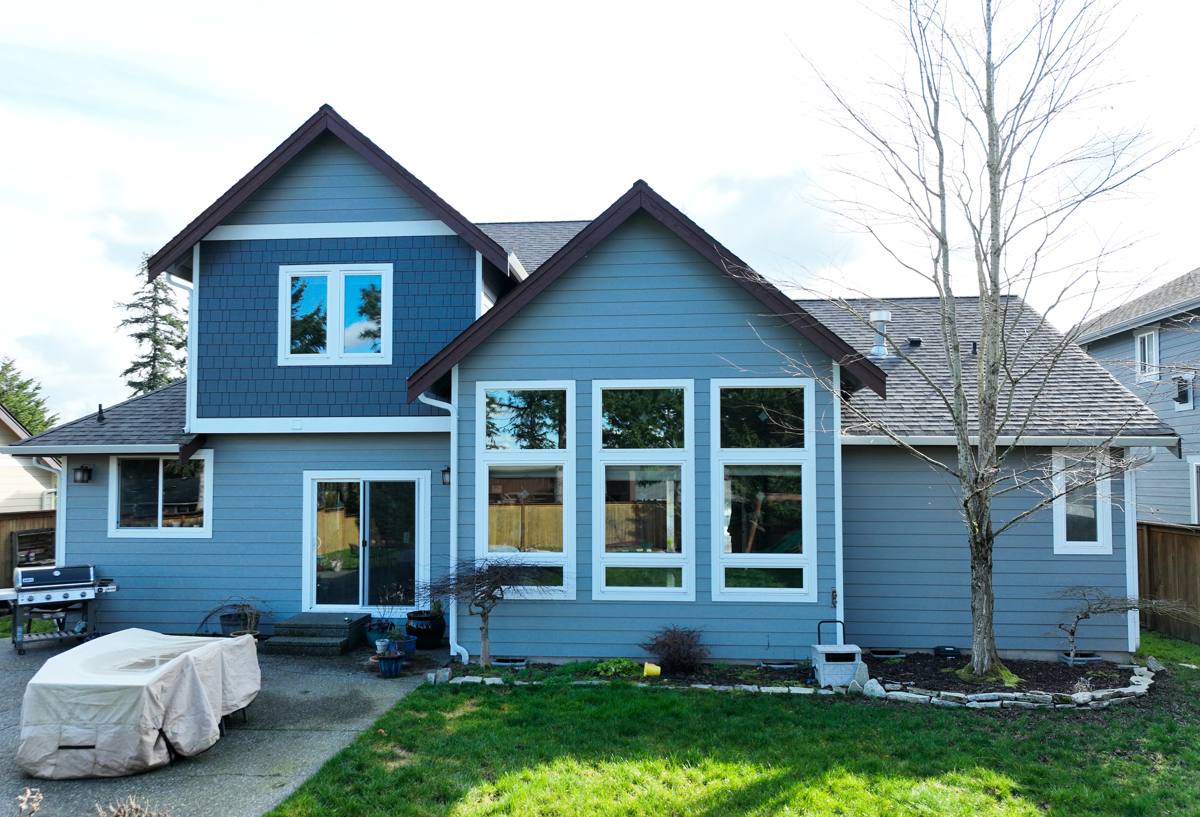
What Salt Air, UV, and Wind-Driven Rain Actually Do to Siding
It helps to understand the specific failure modes, because they explain why we install what we install and how we install it.
- Salt air accelerates corrosion in fasteners, trim accessories, and any exposed metal. It also settles into porous or poorly sealed siding surfaces over time, which can degrade finishes that weren't engineered for coastal exposure.
- UV exposure breaks down pigments and surface coatings. Paint fades unevenly, chalks, and eventually cracks, especially on south- and west-facing walls that take the most direct sun through a Sarasota County summer.
- Wind-driven rain doesn't just hit a wall — it gets driven up under laps, into seams, and behind trim during a hurricane or even a strong afternoon storm. If the water-resistive barrier, flashing, and siding overlap aren't installed correctly, that moisture finds its way behind the cladding and into the wall assembly, where it causes rot, mold, and structural damage that's invisible until it's serious.
- Wind load during named storms puts real mechanical stress on fastening patterns and butt joints. Siding that's under-fastened or fastened with the wrong nail spacing can lift, crack, or blow off entirely in gusts that a correctly installed product would shrug off.
None of this is unique to Nokomis, but the frequency and intensity of it here is higher than in most U.S. markets, which is why we treat every Sarasota County installation as a coastal installation, not a generic one.
Why We Only Install James Hardie Fiber Cement — Not Vinyl, Not Wood, Not LP
We made a deliberate decision as a company to install one siding system: James Hardie fiber cement. We don't install vinyl, LP SmartSide, cedar, or primed spruce, and we're upfront about why.
Vinyl siding softens, warps, and can crack under sustained UV and heat, and in a serious wind event it's one of the more vulnerable claddings on the market — it's simply not built to the same wind-resistance standard as fiber cement. Wood-based and engineered wood products (including LP SmartSide) are organic materials at their core, which means they're inherently more vulnerable to moisture intrusion and rot if any water gets behind the panel — a real risk given how often wind-driven rain finds its way into wall assemblies here. Both can be installed well and both have their place in drier, inland climates. On a Nokomis home exposed to Gulf humidity and storm wind, we don't think either one is the right call, so we don't install them.
James Hardie fiber cement is non-combustible, dimensionally stable across Florida's heat and humidity swings, and manufactured with a factory-applied ColorPlus finish engineered to resist fading and hold up to UV far longer than field-applied paint. Hardie's HZ5 product line is specifically engineered for hot, humid climates like ours. It's also backed by a strong transferable warranty when installed to Hardie's specifications — which is the other half of the equation, because even the best siding product fails if it isn't installed correctly.
What a Correct Fiber Cement Installation Actually Involves
Fiber cement siding is only as good as the assembly behind it. A correct installation on a Nokomis home includes:
- Removal of the old siding down to the sheathing, with the sheathing inspected and any water damage or rot repaired before anything new goes up — covering over a problem never makes it go away.
- A continuous, correctly lapped water-resistive barrier, installed shingle-style so water is always directed outward and down, never behind the layer beneath it.
- Proper flashing at every window, door, and penetration — the single most common point of failure we see in older installations along the coast.
- Correct fastener type, spacing, and placement per James Hardie's published installation specifications, which are more exacting on fastening patterns in high-wind zones than most general carpentry practice.
- Correct clearances at grade, roof lines, and decks, so siding isn't sitting in standing water or trapping moisture against untreated wood.
- Factory-finished ColorPlus panels installed with the specified gaps and sealant approach at joints, so the finish isn't compromised by field-cutting into unfinished edges without proper sealing.
Skip any one of these steps and you can end up with siding that looks fine on install day and starts failing within a few storm seasons — often behind the wall, where you can't see it until the damage is extensive.
Our Process for a Nokomis Siding Installation
We run the same disciplined process on every Nokomis job:
- Free on-site estimate. We walk the exterior, check the condition of the existing siding and sheathing where visible, and talk through what your home actually needs — not a generic package.
- Written scope and product selection. We go over James Hardie board profiles, HZ product options, and ColorPlus color choices suited to coastal exposure, and put the full scope in writing before any work starts.
- Tear-off and sheathing inspection. Old siding comes off, sheathing gets inspected, and any repairs are addressed and documented before new material goes on.
- Water-resistive barrier and flashing. This is the step that determines whether your walls stay dry for the next 30 years, and we don't rush it.
- Hardie installation to manufacturer spec. Correct fastening, clearances, and joint treatment, matched to Sarasota County's wind exposure requirements.
- Final walkthrough. We go over the finished work with you directly and make sure everything matches what was scoped.
Fiber Cement vs. Other Siding Options in a Coastal Climate
| Factor | James Hardie Fiber Cement | Vinyl | Wood / LP SmartSide |
|---|---|---|---|
| Wind resistance | Engineered and rated for high-wind installation | Lower wind rating; prone to cracking or blow-off in severe gusts | Adequate if installed well, but panel is more brittle under impact |
| Moisture behavior | Cement-based; does not rot | Doesn't rot itself, but seams are a common water-entry point | Organic material; vulnerable to rot if moisture gets behind it |
| UV / fade resistance | Factory ColorPlus finish engineered for long-term UV exposure | Can fade and become brittle over time | Field-applied paint typically needs repainting on a shorter cycle |
| Fire resistance | Non-combustible | Combustible | Combustible |
| Typical lifespan (installed to spec) | Multiple decades | Shorter, especially in high-UV coastal climates | Shorter without diligent maintenance |
Signs a Nokomis Home Needs New Siding
Coastal exposure tends to reveal siding problems earlier than in inland climates. Watch for:
- Visible warping, buckling, or gaps opening up between siding panels
- Soft spots or a spongy feel when you press on the siding near the bottom of walls
- Paint that's chalking heavily, peeling, or fading unevenly on sun-exposed walls
- Staining, streaking, or discoloration that keeps returning after cleaning
- Cracked or missing caulk and sealant around windows, doors, and trim
- Any musty smell or visible mold on interior walls that back up to exterior siding
- Siding that came through the last named storm with visible damage, even minor
What Drives the Cost of a Siding Installation Here
| Factor | Why it matters in Nokomis |
|---|---|
| Sheathing condition | Homes with prior moisture intrusion often need sheathing repair before new siding goes on — this only shows up once tear-off begins |
| Home size and complexity | More corners, windows, and roof lines mean more flashing and cutting labor |
| Board profile and color | ColorPlus finishes and certain lap widths carry different material costs |
| Wind zone requirements | Sarasota County's wind exposure standards affect fastening schedules and can affect labor time |
| Access and site conditions | Waterfront and barrier-adjacent lots can affect staging and scheduling around weather |
We don't quote a number until we've actually looked at your home — anyone who does is guessing, and a guess isn't useful to you.
Why Hiring a Crew That Already Works in Nokomis Matters
Coastal Sarasota County construction isn't identical to siding work forty miles inland. Crews who work this area regularly already understand local wind exposure expectations, know how sheathing tends to hold up on homes exposed to this level of salt air and humidity, and are used to sequencing exterior work around Gulf coast weather patterns rather than being surprised by them. That familiarity shows up in fewer surprises mid-project and a finished installation that's actually built for the conditions it has to survive, not just for a generic spec sheet.
If you're weighing a siding replacement on a Nokomis home, we're happy to walk the exterior with you, look at what's actually going on with your current siding and sheathing, and put together a straightforward, no-pressure estimate for a James Hardie installation built for this stretch of the Gulf coast. There's a form below — reach out and we'll get you scheduled.