 Sarasota Roofing
 Venice Asks More of Siding Than Most Places Do
Venice sits right on the Gulf side of Sarasota County, and that location shapes what a home's exterior has to survive year after year. Hurricane-force winds during storm season, wind-driven rain that hits walls sideways instead of straight down, sun exposure that runs strong almost year-round, and salt-laden air moving in off the Gulf all work on siding at the same time, not one at a time. A material and installation approach that performs fine in a milder inland climate can start showing wear here within a few years instead of a few decades.
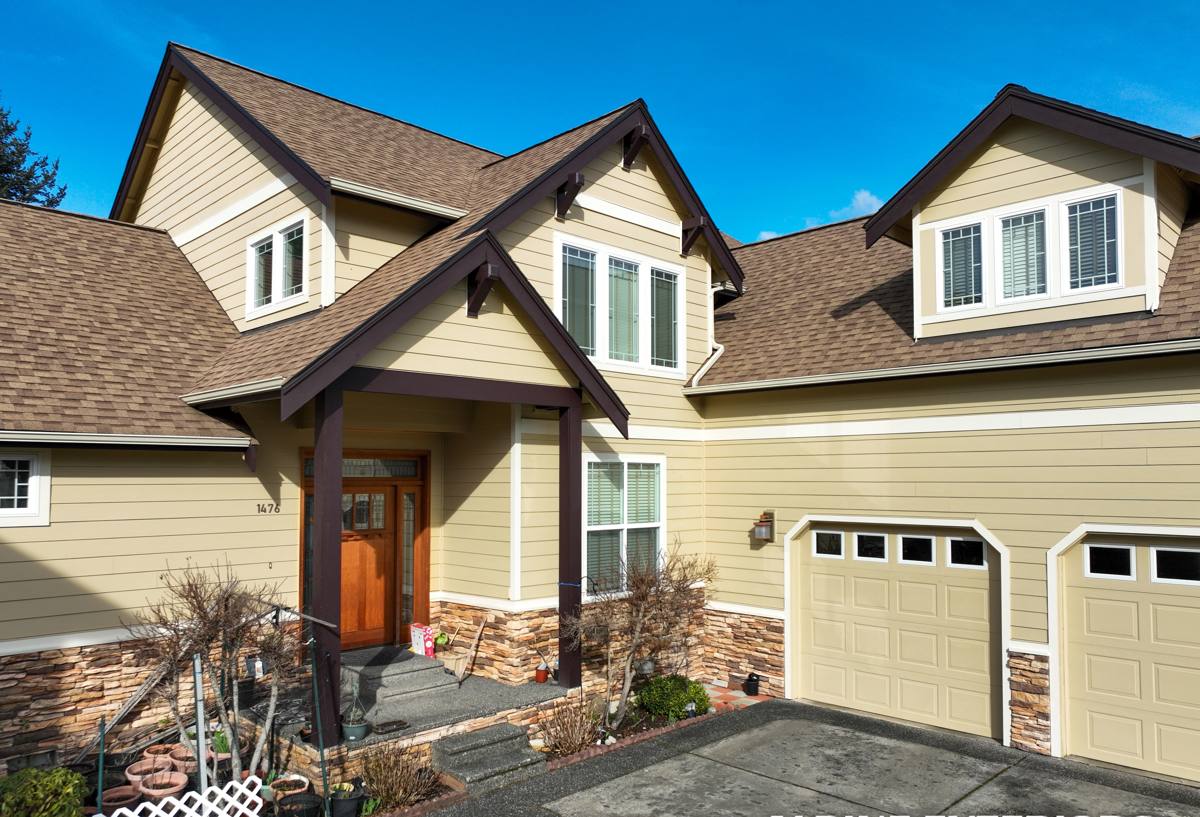
This page is about one thing specifically: James Hardie fiber cement siding on Venice homes. Not siding in general, not every material on the market — the product we install, why it fits this stretch of coastline, what a correct installation actually involves, and why working with a crew that already knows this area's conditions matters more here than it would somewhere with milder weather.
What Venice's Coastal Exposure Actually Does to Siding
Wind-Driven Rain
Straight-down rain is easy for most siding to shed. Wind-driven rain isn't, because it gets pushed sideways into laps, seams, and trim lines that were only ever designed to handle water moving downward. Venice sees this on both ends of the scale — regular afternoon thunderstorms through the warmer months, and the sustained, sideways-driving rain that comes with tropical systems and hurricane-force wind events. Every joint and seam in a home's siding gets tested at once during a real wind event, which is exactly when a marginal installation detail turns into an active leak.
Intense, Near Year-Round UV
Sarasota County gets some of the most consistent sun exposure in the country, and it doesn't let up for months at a time the way it does farther north. UV breaks down caulk and sealants, chalks and fades unstabilized finishes, and speeds up the wear cycle on any material that wasn't engineered to hold color and integrity under sustained direct sun.
Salt Air
Venice's Gulf-facing location means salt-laden air is a constant, not an occasional coastal storm effect. That salt content accelerates corrosion on fasteners, flashing, and any exposed metal trim behind or around the siding. A fastener that starts corroding loses holding strength and can open a small gap at the point it penetrates the siding — a direct entry point for water that only gets worse with time.
Hurricane-Force Wind Loads
Beyond the rain it carries, wind itself puts a mechanical load on siding — pulling at fastener points, working at loose seams, and testing every panel's attachment to the wall. Products and fastening patterns that aren't rated for the wind speeds this area can see are a real liability, not a hypothetical one.
Why We Install Only James Hardie Siding in Venice
Given what's outlined above, we standardized on James Hardie fiber cement for the homes we work on in Venice and the rest of Sarasota County. It isn't that other siding materials can't be installed at all — it's that fiber cement gives a wall assembly meaningfully more margin for error in a climate that combines hurricane-force wind, wind-driven rain, intense UV, and salt air more aggressively than most of the country.
A Non-Combustible, Dimensionally Stable Core
James Hardie siding is made from a mix of Portland cement, sand, and cellulose fiber, cured into a dense, stable board. Unlike wood-based siding, it doesn't swell, shrink, or wick moisture through its fiber structure with every wet-dry cycle, which means it holds its shape and its seams stay tight over years of Gulf Coast humidity swings. It's also non-combustible, which matters to insurers and homeowners alike.
HZ5 Engineering for This Climate
James Hardie manufactures regional formulations rather than one universal product. Siding sold and installed in our part of Florida is built to the HZ5 specification, engineered specifically for high-humidity, high-moisture-exposure conditions. That's a different mix than what ships to a dry inland climate — a manufacturing specification, not a marketing label.
ColorPlus Factory Finish
Rather than relying on paint applied on-site after installation, ColorPlus finishes are baked on in a controlled factory environment through multiple coats. That finish resists fading and chipping far better than field-applied paint holds up under Sarasota County's UV load, and it removes the recurring repaint cycle that wood siding demands.
What a Correct Installation Requires in Venice
The siding material is only part of the equation. A high-quality product installed with poor flashing or the wrong fasteners can fail faster than a modest product installed correctly, because the wall behind the siding is a system, not a single layer. On a Venice project, that means:
- A continuous, properly lapped water-resistive barrier behind the siding, with no gaps or reversed laps
- Flashing at every window, door, and wall penetration, sequenced correctly with the house wrap to shed water outward and downward
- Corrosion-resistant fasteners, sized and spaced to James Hardie's published specifications for our wind zone
- Correct panel gapping and sealed cut edges wherever Hardie's install guide calls for it
- A drainage gap or rainscreen detail that lets incidental moisture escape instead of sitting against the sheathing
- Proper clearance between the bottom of the siding and grade, decks, patios, or roof lines where water tends to pool
- Fastening patterns rated for local wind speeds, not the manufacturer's baseline minimum for a milder climate
Most of these details are invisible once the job is finished, which is exactly why they're worth asking about directly before hiring anyone for a re-side.
James Hardie Compared to Other Siding Options for Venice Homes
| Material | Moisture Behavior | Finish Durability | Fit for Venice's Climate |
|---|---|---|---|
| James Hardie fiber cement | Dimensionally stable; doesn't swell or wick like wood-based products | Factory-baked ColorPlus finish resists fade and chip | HZ5-engineered for high-humidity, coastal conditions |
| Vinyl siding | Doesn't absorb water, but distorts under sustained heat and UV | Color runs through the material but chalks and fades over time | Wind rating depends heavily on gauge and fastening pattern |
| LP SmartSide / engineered wood | Wood-fiber core absorbs moisture readily at cut edges | Relies on factory or field coatings with a shorter service life | More maintenance-sensitive in high-humidity, high-UV conditions |
| Cedar or primed wood | Absorbs and releases moisture continuously with humidity swings | Fully dependent on a repainting maintenance cycle | Not engineered specifically for hurricane wind zones |
This isn't a claim that every other product fails outright — it's why, for the specific demands of a Venice property, fiber cement is what we put on the wall instead.
What Affects the Cost of a Venice Siding Project
| Factor | Why It Matters |
|---|---|
| Home size and wall complexity | More corners, gables, and dormers mean more cuts, seams, and trim work |
| Product line and profile | Lap siding, board and batten, and shingle-style products carry different material and labor costs |
| Condition of the existing wall assembly | Sheathing repair or upgraded water-resistive barrier adds scope if the wall behind the old siding needs work |
| Trim and accessory scope | Corner boards, window and door trim, and fascia detailing add to both material and labor |
| Color and finish selection | Standard ColorPlus colors versus custom or premium finish options can shift material pricing |
Our Process for a Venice Siding Project
We start with an on-site look at the home, not a phone estimate, because the condition of the existing wall assembly matters as much as the square footage. From there, the process generally moves through:
- A walkthrough to assess current siding condition, existing flashing, and any signs of moisture behind the wall
- A written estimate that specifies product line, color, and the flashing and fastening approach for the job
- Removal of the old siding and inspection of the sheathing and water-resistive barrier underneath, with repairs made before anything new goes up
- Installation to James Hardie's published specifications, adjusted for this property's wind exposure and orientation
- A final walkthrough to confirm gapping, fastening, and trim details before we consider the job finished
Why Local Installation Experience Matters in Venice
Manufacturer install guides set the baseline, but a crew that's worked Venice's specific mix of conditions — Gulf-facing wind exposure, canal-adjacent humidity, and salt air that doesn't let up between storms — knows where the real-world weak points show up first on this coastline. That shows up in decisions a generic install guide won't spell out: which elevations need extra attention to fastening because they take the brunt of prevailing wind, where flashing tends to get shorted on a rushed job, and how much clearance actually holds up near canals, pools, and irrigation systems that keep the base of a wall damp longer than it should be. A crew with no track record in this specific climate is learning those lessons on your house.
Maintenance After Installation
One of the practical advantages of a correctly installed Hardie system in Venice is what it doesn't require. There's no annual repaint cycle to chase and no wood fiber slowly absorbing humidity between rain events. Realistic upkeep looks like:
- An occasional rinse to clear salt residue, pollen, and general grime, especially on Gulf-facing walls
- A visual check after any major storm for loosened trim or shifted flashing
- Keeping irrigation and landscaping from spraying directly onto the base of the wall
- Touch-up only where physical damage occurs, not as a routine maintenance item
If you're planning a re-side, replacing storm-damaged siding, or just want a straight answer about what your Venice home actually needs from its exterior, we're happy to take a look. Reach out below for a free, no-pressure estimate.