 Sarasota Roofing
 Siding That Has to Perform in Lakewood Ranch's Climate
Lakewood Ranch is one of the largest master-planned communities in the country, and it straddles the line between Sarasota and Manatee counties. Homes throughout the community face the same weather the rest of our region deals with: hurricane-force wind gusts during storm season, some of the most intense year-round UV exposure in the continental United States, and wind-driven rain that gets pushed sideways into wall assemblies instead of falling straight down where a roof overhang can shed it. Sitting back from the immediate coastline doesn't exempt a Lakewood Ranch home from salt-tinged air moving inland off the Gulf during onshore wind events — it's a lighter dose than a beachfront property takes on, but it's still a real factor working on a wall system over years, not a coastal-only concern.
This page is about one job, done correctly: installing James Hardie fiber cement siding on a Lakewood Ranch home. Not a general siding overview and not a sales pitch — what this climate actually demands from a wall system, what a correct Hardie installation involves, and why it matters that the crew doing the work already knows this community rather than treating it like any other job site.
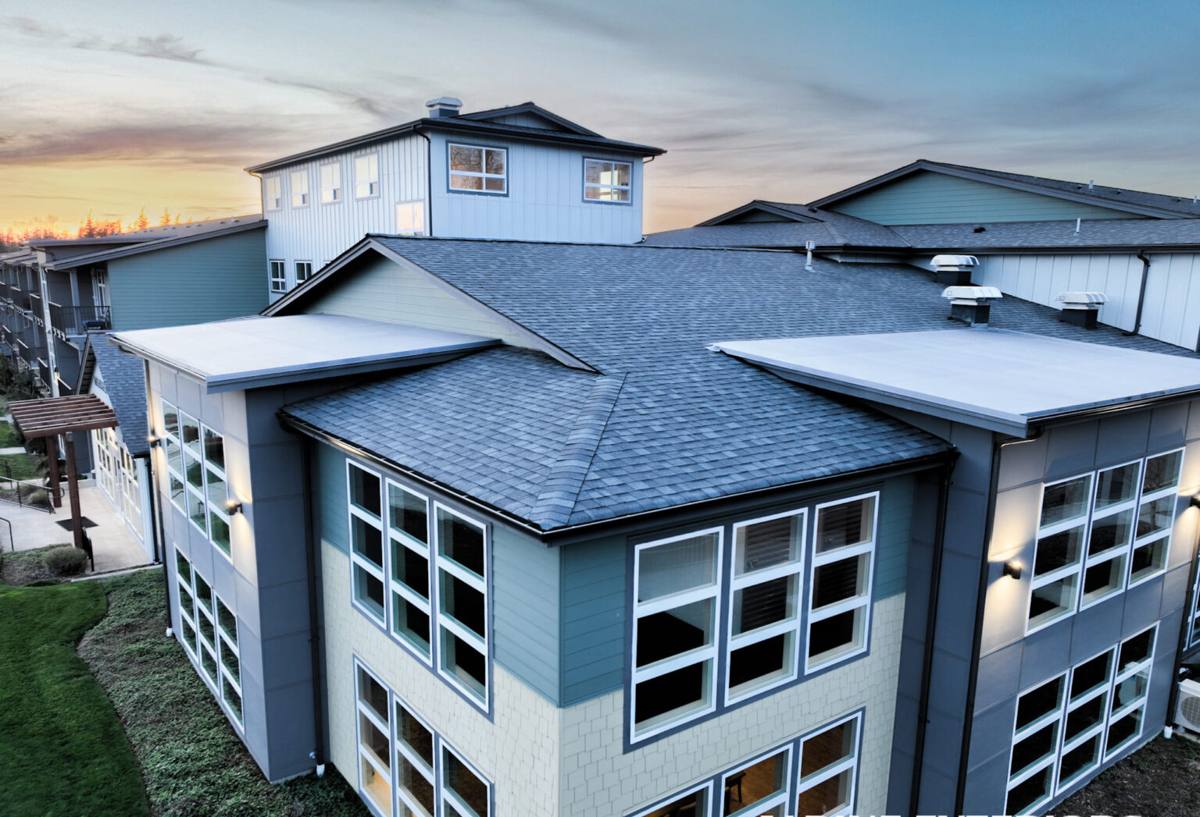
What James Hardie Fiber Cement Siding Is
James Hardie siding is fiber cement — a mix of Portland cement, sand, and cellulose fiber cured into a dense, dimensionally stable board. It's non-combustible, which matters in a state where wildfire isn't the primary concern but ember and flame-spread resistance still factor into some insurance underwriting and code discussions. Just as important day to day, it doesn't absorb and release moisture the way wood or wood-composite products do, so panels and boards stay flat and seams stay tight through Florida's constant humidity swings instead of cupping, swelling, or telegraphing movement through the finish over time.
We install James Hardie exclusively — not vinyl, not LP SmartSide or other engineered wood, not Cemplank, Allura, primed spruce, or cedar. That's a standard we hold ourselves to based on how each of those products actually performs under sustained heat, humidity, and wind exposure like Lakewood Ranch sees, not a claim that every alternative is unusable everywhere. It's why the rest of this page can go deep on one product done right instead of hedging across several.
Built for Heat and Humidity: HZ10 Engineering
James Hardie manufactures regionally-formulated siding rather than one universal board. Homes in hot, humid Gulf Coast climates like Sarasota and Manatee counties receive the HZ10 product line, engineered specifically for high-heat, high-humidity conditions and the moisture cycling that comes with them. That's a different formulation than the HZ5 line sold in colder, drier parts of the country, where freeze-thaw cycling — not sustained humidity — is the bigger engineering target. It's not a marketing label; it's a manufacturing specification tuned to how this specific climate behaves.
ColorPlus Factory Finish and Florida's UV Load
Most Hardie siding installed here carries ColorPlus Technology, a finish baked onto the board in multiple coats under controlled factory conditions before it ever reaches the site. That matters more in Florida than in milder climates, because our UV exposure is among the most intense in the country, and field-applied paint film breaks down, chalks, and fades faster under that kind of sustained sun than a factory-cured finish does. ColorPlus siding also carries a finish warranty that's separate from the substrate warranty on the board itself — worth understanding as two distinct guarantees bundled into one product, not one blanket promise.
Matching Product and Style to Lakewood Ranch Homes
Lakewood Ranch's villages carry a real mix of architectural styles — Mediterranean-influenced stucco-look elevations, Florida coastal cottage detailing, and craftsman touches all show up across the community — and Hardie's product lines cover most of what we see on a given block. HardiePlank lap siding handles the traditional horizontal reveal that dominates most neighborhoods. HardiePanel gives a cleaner vertical or board-and-batten look, often used as a gable accent or on more contemporary elevations. HardieTrim finishes corners, fascia, and window and door surrounds with a material that expands and contracts at the same rate as the field siding, which keeps those transitions tight instead of opening up a gap a few seasons in.
Choosing between materials for a Lakewood Ranch home usually comes down to how each one actually holds up against this specific set of conditions, not just sticker price at the estimate stage:
| Material | Wind & Impact Resistance | Humidity/Moisture Behavior | UV & Color Retention | Typical Maintenance |
|---|---|---|---|---|
| Vinyl | Can crack or blow off in severe wind; lower impact resistance | Doesn't absorb moisture, but can warp in sustained heat | Fades and chalks over time, especially darker colors | Low, but limited repair options once faded |
| Engineered wood (e.g. LP SmartSide) | Reasonable wind performance when installed to spec | Wood-based core is sensitive to sustained moisture exposure at cut edges and seams | Requires field-applied finish; UV wears on paint film | Moderate to high — edge sealing and repainting cycles |
| Cedar | Moderate; dependent on fastening and maintenance condition | Natural wood movement with humidity; prone to moisture issues if finish lapses | Graying and finish breakdown without regular upkeep | High — regular refinishing needed in this climate |
| James Hardie fiber cement | Engineered and rated for high-wind installation per manufacturer specs | Dimensionally stable; HZ10 formulation built for humidity cycling | ColorPlus factory finish resists fading and chalking | Low — periodic rinsing, no refinishing cycle |
HOA and Deed Restriction Considerations
Many neighborhoods within Lakewood Ranch are organized under community or village associations with architectural review requirements that govern exterior materials and, often, an approved color palette. That's not unusual for a planned community of this size, but it's easy for a contractor unfamiliar with the area to miss until a submission gets kicked back and the schedule slips. We build that review step into the project timeline from the start rather than treating it as an afterthought, and a factory ColorPlus finish makes it straightforward to document an exact, reproducible color for an association submission instead of relying on a field-mixed match that can vary by batch. Review requirements and approved palettes differ by neighborhood within Lakewood Ranch, so it's worth checking your specific association's guidelines before finalizing a color or siding profile.
What a Correct Installation Involves
The product only performs as engineered if it goes on the way the manufacturer specifies. Most siding failures we're called out to inspect trace back to an installation shortcut or a skipped detail, not a defective board.
Moisture Management Behind the Siding
A correct install starts with a weather-resistive barrier installed and lapped properly behind the siding, with flashing integrated at every penetration, window, and door so any incidental moisture that gets past the cladding has a clear path to drain rather than pooling against the sheathing. That drainage plane matters more here than in a drier climate, given how much humidity and wind-driven rain a Gulf Coast wall assembly deals with over a typical year.
Fastening and Wind Resistance
Florida Building Code sets wind-load requirements that vary by wind zone, and James Hardie publishes a specific fastening schedule — fastener type, spacing, and embedment — tied to those wind ratings. Using the correct fastener grade also matters given how much salt-influenced air moves through this part of the Gulf Coast even away from the immediate shoreline; a corrosion-resistant fastener holds its grip far longer than a standard-grade one exposed to the same air over years.
Flashing, Joints, and Trim Details
Butt joints, window and door head flashing, and kick-out flashing where a roofline meets a wall are where most water intrusion problems actually originate, not the flat field of siding itself. Caulking has a specific, limited role in Hardie's installation details — oversealing joints that are supposed to allow drainage traps moisture behind the board instead of letting it escape, which is one of the more common mistakes we see on re-inspections of other contractors' work.
Our Process, Start to Finish
- On-site inspection and measurement, including a look at the existing sheathing and framing condition before any pricing is finalized
- Confirming your association's architectural review and color approval requirements, if your Lakewood Ranch neighborhood has them, and building that timeline into the schedule
- Pulling the correct building permit for your property, since Lakewood Ranch spans both Sarasota and Manatee counties and the permitting office differs depending on which side of the line you're on
- Removing existing siding and inspecting the sheathing and framing underneath for hidden moisture or wind damage before anything new goes on
- Installing the weather-resistive barrier and flashing system correctly at every penetration, window, and door
- Installing James Hardie siding and trim to manufacturer specification and the wind-fastening schedule required for your zone
- Finishing joints, caulking, and trim details per Hardie's install specs — not a generic approach applied regardless of product
- Final walkthrough and punch list before we consider the job complete, followed by full cleanup and debris haul-away
Why a Crew That Already Works Lakewood Ranch Matters
A crew that mostly works elsewhere in the region can still do competent work here, but Lakewood Ranch has variables that come up more often in this community than on a typical stand-alone lot — architectural review processes that differ by village association, a permitting split across two counties depending on exactly where a property sits, and a real range of elevation styles that calls for matching the right Hardie product line and trim profile to the house rather than defaulting to one look. Working this community regularly means we're not learning those variables mid-project. We know which county office to file with, what a given association typically expects in a submission package, and how these homes are actually built, because we've already done this work on houses like yours.
That familiarity also produces a more accurate first estimate and fewer surprises once work is underway, because the inspection and proposal account for how Lakewood Ranch actually works rather than applying a generic checklist built for somewhere else.
Protecting the Investment: Maintenance
- Rinse the siding periodically to clear pollen, dust, and any salt residue before it builds up on the surface
- Check caulking and trim joints once a year, and again after any significant storm, for gaps or displacement
- Adjust irrigation heads so they don't spray directly onto the siding — a common issue in a heavily landscaped community and one that keeps a wall surface damp longer than it should be
- Keep landscaping trimmed back from exterior walls to maintain airflow and reduce trapped moisture at the base of the siding
- Address any impact damage from storm debris or lawn equipment promptly rather than letting it sit through another wet season
- Avoid aggressive pressure washing directly at joints and seams, which can force water behind the boards rather than just cleaning the surface
If you're planning a siding project on a Lakewood Ranch home, we're glad to walk the property, talk through your association's requirements if you have them, and put together a free, no-pressure estimate for a James Hardie installation built for this climate.