 Sarasota Roofing
 Deck Replacement Built for University Park's Climate
University Park sits inland from the coast, but that doesn't spare it from what Sarasota County weather does to an outdoor deck. Intense year-round UV breaks down wood fibers and fades or chalks composite boards. Wind-driven rain during summer storms and hurricane season finds its way into every gap in flashing, fastener holes, and end grain. Salt-laden air still reaches this far inland on a breeze off the Gulf, and it's hard on metal hardware, screws, and railing brackets even where you can't see them. Add in the humidity that keeps ground contact and framing members damp for days after a storm, and you've got a climate that ages a deck faster than most homeowners expect based on the deck's actual age.
If your deck is boards-down and cosmetically fine but the structure underneath is compromised, patching it is a short-term fix. Replacement is about rebuilding the whole system — footings, framing, fasteners, and decking — so it holds up to what University Park's weather actually does over the next 15 to 25 years, not just what it looks like today.
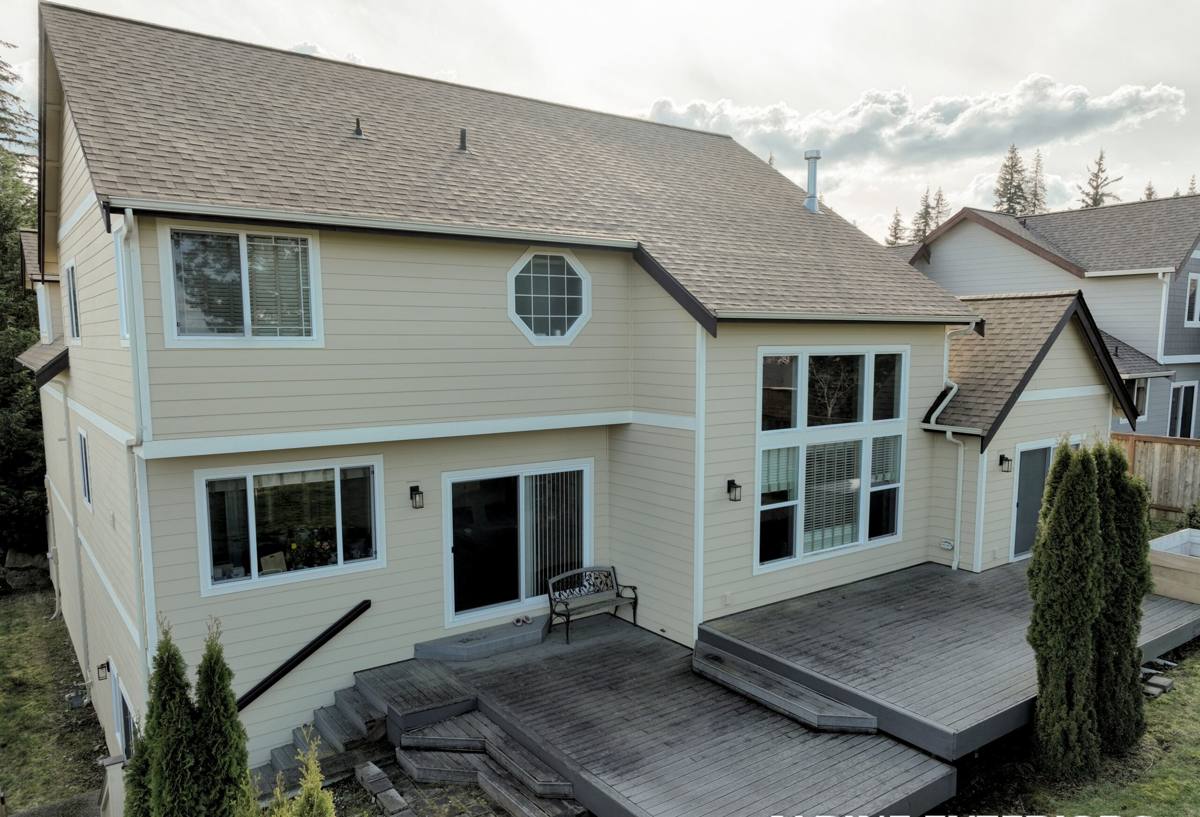
Signs a Deck Needs Replacement, Not Repair
Homeowners often call us about a soft board or a wobbly rail, and the real problem turns out to be underneath. A few things we look for during an evaluation:
- Soft, spongy, or spring-y decking when you walk across it, especially near the house or stair landing
- Rust streaks or dark staining coming from screw heads and joist hangers
- Gaps or separation where the deck ledger board meets the house — a common path for water intrusion
- Wobble in the railing posts, which usually means the post connection to the framing has weakened, not just the railing itself
- Visible rot, soft spots, or insect damage in support posts, beams, or joists when checked from underneath
- A deck that was never properly attached with hurricane-rated hardware to begin with
Any one of these on its own might be repairable. Several together, or anything involving the ledger board or the main support posts, usually means the structure has reached the point where replacement is the honest recommendation.
What a Correct Deck Replacement Actually Involves
The structure comes first
The decking boards are the part everyone sees, but the framing underneath is what determines whether the deck is safe and how long it lasts. A proper replacement starts with footings sized and set to current Florida Building Code requirements, not whatever depth the original builder used decades ago. From there:
- Ledger board attachment is flashed and fastened to keep water from getting behind the house siding or into the rim joist
- Beams and joists are sized for the actual span and load, not just matched to what was there before
- Post-to-beam and joist-to-beam connections use hardware rated for wind uplift, since a deck attached to the house needs to resist both downward load and the uplift forces that come with hurricane-force wind
- All structural fasteners and hardware are stainless steel or coated for the corrosive, salt-influenced air common across Sarasota County — standard hardware store hardware corrodes faster here than it does inland in drier climates
Then the decking surface
Whatever decking material you choose, it's fastened, gapped, and finished to shed water instead of trapping it. Board spacing accounts for expansion and contraction in Florida's heat swings, and any picture-framing or trim details are installed so water doesn't pool against end grain, which is where wood decking rots first.
Choosing the Right Decking Material
There's no single "best" decking material — the right choice depends on your budget, how much upkeep you want to do, and how the deck will be used. Here's how the common options actually perform in this climate:
| Material | Upfront Cost | Realistic Lifespan Here | Maintenance | Trade-offs |
|---|---|---|---|---|
| Pressure-treated pine | Lowest | 10-15 years | Sealing/staining every 1-2 years | Prone to splitting and graying without upkeep; most affordable entry point |
| Capped composite (e.g. Trex, TimberTech) | Mid-high | 25-30+ years | Occasional washing | Higher upfront cost; resists fading and moisture far better than wood |
| Uncapped/basic composite | Mid | 15-20 years | Periodic cleaning | Can absorb moisture and mold at cut edges without a cap layer |
| Tropical hardwood (e.g. Ipe) | High | 25+ years | Oiling to maintain color, or left to gray naturally | Very dense and durable but heavier, harder to work with, and pricier |
| PVC decking | High | 25-30+ years | Minimal | Fully synthetic, very stable in heat and moisture, but can look less natural to some homeowners |
We install materials from any of these categories. Our job is to lay out the honest trade-offs — what you'll spend now versus what you'll spend on upkeep and how soon you'll be looking at another replacement — so you're picking based on your actual priorities, not a sales pitch.
Why we're careful about lower-grade composite
Not all composite decking is built the same way. Boards without a full cap layer can absorb water at the cut ends and along the surface over time, which shows up as swelling, discoloration, or mold growth in a humid climate like Sarasota's faster than it would in a drier region. We don't tell homeowners a product is bad — we tell them what its moisture behavior and warranty terms actually are, so they know what they're buying before it's installed.
Permits and Code Requirements in Sarasota County
Deck replacement in Sarasota County isn't a project you can legally skip a permit on if you're altering or rebuilding the structure — and for good reason. Florida Building Code sets specific requirements for footing depth, ledger attachment, guardrail height, baluster spacing, and stair geometry, all of which matter more here because of wind load requirements tied to our hurricane exposure. A permitted, inspected deck also matters when you go to sell the home; an unpermitted structure can become a negotiating problem or an insurance issue later. We handle the permit application and coordinate inspections as part of the job, so you're not stuck chasing paperwork or wondering if the work will pass.
Our Process for University Park Homeowners
- On-site evaluation. We look at the existing structure from underneath where possible, check the ledger connection, and assess footing condition before quoting anything.
- Honest scope and material discussion. We walk through decking options and what they'll cost you over time, not just up front.
- Permitting. We prepare and submit the permit package to Sarasota County and schedule required inspections.
- Demolition and disposal. The old deck comes down and is hauled off — we don't leave debris for you to deal with.
- Structural rebuild. Footings, framing, ledger flashing, and hardware go in to code, built for wind and moisture, not just to pass a quick glance.
- Decking, railing, and finish work. Boards, stairs, and railings are installed and finished so water sheds properly and edges are clean.
- Final walkthrough and inspection sign-off. You see the finished deck and we confirm everything cleared inspection.
Keeping a New Deck in Good Shape
Whatever material you choose, a little seasonal attention goes a long way in this climate:
- Keep gutters and downspouts clear so runoff isn't dumping extra water onto or under the deck
- Sweep off leaves, pine needles, and organic debris regularly — trapped moisture underneath is what starts rot and mold
- Rinse composite or PVC decking periodically to prevent pollen and mildew buildup, especially in shaded or tree-covered yards
- Reseal or oil wood decking on the schedule the manufacturer recommends, not just when it starts looking gray
- Have railing posts and stair connections checked periodically — loose hardware is easier to catch early than after it fails
Why It Matters That We Already Work in University Park
University Park has a mix of established homes on lake and golf-course lots with mature tree canopy, which means shade, leaf litter, and irrigation runoff are part of the picture for a lot of decks here — on top of the same heat, storms, and salt air affecting the rest of Sarasota County. A crew that already works in this neighborhood knows what that combination does to a deck over time, has a working relationship with the county permitting process, and isn't guessing at footing depth or wind-load hardware requirements for the first time on your project. That familiarity shows up in fewer surprises during the job and a deck that's actually built for where it sits, not a generic spec pulled from a colder, drier region.
If your deck is showing its age or you're just not sure whether it needs repair or full replacement, we're happy to take a look and give you a straight answer. Fill out the form below to schedule a free, no-pressure estimate.