 Sarasota Roofing
 Why Decks in Osprey Wear Out Differently Than Decks Inland
Osprey sits in the part of Sarasota County where the Gulf and the Intracoastal Waterway shape everything about how a structure ages, and a deck is one of the first things on a property to show it. Homes here deal with a combination most inland markets never see at the same intensity: near-constant UV exposure, salt-laden air drifting in off the water, sudden wind-driven rain, and the occasional direct hit from a tropical system. Individually, any one of these would shorten a deck's life. Together, they compound each other.
UV breaks down the surface fibers of wood and the resin binders in composite decking, drying out lumber and fading color on any material. Salt air is corrosive to metal fasteners, joist hangers, and railing hardware, and it works its way into any gap or crack. Wind-driven rain doesn't just fall on a deck — it drives sideways and up under boards, into ledger connections, and behind fascia, which is exactly where rot and hidden hardware corrosion start. None of this is unique to Osprey, but the concentration of it, combined with the humidity that keeps moisture sitting on and under a deck longer than in a drier climate, is why decks here often need replacement sooner than the manufacturer's brochure would suggest.
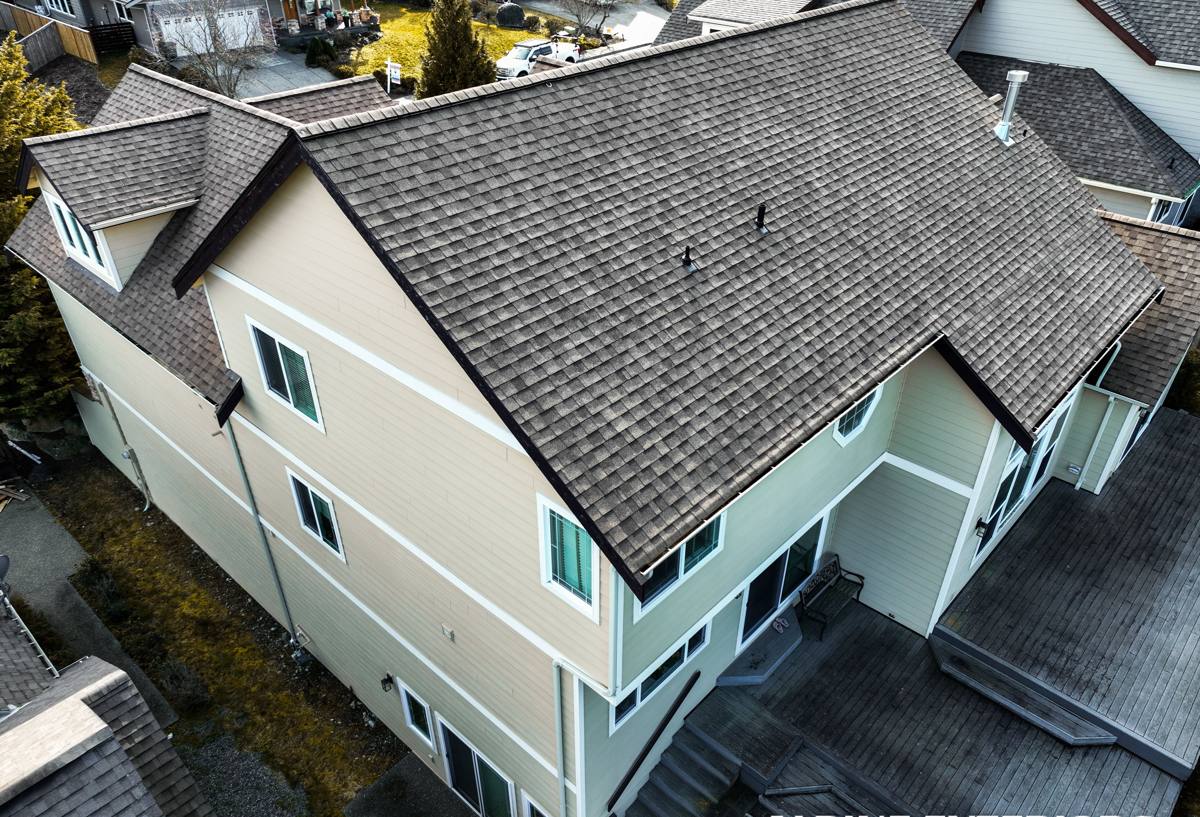
Signs a Deck Needs Replacement, Not Just Repair
Not every deck problem calls for a full teardown. But there's a point where patching boards or re-tightening railings is just delaying a bigger, more expensive failure. Here's how we tell the difference on a walkthrough:
- Soft, spongy, or bouncy decking boards, especially near the house or at board ends
- Rust staining or streaking around fasteners, post bases, or joist hangers
- Any movement or gap where the ledger board meets the house — this is a structural safety issue, not cosmetic
- Posts that feel loose at the base or show soft wood when probed with a screwdriver
- Cracking, splintering, or checking that runs deep into the board rather than just the surface
- Railings that flex noticeably when leaned on
- A deck that's more than 15-20 years old and has never had the substructure inspected
If what you're seeing is limited to a handful of surface boards and the frame underneath is solid, repair can make sense. Once the framing, ledger connection, or multiple structural posts are compromised, replacement is the honest recommendation — patching a failing frame just moves the failure point somewhere else on the deck.
What a Correct Deck Replacement Actually Involves
It Starts Below the Decking, Not At It
A deck is only as good as what's underneath it. A proper replacement means evaluating and, where needed, rebuilding the substructure — ledger board attachment, joists, beams, posts, and footings — before a single new decking board goes down. In a coastal county like Sarasota, that substructure work should use corrosion-resistant, coastal-rated fasteners and connectors, not the standard-grade hardware that's fine in a drier inland climate but corrodes fast here.
Ledger Attachment
The ledger board — where the deck framing bolts to the house — is the single most common point of catastrophic deck failure nationwide, and salt air makes fastener corrosion at that connection happen faster in a place like Osprey. A correct installation uses proper flashing to keep water out from behind the ledger, lag bolts or through-bolts rated for the load, and hardware sized and spaced to current code, not just "what was there before."
Framing and Hardware
Joists, beams, and posts should be sized for the actual span and load, connected with coated or stainless structural hardware, and set on footings that meet local frost and wind-uplift requirements — wind uplift being the relevant one here, not frost. Every joist hanger, post base, and hurricane tie is a place salt air can start corrosion, so material choice on hardware matters as much as on the decking itself.
Decking, Railings, and Fasteners
Whatever decking material is chosen, it should be installed with proper spacing for drainage and expansion, hidden or coated fasteners to reduce the number of exposed metal points, and railings that meet current code height and baluster spacing — a lot of older Osprey decks were built to codes that have since tightened up.
Choosing a Decking Material for Osprey's Climate
There's no single "best" decking material — there's a best fit for your budget, how the deck will be used, and how much maintenance you're willing to do. Here's how the common options actually perform in a hot, humid, salt-air environment like Osprey's:
| Material | Upfront Cost | Maintenance | How It Handles Salt Air & UV |
|---|---|---|---|
| Pressure-treated pine | Lowest | Annual sealing/staining recommended | Needs consistent upkeep or it grays, splinters, and checks; fasteners are the weak point |
| Composite decking | Mid-to-high | Occasional washing, no sealing/staining | Fade-resistant capped composites hold up well; uncapped or older-generation composites can absorb moisture and mildew |
| PVC/cellular decking | Highest | Lowest — wash as needed | Doesn't absorb moisture, very stable in heat and salt air, but can feel warmer underfoot in full sun |
| Tropical hardwood (e.g., ipe) | High | Periodic oiling to maintain color | Naturally dense and rot-resistant, but installation is sensitive — pre-drilling and fastener choice matter a lot |
Our default recommendation for most Osprey homeowners is a quality capped composite or PVC board, specifically because the maintenance burden of real wood in this climate is higher than most people expect — sealing a deck every year in intense Florida sun is a commitment that tends to slip. That said, plenty of homeowners are happy with pressure-treated wood if they're realistic about the upkeep, and we'll install whichever material fits your budget and expectations. We'll walk through the honest trade-offs for your specific deck rather than push one product line.
Permitting and Florida Building Code in Sarasota County
Deck replacement in Sarasota County isn't a weekend project you can skip past the permit office on. Because decks are structural attachments to the home and have to meet Florida's wind-load requirements, replacement work typically requires a permit and inspection, whether the deck is a small platform off a slider or a larger elevated structure over a canal-front lot. Key things a compliant deck replacement addresses:
- Proper engineering or code-compliant span tables for joist and beam sizing
- Ledger flashing and fastening that meets current wind-uplift standards
- Guard and railing height, baluster spacing, and graspable handrail requirements
- Footing depth and post connections adequate for coastal wind exposure
- Final inspection sign-off before the deck is considered complete
Skipping permits on a deck rebuild can create real problems later — at resale, with insurance claims after storm damage, or if the county flags unpermitted work during an unrelated inspection. We pull permits as a standard part of the job, not an upsell.
Our Deck Replacement Process
- On-site evaluation. We inspect the existing deck's framing, ledger connection, posts, and footings to determine what's actually salvageable versus what needs to come out.
- Written scope and material options. You get a clear plan covering substructure work, decking material choices, railing, and code items specific to your property — no vague allowances.
- Permitting. We handle the Sarasota County permit application and coordinate required inspections.
- Demolition. Old decking, framing, and hardware are removed and hauled off; anything hidden by the old boards (rot, prior water intrusion) gets addressed before rebuilding.
- Structural rebuild. Ledger, framing, posts, and footings are built or replaced to current code with coastal-rated hardware.
- Decking and railing installation. Boards, fasteners, and railings go in per manufacturer spec and code, with attention to drainage gaps and fastener pattern.
- Final walkthrough and inspection. We review the finished deck with you and close out the permit with the county.
Why Hiring a Crew That Already Works Osprey Matters
Deck replacement isn't identical everywhere in Florida, let alone everywhere in the country. A crew that regularly works Osprey and the surrounding Sarasota County waterfront neighborhoods already knows the local permitting process, the wind-load requirements that apply here, and the practical realities of building on canal-front and low-lying lots — things like footing placement relative to water tables and how to handle decks that tie into seawalls or docks without overstepping into separate marine-construction permitting. That local familiarity shortens the permitting timeline and avoids the rework that happens when a crew unfamiliar with the county's inspectors has to redo a detail after a failed inspection.
It also means we've seen how decks in this specific area actually fail over time — which hardware corrodes first in salt air, which decking products handle the UV and humidity combination well versus poorly, and which framing details need extra attention on an older Osprey home versus new construction. That's the kind of judgment that only comes from working the same climate and code jurisdiction repeatedly, not from a general contractor's national playbook.
What Deck Replacement Typically Costs
Exact pricing depends on deck size, substructure condition, height/elevation, decking material, and railing style, but here's a general sense of what drives the cost up or down on an Osprey deck replacement:
| Cost Factor | Lower Cost | Higher Cost |
|---|---|---|
| Decking material | Pressure-treated pine | PVC, high-end composite, tropical hardwood |
| Substructure condition | Framing and footings reusable | Full rebuild of joists, beams, posts, footings |
| Height/elevation | Ground-level or low deck | Elevated deck requiring taller posts and additional bracing |
| Railing | Standard wood or basic composite rail | Cable, glass, or custom railing systems |
| Size and layout | Simple rectangular footprint | Multi-level, curved, or wraparound designs |
Most straightforward residential deck replacements in this area land in a broad middle range once you account for material and substructure work; a small deck with a sound frame will cost meaningfully less than a large, elevated deck needing full structural replacement. We'll give you actual numbers, not a ballpark, once we've seen the deck in person.
Maintaining a New Deck in Osprey's Climate
Whatever material you choose, a few habits go a long way toward getting the full lifespan out of a new deck in this climate:
- Rinse off salt residue and debris periodically, especially on decks closer to the water
- Check and re-tighten railing hardware once a year — vibration and corrosion loosen fasteners over time
- Keep an eye on the ledger flashing area after major storms for any signs of water intrusion
- If you chose wood, stay on a sealing schedule rather than waiting until it visibly needs it
- Clear standing water and debris from between boards after heavy rain to reduce moisture retention
If you're dealing with a soft, aging, or storm-damaged deck in Osprey, we're happy to take a look and give you a straight assessment of what it needs. Reach out for a free, no-pressure estimate using the form below.