 Sarasota Roofing
 Siding That Has to Work in Sarasota's Climate, Not Just Look Good
University Park sits in one of the more demanding climates in the country for exterior building materials. Homes here deal with hurricane-force winds during storm season, wind-driven rain that finds every gap in a poorly sealed wall system, intense year-round UV that bakes paint and coatings, and salt-laden air drifting in off the Gulf that accelerates corrosion and material breakdown. Siding is not a cosmetic afterthought in this environment — it is the first line of defense between your home's structure and everything Sarasota County's weather throws at it.
That reality shapes everything about how we approach siding installation for University Park homeowners: the product we use, the way we detail moisture management, the fasteners we choose, and the sequence we follow on the job site. A siding job that would hold up fine in a mild inland climate can fail here in a few storm seasons if it's not built for coastal Florida conditions from the start.
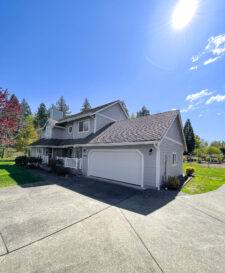
What "Correct" Siding Installation Actually Involves
Siding installation looks simple from the ground — boards go up, seams get covered, trim goes around the openings. What separates a job that lasts twenty-plus years from one that causes problems in five is almost entirely in the details you can't see once the house is finished.
Moisture Management Behind the Cladding
Every siding installation is really a water-management system with a finish layer on top. That means a properly lapped weather-resistant barrier, correctly flashed windows and doors, drip caps and kick-out flashing where rooflines meet walls, and gaps left at the bottom of the siding so any water that does get behind it has somewhere to drain and evaporate. Skip these steps and even the best siding material in the world will eventually let moisture into the wall cavity — a serious problem in a climate this humid.
Fastening for Wind Load
Sarasota County's building code requires siding to be installed to specific wind-load standards, and for good reason. Nailing patterns, fastener spacing, and fastener type all affect how well a wall system holds up when hurricane-force gusts hit it broadside. Manufacturer installation instructions spell out exact fastener schedules for high-wind zones, and those instructions aren't a suggestion — following them (or deviating from them) is often what determines whether siding stays attached in a serious storm.
Following Manufacturer Specifications
Warranties on quality siding products are conditioned on installation matching the manufacturer's written specifications — clearance from grade and roofing, fastener penetration depth, joint treatment, and caulking requirements all matter. A crew that cuts corners on these details can void a warranty without the homeowner ever knowing until there's a claim to file.
Why We Install Only James Hardie Fiber Cement
We made a decision early on to install one siding system — James Hardie fiber cement — rather than offer a menu of vinyl, wood-based, or other fiber cement brands. That's not a marketing gimmick. It's because fiber cement, and specifically Hardie's engineered product lines, perform better under the conditions University Park homes actually face than the alternatives we chose not to carry.
| Factor | James Hardie Fiber Cement | Vinyl Siding | Wood or Engineered Wood |
|---|---|---|---|
| Wind and impact resistance | Rigid, holds up well to wind-borne debris | Can crack or blow off in high winds | Moderate; dents and cracks under impact |
| Moisture behavior | Non-combustible, engineered to resist moisture damage when properly installed | Sheds water but can trap moisture behind it if not vented correctly | Prone to swelling, rot, and insect damage if moisture gets in |
| UV and color stability | ColorPlus factory finish resists fading from intense Florida sun | Can fade and become brittle over time in strong UV | Paint requires more frequent recoating in intense sun |
| Salt air exposure | Fiber cement composition holds up well near coastal air | Generally stable but can chalk and discolor | More vulnerable to accelerated wear near salt air |
| Maintenance burden | Low — no repainting needed for years with ColorPlus finish | Low but limited repair options if damaged | Higher — regular painting, sealing, and pest monitoring |
Every siding material involves trade-offs, and we're not going to pretend otherwise. Vinyl is inexpensive and easy to install, but it's a plastic product that can warp, fade, and crack under prolonged UV and heat — and it offers little in the way of impact resistance during storms. Wood and engineered wood products can look great, but in a humid, salt-air climate they demand a level of ongoing maintenance most homeowners don't want to keep up with. James Hardie's HZ product lines are specifically engineered for climate zones like ours, and that engineering — combined with a transferable warranty backed by one of the largest fiber cement manufacturers in the country — is why it's the only product we put our name behind.
HardiePlank vs. HardiePanel — Choosing the Right Profile
University Park has a mix of architectural styles, and Hardie's product lines cover most of them. HardiePlank lap siding gives you the traditional horizontal board look in a range of exposure widths and textures (smooth or cedar-grain). HardiePanel is a vertical sheet product often used for accent walls, gable ends, or more modern architectural styles. HardieTrim finishes out corners, fascia, and window and door surrounds so the whole exterior reads as one coordinated system rather than mismatched materials.
Our Siding Installation Process
Every project follows the same disciplined sequence, whether it's a full re-side or a targeted repair-and-replace on a section of wall.
- Inspection and scope. We walk the entire exterior, checking for existing moisture damage, soft sheathing, and problem areas around windows, doors, and roof-to-wall transitions before quoting anything.
- Tear-off and substrate check. Old siding comes off and we inspect the sheathing underneath. Any rot or damage gets addressed before new material goes up — covering a bad substrate with new siding just hides the problem.
- Weather-resistant barrier and flashing. A new water-resistive barrier is installed with correctly lapped seams, and flashing is installed at every penetration and transition point.
- Hardie installation to manufacturer spec. Fastener type, spacing, and clearances follow James Hardie's written installation instructions for our wind zone, keeping the warranty intact.
- Trim, caulking, and finish detailing. Corners, trim boards, and joints are finished and sealed according to spec, not just to look clean from the curb.
- Final walkthrough. We review the completed work with the homeowner and address anything before calling the job done.
Matching University Park's Look and HOA Expectations
Many homes in University Park were built as part of a coordinated community development, which often means architectural guidelines and, in many cases, an HOA with expectations around exterior colors, trim profiles, and siding styles. Because we've worked in communities like this throughout the Sarasota area, we're used to reviewing HOA color palettes and architectural standards before we ever start ordering material — it's far easier to confirm a ColorPlus finish color is approved up front than to find out after installation that it doesn't match community guidelines. James Hardie's factory-finished color palette gives homeowners a wide range of options while keeping that finish consistent and durable, which tends to line up well with the kind of uniform, well-kept streetscape planned communities are designed to maintain.
What Drives the Cost of a Siding Project
Every home is different, so we don't quote a project until we've actually looked at it — but there are a handful of factors that consistently move the number up or down.
| Cost Factor | Why It Matters |
|---|---|
| Home size and wall area | More square footage of wall surface means more material and labor |
| Number of stories | Second-story work requires additional staging, safety equipment, and time |
| Existing substrate condition | Rotten or damaged sheathing found during tear-off adds repair work before new siding goes on |
| Siding profile and trim detail | Vertical panel accents, complex trim work, and custom detailing take more labor than a straightforward lap-siding job |
| Number of openings | Every window and door requires flashing and trim work, which adds time relative to plain wall runs |
| Full re-side vs. partial replacement | Partial work requires careful matching to existing material and color; full re-sides are more straightforward to price per square foot |
Signs Your University Park Home May Need New Siding
Because siding failures often start behind the surface, it's worth knowing what to watch for from the outside.
- Visible cracking, warping, or buckling in the siding panels
- Soft or spongy spots when you press on the wall near the bottom edge
- Peeling paint or bubbling finish, especially on south- and west-facing walls that take the most sun
- Persistent mildew or discoloration that comes back soon after cleaning
- Gaps opening up at seams, corners, or around window and door trim
- Rising energy bills that can't be explained by anything else, which sometimes points to a compromised wall system
- Visible damage after a storm — missing sections, dents, or lifted panels
Any one of these on its own might be minor. Several together, especially on a home that's due for an exterior update, usually means it's worth having someone take a closer look before small issues turn into sheathing repairs.
Why Hiring a Crew That Already Works in University Park Matters
Siding installation isn't just a product decision — it's an execution decision, and execution is where most siding problems actually originate. A crew that regularly works in University Park and the surrounding Sarasota area already understands the wind-load requirements Sarasota County inspectors check for, knows how HOA approval processes in planned communities typically work, and has already seen how salt air and afternoon storms affect installation timing and material handling. That local familiarity shows up in fewer surprises, fewer callbacks, and a finished product that's built for the specific conditions of this address rather than a generic installation.
If you're weighing a siding replacement or repair for your University Park home, we're happy to take a look and give you a straightforward, no-pressure estimate — no guesswork, just an honest read on what your home actually needs.