 Sarasota Roofing
 Building a Deck That Holds Up in University Park
A deck in University Park has to earn its keep in a way decks in milder climates don't. It sits outside year-round under intense Florida sun, takes wind-driven rain off Sarasota Bay and the Gulf during storm season, and lives through the kind of heat-and-humidity cycling that pushes wood, fasteners, and finishes harder than most manufacturers' warranty language assumes. A deck built to a generic national spec, without accounting for that, tends to show its weak points early — loose fasteners, cupped or split boards, and rail connections that work themselves loose within a few seasons instead of holding for decades.
We build and repair decks for homes throughout University Park and the surrounding Sarasota area, and the difference between a deck that lasts and one that becomes a maintenance headache almost always comes down to decisions made before the first board goes down — footing depth, framing material, fastener selection, and how the structure is tied back to the house. This page walks through what a University Park deck actually needs, what a correct build involves, and how we approach the job.
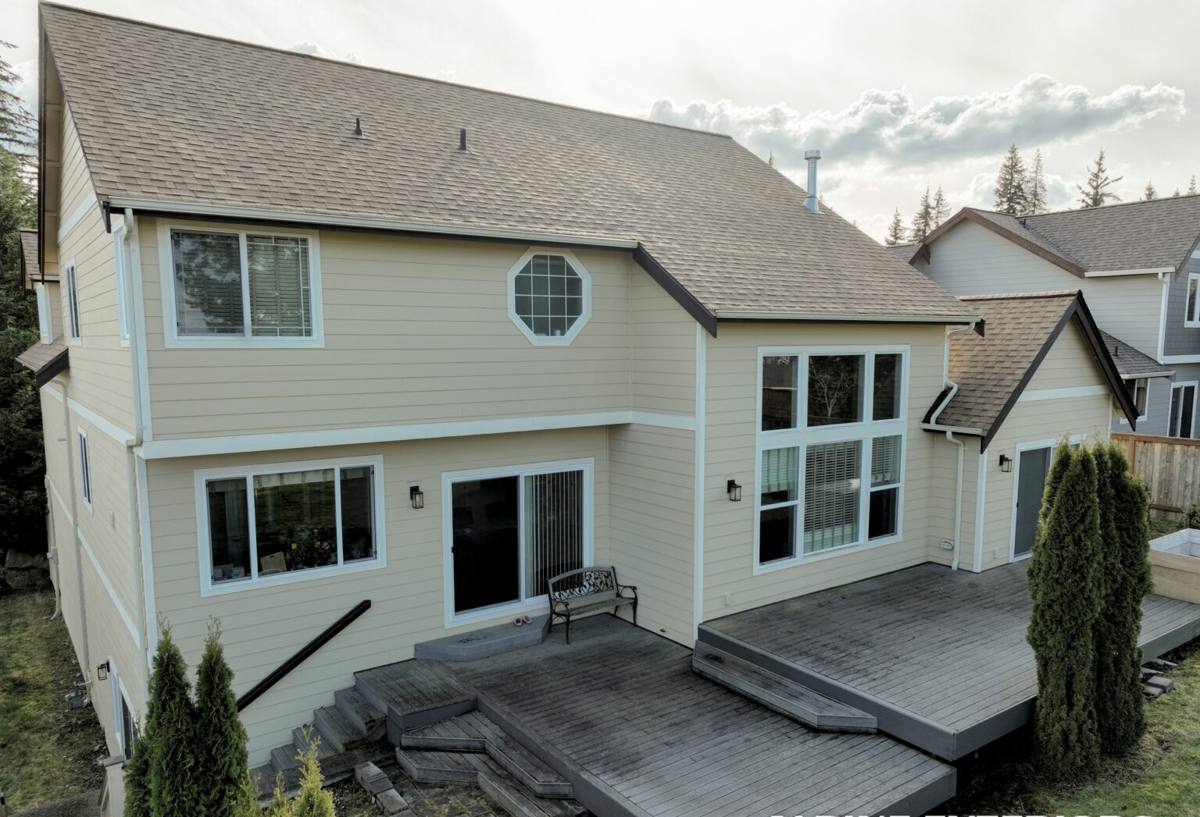
What Sarasota County's Climate Does to a Deck
University Park's location inland from the coast doesn't exempt it from the same climate stresses that affect the rest of Sarasota County — it just changes the mix slightly. A deck here deals with several forces working at once, and a build that only accounts for one or two of them ends up with problems the others eventually expose.
Hurricane-Force Wind Loads
Florida's building code treats wind resistance as a structural requirement, not an afterthought, and a deck is a structure that has to resist uplift and lateral load just like the roof does. Railing posts, ledger connections, and footing depth all need to be sized for real wind exposure, not the minimum that happens to pass a casual inspection. A deck that isn't properly anchored is one of the more common things we find failing after a serious wind event, usually at the ledger-to-house connection or at undersized post footings.
Intense, Near Year-Round UV
Sarasota's sun exposure runs strong for most of the year, and UV breaks down wood fibers, fades finishes, and dries out sealants faster than it does in milder climates. Composite decking isn't immune to this either — UV exposure is part of why manufacturers formulate cap layers specifically to resist fading and surface degradation. Whatever material goes down, the finish or cap layer has to be rated for sustained sun exposure, not just moisture resistance.
Wind-Driven Rain and Afternoon Storms
Sarasota County gets frequent, heavy afternoon thunderstorms for much of the year, plus the sideways-driving rain that comes with tropical systems. A deck surface that doesn't drain properly, or framing that traps water against fasteners and connectors, sets up exactly the wet-dry cycling that causes wood to check, cup, and eventually rot from the inside out. Proper board spacing, framing slope, and flashing at the ledger board all matter more here than they would in a drier region.
Salt Air
Even set back from the immediate coastline, University Park is close enough to Sarasota Bay and the Gulf that salt-laden air reaches inland neighborhoods and accelerates corrosion in exposed metal. Standard carbon-steel fasteners and hardware corrode faster here than the same products would inland in a non-coastal state, which is why fastener and connector selection matters as much as the decking material itself.
What a Correct Deck Build Involves
A deck is a structural project before it's a finish project. The parts nobody sees — footings, framing, fasteners, and the ledger connection — determine whether the deck is safe and long-lasting far more than the decking material on top does.
Footings and Foundation
Footing depth and sizing need to match the soil conditions on the specific lot and the load the deck will carry, not a one-size-fits-all minimum. In Florida, footings also need to account for how the local water table and soil drainage behave, since a footing that isn't sized or placed correctly can settle unevenly over time and throw the whole structure out of level.
Framing Material and Layout
Pressure-treated lumber remains the standard for deck framing because it's rated for ground contact and outdoor exposure, but the treatment level needs to match the application — framing members in direct ground contact need a higher retention level than joists that stay elevated and dry. Joist spacing also needs to be tightened up for certain decking materials; composite and PVC decking typically require closer joist spacing than the code minimum for wood decking to avoid flexing and long-term sagging between boards.
The Ledger Board Connection
This is one of the most safety-critical details on the entire deck and one of the most commonly under-built. The ledger board ties the deck structure to the house, and it needs proper flashing to keep water from getting trapped between the ledger and the house wall, plus fasteners rated for the actual load path rather than a handful of undersized lag screws. A poorly flashed or under-fastened ledger connection is a leading cause of deck collapses nationally, and it's exactly the kind of detail that looks fine on the surface for years before it fails.
Fasteners and Hardware
Every fastener, joist hanger, and structural connector on a Sarasota County deck should be corrosion-resistant hardware rated for coastal or treated-lumber exposure — typically stainless steel or a heavy hot-dip galvanized coating, not standard zinc-coated fasteners that corrode faster in salt air and in contact with modern treated lumber's chemical formulation. Mixing incompatible metals at a connection point sets up galvanic corrosion that can weaken a joint from the inside without any visible warning.
Decking Surface and Railings
The visible decking and railing are what most homeowners focus on, and material choice here comes down to a real trade-off between upfront cost, maintenance commitment, and appearance over time, covered in the comparison below. Railings need to meet Florida's structural load and height requirements, and any glass, cable, or metal rail components need hardware rated for the same coastal exposure as the rest of the structure.
Decking Material Comparison
| Material | Upfront Cost | Maintenance | How It Handles Sarasota's Climate |
|---|---|---|---|
| Pressure-treated wood | Lowest | Annual cleaning and periodic re-staining or sealing | Prone to checking and graying from intense UV and humidity cycling without regular upkeep |
| Cedar or tropical hardwood | Mid to high | Regular oiling to maintain color and prevent surface checking | Naturally more rot-resistant than treated pine, but still moves with humidity and needs consistent upkeep in this climate |
| Composite decking | Mid to high | Low — periodic washing, no staining or sealing | Cap-layer composites resist UV fading and moisture absorption well; framing needs closer joist spacing to prevent flex |
| PVC decking | Highest | Lowest — no staining, sealing, or refinishing | Fully synthetic, doesn't absorb moisture or host rot; performs consistently through heat, humidity, and salt air exposure |
There's no universally "right" answer here — a well-maintained pressure-treated deck can last for decades, and plenty of homeowners are happy to keep up with periodic staining in exchange for the lower upfront cost. The honest trade-off is time and maintenance discipline against upfront price, and we'll walk through it against your budget and how much upkeep you actually want to take on.
Our Process for University Park Deck Projects
- On-site assessment: We look at the lot, existing structure if it's a rebuild or expansion, soil conditions, drainage, and how the deck will tie into the house.
- Design and material selection: We walk through decking material, railing style, and layout options against your budget and maintenance preference, and make sure the design meets Sarasota County's permitting and wind-load requirements.
- Permitting: Deck construction in Sarasota County typically requires a permit, and we handle that process rather than leaving it to you to navigate.
- Footings and framing: Footings are dug and poured to spec, and framing goes up with pressure-treated lumber and corrosion-resistant hardware sized for the load and the coastal exposure.
- Ledger connection and flashing: The ledger board is flashed and fastened to the load path standard, not the minimum.
- Decking, railing, and finish work: Decking is installed with correct spacing for drainage and material expansion, railings go up to code, and any staining or sealing is completed before we walk the job with you.
- Final walkthrough: We go over the finished deck together, confirm everything meets what was scoped, and answer any maintenance questions before we consider the job done.
Why a Crew That Already Works University Park Matters
A deck built by a crew that doesn't regularly work Sarasota County can still look fine on installation day and still be under-built for what the climate does to it over the following few years. Local experience shows up in specific, unglamorous decisions — footing depth appropriate for the area's soil and water table, fastener grade that accounts for salt air even at an inland-facing lot, and framing details built for real Gulf Coast wind exposure rather than a generic code minimum. A crew that's inspected deck failures around University Park and greater Sarasota knows where those failures actually start, and builds to avoid them from the first footing.
We're also positioned to respond if something needs attention after a storm — checking that connections and fasteners held up, rather than leaving you to track down a contractor from out of the area after the fact.
Maintenance Checklist for a University Park Deck
- Inspect fasteners, joist hangers, and connectors annually for corrosion or loosening, especially after storm season
- Check the ledger board connection and flashing for signs of water staining or separation from the house
- Clean the deck surface periodically to remove pollen, algae, and organic buildup that humidity encourages
- Re-stain or reseal wood decking on the schedule the product actually needs, not just when it visibly looks worn
- Confirm railings and stairs remain structurally solid, with no movement at post connections
- Clear debris from under the deck and around footings to keep drainage working as designed
- After any major wind event, do a visual check of the ledger connection and post footings before resuming normal use
Repairs and Rebuilds
Not every deck problem means starting over. Some issues — a failing ledger flashing detail, corroded hardware, a handful of rotted boards — can be corrected without rebuilding the whole structure, provided the underlying framing is still sound. Others, particularly older decks built before current wind-load and fastening standards, are often more cost-effective to rebuild than to keep patching. We'll give you a straight assessment of which category your deck falls into rather than defaulting to the larger job.
Get a Free Estimate
If you're planning a new deck in University Park, or you want an honest look at whether an existing deck is holding up the way it should, we're happy to come take a look and put together a written estimate — no pressure, no obligation. Use the form below to get started.