 Sarasota Roofing
 Siding Built for What Southside Village Actually Deals With
Southside Village sits inside Sarasota's coastal climate zone, which means the siding on any home here is doing real work every day, not just sitting there looking nice. Between hurricane-force wind events, near-constant UV exposure, wind-driven rain that gets pushed sideways into wall assemblies, and salt-laden air moving in off the water, exterior cladding in this neighborhood ages faster and fails differently than it would inland. We install James Hardie fiber cement siding exclusively, and in a neighborhood like Southside Village, that's not a marketing preference — it's a response to what the climate does to lesser materials over a five- to ten-year window.
This page is specifically about James Hardie siding installation for Southside Village properties: what the local climate demands, what a correct installation looks like, how our process runs, and why it matters that the crew on your roofline already understands this neighborhood.
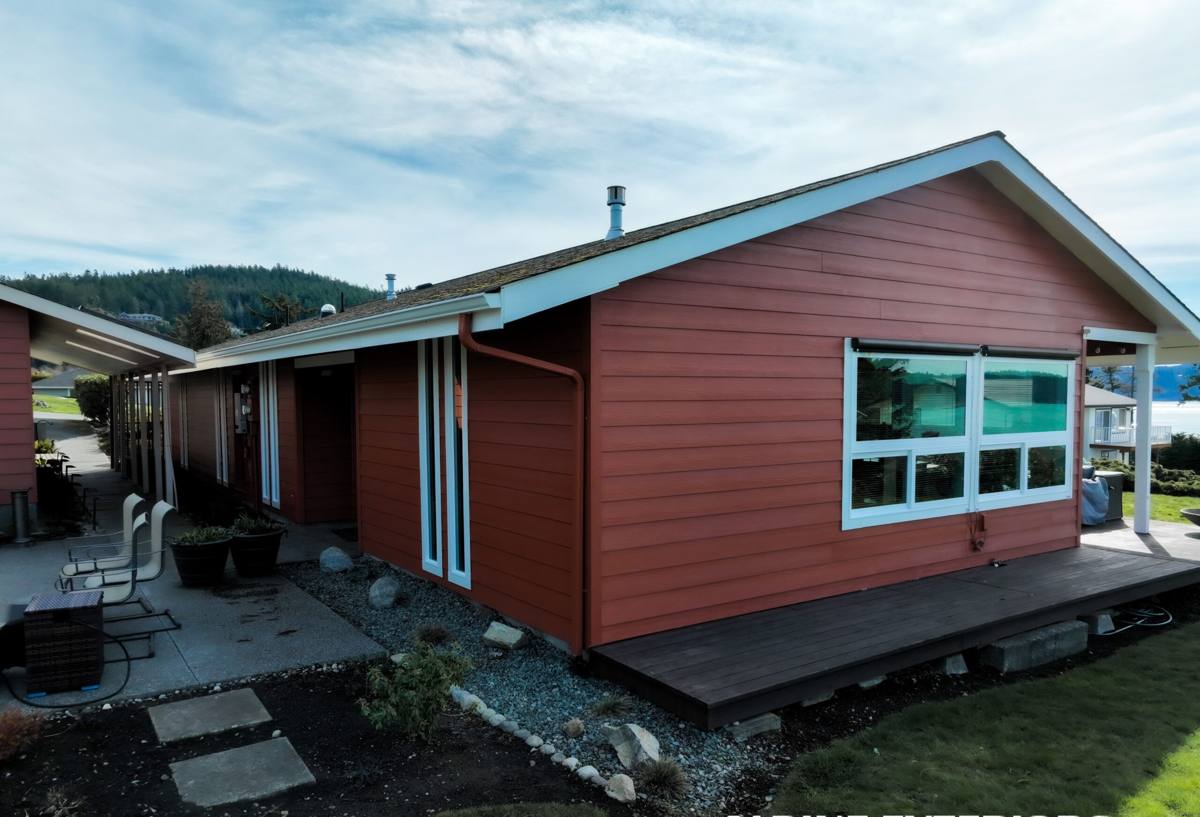
What Coastal Sarasota Conditions Do to Siding Over Time
Salt Air and Corrosion
Homes in and around Southside Village sit close enough to Sarasota Bay and the Gulf that airborne salt is a constant factor, not an occasional one. Salt doesn't just affect metal — it accelerates the breakdown of adhesives, caulks, and lower-grade composite materials, and it speeds up fastener corrosion on anything not rated for coastal exposure. Siding systems and fastener packages that aren't engineered for this environment show pitting, staining, and premature failure well before their expected service life.
UV and Heat Cycling
Sarasota gets intense sun essentially year-round. Painted wood, vinyl, and many composite sidings chalk, fade, or soften under that kind of sustained UV load, and repeated heat-and-humidity cycling stresses seams and caulk joints. A siding product with a baked-on factory finish holds color and integrity through this cycling in a way field-applied paint systems generally can't match.
Wind-Driven Rain and Moisture Intrusion
Southside Village isn't immune to the wind-driven rain that comes with Gulf Coast storm systems. Rain doesn't just fall here — it gets forced horizontally into wall systems, seeking any gap in flashing, caulking, or panel seams. Once moisture gets behind siding and can't escape, it doesn't matter how good the surface material is; the wall assembly rots, sheathing degrades, and problems stay hidden until they're expensive.
Hurricane Wind Loads
Sarasota County enforces wind-load and fastening requirements that reflect its hurricane exposure. Siding that isn't installed to the correct fastener pattern, spacing, and edge distance can lift, crack, or blow off in a wind event well below what a properly installed system is rated to withstand.
Why We Install Only James Hardie Fiber Cement Siding
We made the decision years ago to standardize on James Hardie and stop installing vinyl, LP SmartSide, primed wood, and other composite siding products. That's a real trade-off for us — Hardie costs more up front and is heavier and slower to install than most alternatives — but for a climate like Sarasota's, the trade-off runs the other way over the life of the siding.
- Non-combustible material. Fiber cement doesn't contribute fuel to a fire the way wood-based products can, which matters for insurance underwriting as much as safety.
- Engineered for humid, coastal climates. James Hardie's HZ5 product line is formulated specifically for high-humidity, moisture-heavy regions like Florida's Gulf Coast, addressing swelling, cracking, and moisture absorption at the material level rather than relying only on paint or caulk.
- ColorPlus factory finish. The finish is baked on in a controlled factory process rather than field-applied, which gives far more consistent UV and fade resistance than site-painted siding — directly relevant given how much sun this area gets.
- Dimensional stability. Fiber cement doesn't expand and contract with heat and humidity the way vinyl and some composites do, which means fewer buckled panels and fewer stressed seams after a few Florida summers.
- Strong, transferable warranty. James Hardie backs its products with a warranty structure that holds up over decades, which matters when you're weighing a home improvement meant to last 30-plus years, not five.
We're not going to tell you vinyl or LP SmartSide are junk — they have legitimate uses and plenty of homes carry them without incident. But for what this specific climate does to a wall system over time, we don't think they hold up as well as fiber cement, and we'd rather put our name behind one product we trust completely than offer several we have reservations about.
What a Correct James Hardie Installation Actually Involves
The material is only half the equation. Most siding failures we get called out to inspect — on any brand — trace back to installation shortcuts, not product defects. A correct Hardie installation in a coastal Sarasota County neighborhood includes:
- A properly lapped and sealed weather-resistive barrier behind the siding, giving moisture that does get in a path to drain back out
- Correct flashing at every window, door, and penetration — the single most common failure point we find on older installations
- Manufacturer-specified fastener type, spacing, and penetration depth, sized for the wind zone the home sits in
- Proper clearance between siding and grade, roofing, decks, and other transitions to prevent wicking moisture
- Correct joint treatment and caulking at butt joints and trim, using products compatible with both the siding and the coastal environment
- Field-cut edges primed or sealed per Hardie's installation guidelines, since raw cut edges are a common entry point for moisture if left untreated
Skip any one of these steps and you can end up with a home wearing an excellent product that still underperforms — which is exactly why we treat installation discipline as equal in importance to product selection.
James Hardie Product Lines We Install
Southside Village has a mix of home styles and eras, so the right Hardie product line depends on the specific house. Here's how the main options compare for this kind of coastal residential setting:
| Product Line | Look | Best Fit For |
|---|---|---|
| HardiePlank Lap Siding | Traditional horizontal lap board | Classic and craftsman-style homes wanting a familiar coastal look |
| HardieShingle | Staggered or straight-edge shingle profile | Cottage or bungalow-style homes, accent gables, dormers |
| HardiePanel | Vertical panel with battens | Modern or Florida vernacular styles, porch gables, accent walls |
| Artisan Series | Premium smooth or authentic wood-grain lap | Homes where a higher-end, dimensional finish is the priority |
All of these are available in James Hardie's ColorPlus finish palette, and all are appropriate for HZ5 climate-zone installation, which is what this region calls for.
Our Process for a Southside Village Siding Project
- On-site inspection. We walk the home, check the current siding and underlying substrate for hidden moisture damage, and assess wind exposure and drainage around the property.
- Product and profile selection. We go through Hardie product lines and ColorPlus color options relative to the home's style, HOA or neighborhood expectations, and your budget.
- Permitting and code check. We confirm the fastening schedule and wind-load requirements that apply to the property under Sarasota County's building code before any material is ordered.
- Substrate prep and moisture remediation. Any water-damaged sheathing or framing found during tear-off gets addressed before new siding goes up — covering it up would just hide the same problem again.
- Weather barrier and flashing installation. This step gets the least attention from homeowners and the most attention from us, since it's what actually keeps water out of the wall assembly.
- Siding installation to manufacturer spec. Fastener pattern, spacing, gaps, and joint treatment are all installed per James Hardie's published guidelines for this climate zone.
- Final walkthrough. We inspect the completed job with you, check caulk lines, trim, and finish quality, and go over basic care.
Signs Your Southside Village Home's Siding Is Overdue for Attention
Coastal conditions tend to hide siding problems until they've been developing for a while. Watch for:
- Soft or spongy spots when you press on the siding near the bottom courses or around windows
- Visible warping, buckling, or gaps at seams and corners
- Persistent staining or dark streaking that doesn't wash off, especially near roof-to-wall transitions
- Peeling or chalking paint on wood or composite siding that keeps recurring within a year or two of repainting
- Fastener heads showing rust bleed through the surface finish
- Rising interior humidity, musty smell, or bubbling interior paint on an exterior wall
Any of these can indicate moisture has already reached the wall assembly, which is worth having looked at before it's scheduled for a full replacement anyway.
Why It Matters That Your Crew Already Works This Neighborhood
A siding crew that regularly works in and around Southside Village already understands the wind zone requirements, permitting expectations, and coastal detailing that Sarasota County inspectors and this environment demand. That familiarity shows up in small but meaningful ways — knowing which flashing details tend to get flagged, understanding how salt air affects fastener and trim choices, and being realistic with homeowners about timelines around Florida's rainy season. A crew that's installed Hardie siding on similar homes nearby isn't guessing at what this climate requires; they've already seen how the details hold up a few years in.
Caring for James Hardie Siding in a Coastal Climate
Fiber cement is low-maintenance compared to wood or vinyl, but "low-maintenance" isn't "no-maintenance," especially this close to the water. A simple annual rinse to remove salt film and organic buildup, prompt attention to any caulk line that starts to fail, and keeping sprinklers and dense landscaping from holding moisture against the siding will go a long way toward getting the full service life out of the material and finish.
If your Southside Village home's siding is showing its age, or you're planning ahead for a project, we'd be glad to walk the property with you and give you a straight, no-pressure assessment. Use the form below to request a free estimate.