 Sarasota Roofing
 Southside Village Decks Live in a Tough Climate
Southside Village sits close enough to the water that every outdoor structure in the neighborhood deals with the same three stresses year-round: intense UV exposure, salt-laden air drifting in off the bay, and the wind-driven rain and hurricane-force gusts that come with a normal Sarasota County storm season. A deck built without those factors in mind doesn't fail because the homeowner did anything wrong — it fails because it was built like a deck somewhere inland, not a deck in coastal Florida.
Composite decking exists precisely to handle this kind of exposure better than wood, but "composite" isn't a single product with one set of rules. The board brand, the substructure underneath it, the fasteners holding it down, and the way it's flashed against the house all determine whether a deck holds up for twenty-plus years or starts showing problems in three. This page is about what that actually looks like for a home in Southside Village specifically — not composite decking in general.
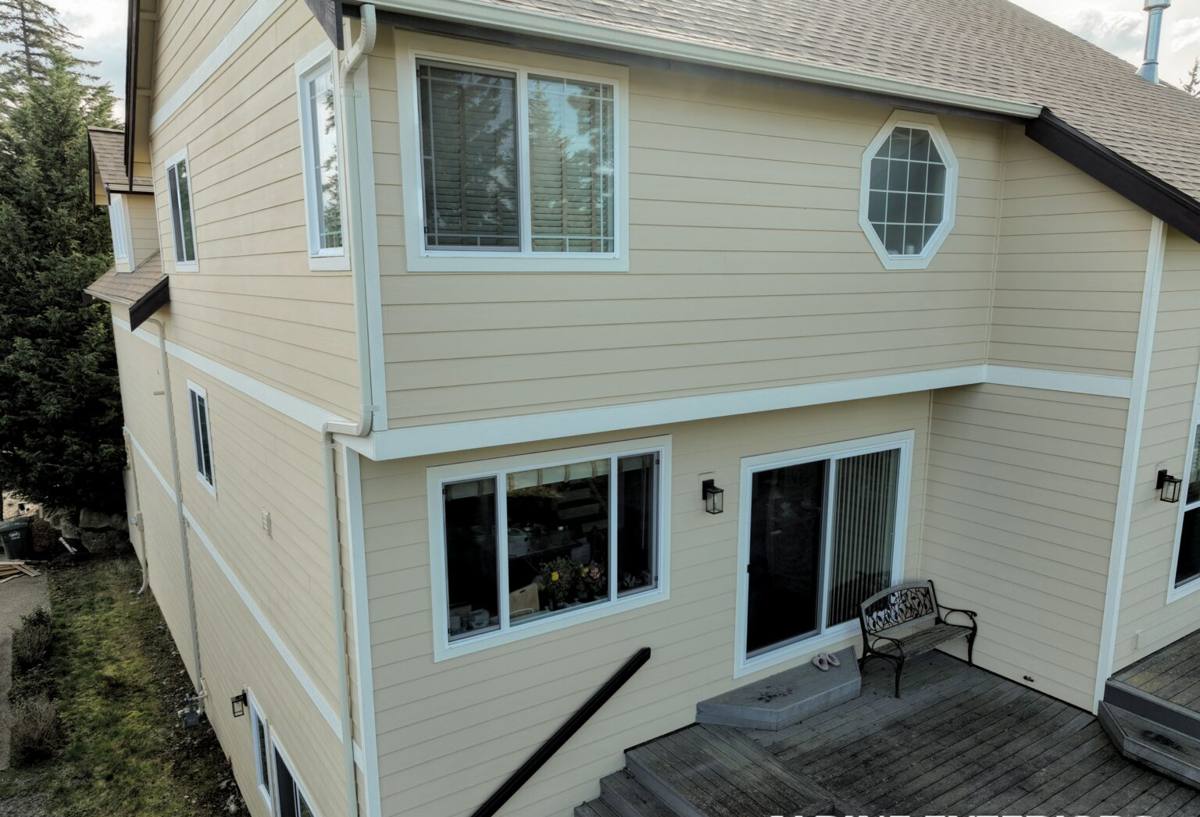
What Sarasota's Climate Does to an Outdoor Deck
UV and Heat
Florida sun is stronger and more constant than what most composite boards were originally engineered around decades ago. Lower-grade or older-generation composite products can fade unevenly, chalk on the surface, or get noticeably hot underfoot in July. Board quality and cap technology matter more here than in almost any other part of the country.
Salt Air
Southside Village isn't oceanfront, but it's close enough to the water that salt-laden air still reaches fasteners, brackets, and any exposed metal hardware. Salt air accelerates corrosion on standard fasteners and connectors, which is why the hardware spec matters as much as the decking material itself.
Wind-Driven Rain
Sarasota storms rarely come straight down. Wind-driven rain gets pushed sideways and up under boards, into ledger connections, and against the house band board. A deck that isn't flashed and sloped correctly will trap that moisture, and trapped moisture is what causes rot in the framing underneath a deck even when the composite boards on top look fine.
Hurricane-Force Wind Loads
Deck framing in this area needs to be attached and braced with real wind uplift in mind, not just vertical load. Ledger attachment to the house, post-to-beam connections, and joist hangers all need to be rated and installed for lateral and uplift forces, not just the weight of people standing on the deck.
What a Properly Built Composite Deck Actually Involves
The composite boards on top get all the attention, but they're the last layer installed and the easiest part to get right. The substructure underneath is where a deck's real lifespan is decided, especially in a climate like this one.
- Pressure-treated or coated framing lumber rated for ground contact where applicable, not standard-grade lumber
- Corrosion-resistant fasteners and hardware throughout — stainless or coated hardware rated for coastal exposure, not the cheapest box of deck screws
- Proper ledger board flashing and a water-tight connection where the deck meets the house
- Joist spacing that matches the specific composite board's manufacturer requirements (composite boards often need tighter joist spacing than wood, especially on angles or diagonal patterns)
- A slight slope away from the house for drainage, plus gapping between boards that allows water to pass through instead of pooling
- Hidden or manufacturer-approved fastening systems installed at the correct spacing for thermal expansion — composite boards expand and contract with heat more than wood does
- Proper post footings sized for local soil conditions and set to the depth that actually resists wind uplift
Skip or shortcut any one of these and the boards on top can look perfect for a couple of years while the structure underneath quietly deteriorates.
Composite vs. Other Decking Materials for This Climate
Homeowners in Southside Village usually narrow it down to composite, pressure-treated wood, or PVC. Each has real trade-offs — there's no universally "best" choice, only the right one for a given budget and maintenance appetite.
| Material | UV/Fade Resistance | Maintenance | Moisture Behavior | Typical Lifespan |
|---|---|---|---|---|
| Composite (capped) | Strong, especially capped boards | Occasional wash, no staining/sealing | Resists rot but requires drainage gaps to shed water | 25-30+ years |
| Pressure-Treated Wood | Fades and grays without upkeep | Annual staining/sealing recommended | Absorbs water, prone to warping and rot if neglected | 10-15 years with upkeep |
| PVC/Cellular PVC | Very strong, minimal fading | Low, occasional wash | Fully moisture-resistant but can flex more in heat | 25-30+ years |
Composite generally lands in the middle: it doesn't need the yearly staining that wood does, and it typically has a more natural wood-grain look than straight PVC. In a UV-heavy, salt-air environment like Sarasota County, the cap technology on the composite board matters more than the brand name — an uncapped or lightly capped board will show wear faster here than in a milder climate.
Our Process for a Southside Village Deck Project
1. Site Visit and Assessment
We look at how the deck connects to the house, what the existing framing (if any) is doing, drainage patterns in the yard, and sun/shade exposure through the day. Southside Village lots vary enough in grading and tree cover that this step changes the plan more than people expect.
2. Structural Plan
We size framing, footings, and hardware for the actual load and wind exposure of the site — not a generic spec. This is where ledger attachment method and footing depth get decided.
3. Board and Hardware Selection
We walk through composite board options with real trade-offs explained — color and grain retention, heat underfoot, warranty terms, and cost — so the decision is based on how the deck will actually be used, not just a sample chip.
4. Framing and Flashing
Framing goes in first, with flashing at every point moisture can get behind the boards or into the house structure. This stage is inspected before a single composite board goes down.
5. Decking Installation
Boards are installed with manufacturer-spec fastening, correct gapping, and attention to expansion joints, especially important with Sarasota's temperature swings between a hot afternoon and a cooler evening.
6. Final Walkthrough
We check fastener finish, board alignment, railing security, and drainage under real conditions (a hose test where needed) before calling the job done.
Cost Factors for Composite Decking in This Area
Composite decking costs more upfront than pressure-treated wood but less in lifetime maintenance. The total for any given project depends on a handful of variables specific to the site and the board chosen.
| Factor | Why It Moves the Price |
|---|---|
| Board tier | Entry-level capped composite vs. premium multi-layer cap systems have a real price spread, mostly in fade/scratch resistance and warranty length |
| Substructure condition | New framing vs. reusing existing framing (only viable if it passes inspection) changes labor and material significantly |
| Height and railing | Elevated decks need code-compliant railings, stairs, and stronger post/footing work than ground-level decks |
| Fastening system | Hidden-fastener systems cost more in labor than face-screwing but give a cleaner look and fewer exposed metal points for salt air to attack |
| Site access | Tight lots or limited equipment access in some Southside Village properties can add labor time |
We give a firm, itemized quote after the site visit rather than a ballpark over the phone — too many of these variables change the number to make a phone estimate honest.
Permits and Local Considerations in Southside Village
Most composite deck construction in Sarasota County requires a building permit, and for good reason: permitted work gets inspected at the framing stage, before the composite boards go down, which is exactly the stage where corners get cut if nobody's checking. We pull permits as part of the job rather than treating it as optional paperwork, and we build to current wind and structural code requirements for the area rather than to a minimum that happened to pass somewhere else.
If your property in Southside Village falls under an HOA or deed restriction, there may also be guidelines on visible decking colors, railing styles, or setback from property lines. We're happy to work within whatever those requirements are — it's worth checking before materials are ordered rather than after.
Maintaining a Composite Deck in a Coastal Climate
One of the appeals of composite is low maintenance, but "low" doesn't mean "none," especially with salt air and constant sun in the mix.
- Rinse or wash the surface periodically to clear salt residue, pollen, and organic buildup before it stains the cap layer
- Keep drainage gaps between boards clear of debris so water keeps passing through rather than sitting on the surface
- Check railing posts and fastener points once or twice a year for any early corrosion signs, particularly on hardware closest to the ground
- Trim back plantings that hold moisture against the deck edge or framing
- After a named storm, walk the deck for loose boards, railing movement, or standing water that wasn't draining before
None of this is heavy upkeep, but skipping it in a climate this demanding shortens a deck's life faster than it would somewhere drier and cooler.
Why It Matters That Your Crew Already Works in Southside Village
A crew that regularly works Southside Village and the surrounding Sarasota area already knows the practical realities that don't show up in a manufacturer's install manual: how the local soil handles footings, how sun angle and tree cover on a given lot affect board heat and fade over a full year, and what wind exposure actually looks like on a property this close to open water. That local pattern recognition is the difference between a deck that's engineered for "coastal Florida" in the abstract and one that's actually right for this specific neighborhood.
It also means faster, more accurate quotes, fewer surprises once framing is opened up, and a crew that's still around and reachable if a warranty question comes up years down the road — not a name that only shows up for one job and moves on.
Signs a Composite Deck Was Installed Correctly
Whether it's our work or a deck you're evaluating on a home you're buying, these are the practical signs of a correct installation versus a shortcut job:
- No visible gaps or staining at the ledger board where the deck meets the house
- Consistent, tight board spacing with no waviness or "trampoline" bounce when walked on
- Fastener heads flush and consistent, with no rust bleed-through at hardware points
- Railings that don't flex or wiggle at the post connections
- Visible slope or drainage path away from the house rather than water pooling against the foundation
- No soft spots or give underfoot, especially near stairs or the deck perimeter
If you're weighing a new composite deck or replacing an aging wood deck in Southside Village, we're glad to walk the property, look at what's there now, and put together a straightforward, itemized estimate — no pressure, no obligation. Use the form below to get started.