 Sarasota Roofing
 Building Decks for Siesta Key's Coastal Conditions
Siesta Key sits right on the Gulf, which means any deck built here is doing a harder job than a deck built inland. Salt-laden air corrodes hardware, intense UV bleaches and dries out wood fiber, wind-driven rain finds its way into every gap and fastener hole, and the occasional hurricane-force gust tests every connection point in the structure. A deck that would hold up fine in a subdivision twenty miles inland can fail early on a barrier island lot. We build decks specifically to handle that environment, not a generic deck plan we hope works out here.
This page covers deck building for Siesta Key specifically: what the island's conditions demand, how we approach materials and fastening, what our process looks like from first visit to final walkthrough, and why local experience on this particular stretch of coastline matters more than it would somewhere else in Sarasota County.
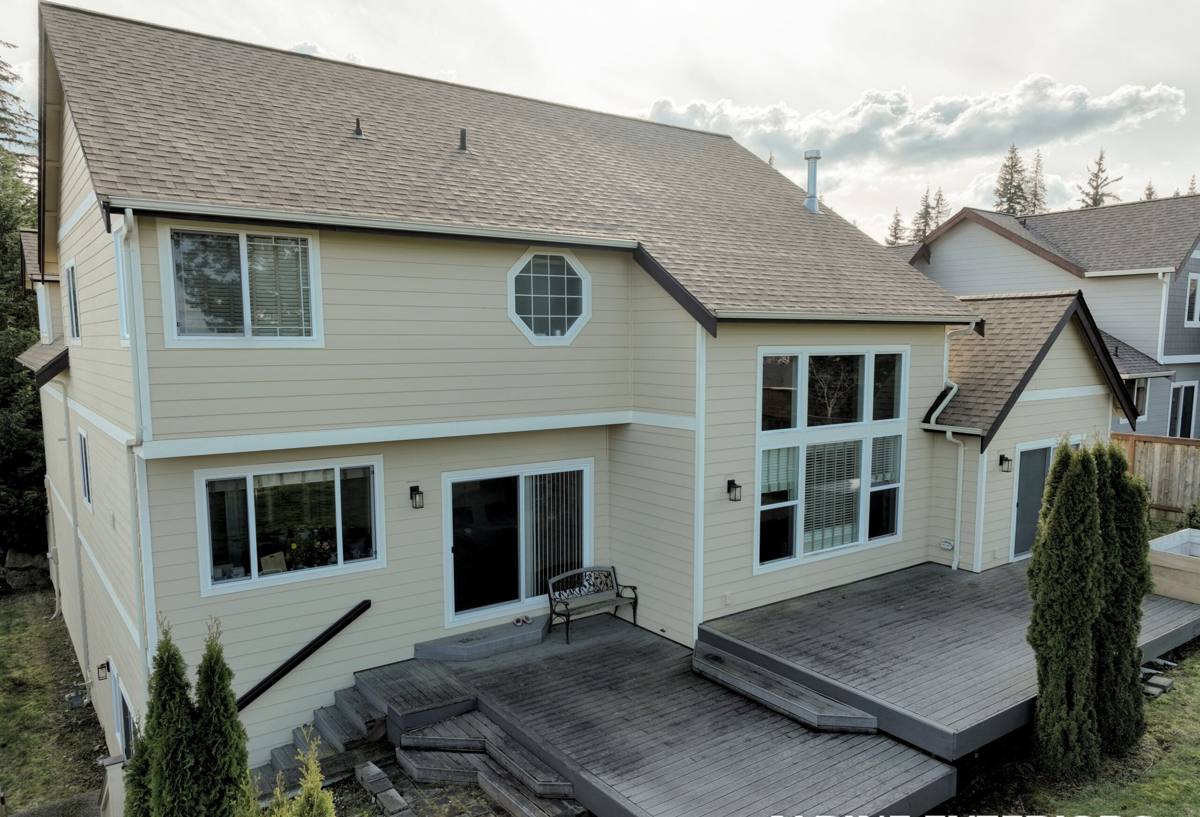
What Siesta Key's Climate Does to a Deck
Four factors drive almost every deck problem we see on the island, and a correctly built deck has to answer all four at once, not just one or two.
Salt Air and Corrosion
Airborne salt accelerates corrosion on any exposed metal — fasteners, joist hangers, post bases, railing brackets. Standard hot-dip galvanized hardware that performs well inland can start showing rust streaks and pitting within a few years this close to the Gulf. Once a fastener corrodes, it loses holding strength long before it looks obviously bad, which is part of why hardware choice matters more here than most homeowners expect.
Year-Round UV Exposure
Florida sun is intense in every season, not just summer. UV breaks down the lignin that holds wood fibers together, which is what causes graying, surface checking, and splintering on untreated or poorly finished wood decking. Composite and PVC decking resist this better, but even those products vary in how well their color and surface hold up under sustained UV — it's a real factor in product selection, not just a marketing line.
Wind-Driven Rain and Moisture
Rain on Siesta Key rarely falls straight down — Gulf breezes push it sideways, which drives water into places a vertical rain wouldn't reach: under railing caps, behind ledger boards, into fastener holes and end grain. Decks fail from the inside out far more often than from the surface down, usually starting at a joint or connection point where moisture sat too long.
Hurricane-Force Wind Loads
Sarasota County requires deck construction to meet Florida Building Code wind-load standards, and on a barrier island like Siesta Key that's not a formality — it's the actual condition the structure will face. Railings, ledger attachments, post-to-beam connections, and footing depth all need to be engineered for real wind uplift and lateral load, not just built to "looks sturdy."
What a Correctly Built Deck Involves
A deck that's going to hold up on Siesta Key isn't just a surface to walk on — it's a structural system where every layer matters.
Framing and Structure
This is the part nobody sees once the decking goes down, and it's the part that determines whether the deck is safe in ten years. Joist spacing, beam sizing, and post placement all need to match the actual load — furniture, hot tubs, foot traffic — and the wind exposure of an island lot. Ledger board attachment to the house is one of the most common failure points in decks generally; it has to be flashed correctly and fastened to resist both gravity load and wind uplift.
Fasteners and Connectors
Given the salt air, we don't treat hardware as an afterthought. Stainless steel or coated fasteners rated for coastal or ACQ-treated lumber contact are the standard here, along with corrosion-resistant joist hangers and structural connectors at every load-bearing point. Mixing incompatible metals — the wrong fastener in the wrong hanger — can actually accelerate corrosion through galvanic reaction, so matching hardware systems correctly is part of doing this right.
Decking Material
Wood, composite, and PVC decking each behave differently in this climate, and the right choice depends on the homeowner's priorities as much as the environment. We'll walk through the honest trade-offs for your project rather than push one product line.
Railings and Guards
Code requires guardrails at a given height once a deck reaches a certain elevation, and on an island property railings also take direct salt spray and wind load. Attachment points need the same corrosion resistance and structural rigor as the rest of the frame.
Footings
Footing depth and design need to account for local soil conditions and wind uplift resistance, inspected and poured to hold the structure against both gravity and lateral wind forces — not guessed at.
Decking Material Comparison for Island Conditions
| Material | UV/Sun Behavior | Moisture Behavior | Maintenance |
|---|---|---|---|
| Pressure-treated wood | Grays and can check/splinter without regular finishing | Absorbs moisture at cut ends and fasteners if not sealed | Needs re-staining or sealing every 1-3 years |
| Composite decking | Better fade resistance than wood; quality varies by product line | Doesn't absorb water like wood, but core material and capping quality affect long-term performance | Periodic cleaning; no staining or sealing |
| PVC/capped decking | Strong UV and fade resistance | Fully moisture-resistant surface; won't rot | Low; occasional cleaning |
None of these is automatically "best" — a wood deck maintained on schedule can look great for years, and a lower-tier composite product can underperform a well-installed wood deck. We'll talk through what fits your budget, maintenance appetite, and how the deck will actually be used.
Our Process on Siesta Key
1. On-Site Visit and Assessment
We look at the site itself — exposure to Gulf wind and spray, existing structure if it's a replacement, drainage, and how the deck ties into the house. Island lots vary block to block in how much direct salt exposure they get, which affects our hardware and material recommendations.
2. Design and Material Selection
We size the framing to the load and wind exposure, walk through decking and railing options with honest cost and maintenance trade-offs, and confirm the layout works with your home and how you'll use the space.
3. Permitting
Deck construction in Sarasota County requires a permit, and on a barrier island property that also means confirming setback and elevation requirements specific to the lot. We handle the permit process as part of the job rather than leaving it to the homeowner.
4. Construction
Footings first, then framing, then decking, railings, and any stairs — each stage built to hold up against sun, salt, and wind before the next stage goes on top of it.
5. Final Walkthrough
We inspect the finished deck with you, check that railings are secure, fasteners are properly set, and everything meets the plan and code before we call the job done.
Why a Local Siesta Key Crew Matters
A crew that regularly works Siesta Key has already seen what happens to decks that weren't built for this specific exposure — which fastener types hold up, which decking products perform as advertised in direct Gulf-front sun, and how permitting and inspection actually work in this part of Sarasota County. That's different knowledge than general deck-building experience from inland Florida or another state. It shows up in small decisions — hardware selection, flashing details, footing depth — that don't matter much elsewhere but matter a lot on a barrier island.
Maintaining a Siesta Key Deck
Whatever material you choose, a few habits extend the life of any deck on the island substantially.
- Rinse salt residue off the deck surface and railings periodically, especially after storms
- Keep gutters and downspouts near the deck clear so runoff doesn't pool against ledger boards or posts
- Inspect fasteners and connectors annually for early rust or looseness
- Re-seal or re-stain wood decking on schedule rather than waiting until it visibly grays
- Check that furniture and planters aren't trapping moisture against the deck surface
- Have railings and structural connections checked after any major storm
Signs an Existing Deck Needs Attention
If you already have a deck on your Siesta Key property, watch for a few warning signs that mean it's time for a professional look rather than a wait-and-see approach:
- Soft or spongy spots in the decking surface
- Rust streaking around fasteners or connectors
- Railings that flex or feel loose when leaned on
- Gaps opening up where the deck meets the house
- Visible wood decay at post bases or ledger boards
Any of these can indicate a structural issue rather than a cosmetic one, and on an island property with real wind exposure, it's worth having it checked rather than assuming it's minor.
Get a Free Estimate
If you're planning a new deck or need to replace one that hasn't held up to Siesta Key's conditions, we're happy to take a look and walk you through honest options for your property. Fill out the form below for a free, no-pressure estimate.