 Sarasota Roofing
 What Bee Ridge Homes Are Actually Up Against
Bee Ridge sits inland from the Gulf, but "inland" in Sarasota County doesn't mean sheltered. Homes here still take a beating from the same forces that hit the coastline: sustained humidity that never really lets up, intense year-round UV that fades and embrittles building materials faster than almost anywhere in the country, and wind-driven rain that finds its way behind poorly installed siding during summer storms and hurricane season alike. Add in the salt air that drifts across the whole county on Gulf breezes, and you have a climate that's genuinely hard on exterior materials — even ones marketed as low-maintenance.
For siding specifically, that combination shows up as premature fading, swelling, delamination, and moisture intrusion at seams and fastener points. A siding product that performs fine in a drier, milder climate can fail in Sarasota County in a fraction of the time. That's the lens we bring to every Bee Ridge siding replacement: this isn't a cosmetic upgrade, it's a system that has to hold up against real, sustained weather stress.
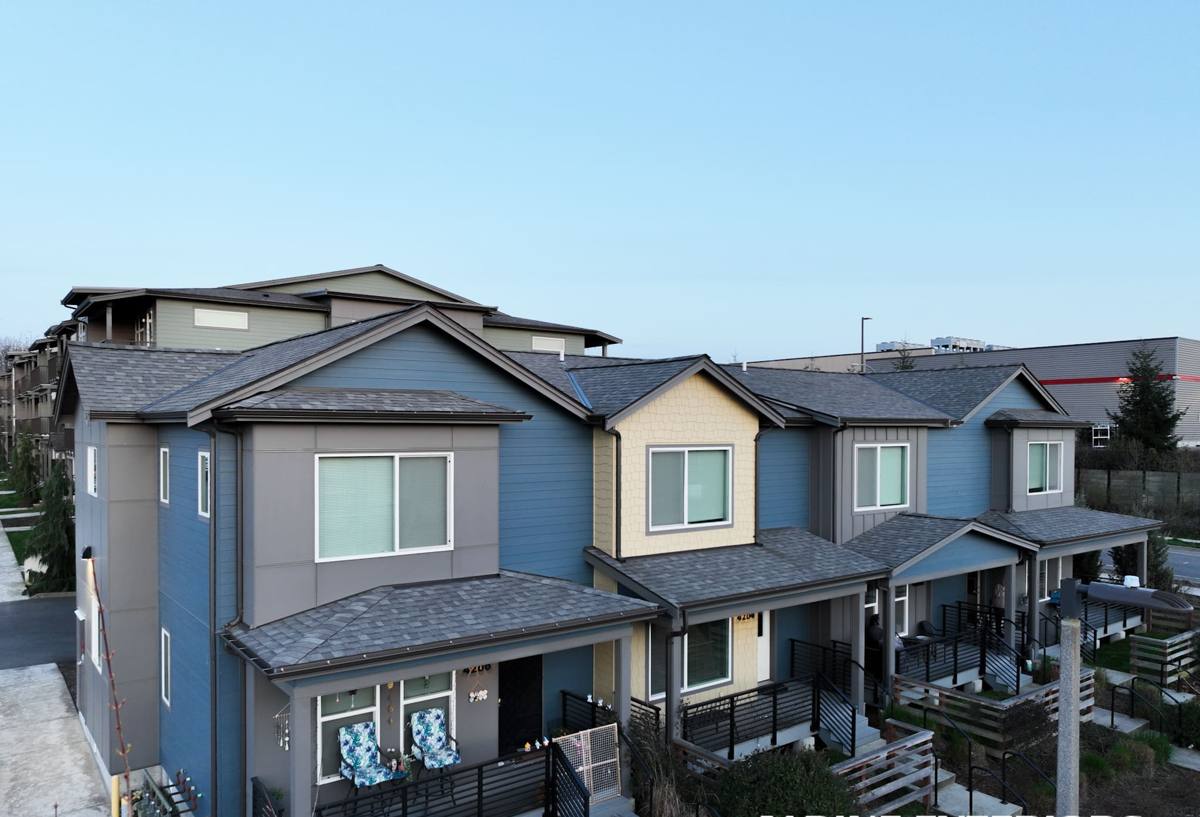
Signs a Bee Ridge Home Needs Siding Replacement
What you can see from the ground
- Visible cracking, warping, or buckling panels, especially on south- and west-facing walls that take the most sun
- Chalky, faded, or peeling paint that keeps needing repainting every few years
- Soft or spongy spots when you press on the siding, particularly near the bottom courses and around windows
- Gaps opening up at seams, corners, or trim where caulking has failed
- Visible mold, mildew, or dark staining that keeps coming back after cleaning
What's often hidden until it's worse
Some of the most expensive siding problems don't show up on the surface until they're advanced. Moisture that gets behind siding through failed seams or fastener holes can sit against the sheathing and framing for years, especially in Florida's humidity, before a homeowner notices soft trim, a musty smell, or a stain bleeding through interior drywall. This is one of the main reasons we don't just replace panels — we inspect what's underneath before we ever talk about a new exterior.
Why We Only Install James Hardie Fiber Cement
We made a deliberate decision as a company: we install James Hardie fiber cement siding, and we don't install vinyl, LP SmartSide, Cemplank, Allura, or primed wood products like spruce or cedar. That's not a marketing gimmick — it's a standard we hold because of what we've seen products do in this specific climate over time.
Vinyl siding is affordable and easy to install, but it's a petroleum-based product that softens, warps, and can even melt under sustained heat and direct sun exposure — a real risk in a market where roof and wall surfaces regularly bake at high temperatures for months at a time. LP SmartSide and other wood-strand products use a wood core that, however well-treated, is still wood; if moisture gets past the coating or into a cut edge, it can swell and deteriorate, and that risk only grows in a humid, storm-prone county. Primed spruce or cedar requires the homeowner to stay on top of repainting and resealing on a tight schedule, something that's easy to fall behind on and costly to fix once you do.
James Hardie fiber cement is a cement, sand, and cellulose fiber composite. It doesn't burn, it doesn't attract termites, it doesn't warp in heat, and it holds paint and factory-applied color far longer than wood or vinyl because it's engineered to move less with temperature and humidity swings. Hardie also makes an HZ5 product line specifically engineered for high-humidity, storm-exposed climates like ours — that's a meaningful difference from a one-size-fits-all siding product.
What a Correct Siding Replacement Actually Involves
Tear-off and inspection
We remove the existing siding down to the sheathing and inspect it — not skim over it. In a climate where hidden moisture damage is common, this step tells us whether any sheathing or framing needs to be repaired or replaced before new siding goes up. Installing new siding over compromised sheathing just locks the problem behind a new wall.
Weather-resistive barrier and water management
A correctly detailed weather-resistive barrier (house wrap) with properly lapped and taped seams is what actually keeps wind-driven rain out — the siding itself is the first line of defense, but the barrier behind it is what protects the structure if water gets past a seam or fastener. We pay particular attention to flashing at windows, doors, and any wall penetrations, since these are the most common places for leaks to start.
Installation to manufacturer spec
James Hardie siding is engineered with specific fastener spacing, clearances, and caulking requirements, and those specs exist for a reason — proper spacing lets the material handle humidity-driven expansion and contraction without buckling, and proper clearance at the ground and roofline keeps moisture from wicking up into the bottom of the panels. Cutting corners here is the single biggest reason fiber cement siding underperforms; the product isn't the problem, the installation is.
Trim, caulking, and finish work
The last details are often what separates a good job from a great one — tight trim work, consistent reveal lines, and quality caulking at every joint and penetration. This is also where ColorPlus factory-finished panels pay off, since the finish is baked on at the factory under controlled conditions rather than field-applied, which means better fade resistance and fewer touch-ups down the road.
Our Process, Start to Finish
- Free on-site estimate — we walk the home, assess the current siding, and check for signs of underlying moisture damage.
- Written scope and product selection — you'll know exactly which Hardie product line, profile, and color is being installed and why it fits your home.
- Tear-off and sheathing inspection — old material comes off and we address any deterioration found underneath before moving forward.
- Weather barrier and flashing installation — the moisture-management layer goes in correctly, not as an afterthought.
- Siding installation to spec — fastened, spaced, and finished according to James Hardie's requirements for our climate zone.
- Final walkthrough — we go over the finished work with you before calling the job done.
Comparing Siding Materials in Sarasota County's Climate
| Material | Heat/UV Behavior | Moisture Resistance | Maintenance | Typical Upkeep Cycle |
|---|---|---|---|---|
| James Hardie Fiber Cement | Won't warp or soften in heat; factory ColorPlus finish resists fading | Non-combustible, engineered HZ5 line for humid/storm climates | Low — occasional wash, no repainting for years with ColorPlus | Long-cycle repaint if ever needed |
| Vinyl | Can soften, warp, or distort in sustained high heat and direct sun | Water can get behind panels at seams | Low effort but limited repair options if damaged | Replacement rather than repaint |
| LP SmartSide | Wood-strand core sensitive to prolonged UV exposure at cut edges/seams | Wood core can swell if moisture penetrates coating | Moderate — coating and caulking need monitoring | Periodic recoating/caulk maintenance |
| Primed Wood (spruce/cedar) | Fades and checks under intense UV without diligent upkeep | Prone to swelling, rot if repainting lapses | High — regular repainting and sealing required | Repaint every few years |
This isn't a claim that other materials can't perform anywhere — it's why, for the specific conditions Sarasota County homes face, we've standardized on one product system we trust and stand behind.
What to Look For in a Bee Ridge Siding Contractor
- Proper Florida contractor licensing and current liability insurance — ask to see both, not just hear about them
- A written scope that names the exact siding product, line, and profile — not just "Hardie siding" with no specifics
- A clear explanation of how they'll handle the weather-resistive barrier and flashing, not just the visible panels
- Willingness to inspect and address sheathing issues before installing over them
- References or a track record specific to fiber cement installation, not general contracting
- A realistic timeline that accounts for Florida's summer storm patterns rather than promising an unrealistic turnaround
Why Local Experience in Bee Ridge Matters
Every part of Sarasota County shares the same broad climate risks, but the details still matter at the neighborhood level — how a particular street's tree canopy affects moisture retention around a home, how afternoon storm patterns hit certain exposures harder than others, and what permitting and inspection process to expect from Sarasota County for exterior work. A crew that's done this work across Bee Ridge and the surrounding area isn't guessing at any of that. They know what correct installation looks like in this specific humidity and UV environment, and they've already worked through the practical logistics of doing quality exterior work on occupied homes in this community.
That local familiarity also means fewer surprises during the project — knowing what to expect from the permitting process, planning around typical Gulf Coast rain patterns, and understanding how a Bee Ridge home's age and construction style typically affect what's found once the old siding comes off.
Is It Time to Replace, or Can It Be Repaired?
Not every siding problem means a full replacement. Isolated panel damage or a small area of moisture intrusion can sometimes be repaired. But if a home is showing fading, warping, or moisture issues across multiple sides, or if the siding has reached the end of its practical service life, patch repairs usually just delay a bigger cost while the underlying material keeps deteriorating. Part of an honest estimate is telling you plainly which situation you're actually in.
If your Bee Ridge home is showing any of these signs, or you simply want an honest read on where your siding stands, we're glad to come take a look. The estimate is free, there's no pressure attached to it, and you'll walk away with a clear picture of what your home actually needs — just fill out the form below to get started.