 Sarasota Roofing
 Why Longboat Key Siding Takes More Damage Than Homes Further Inland
Longboat Key sits on a barrier island between the Gulf of Mexico and Sarasota Bay, which means every home on it is exposed to conditions that inland Sarasota County properties simply don't see to the same degree. Salt-laden air moves across the island constantly, not just during storms. Add in wind-driven rain during summer squalls and hurricane season, plus some of the most intense year-round UV exposure in the state, and you have a combination that wears down siding faster than almost anywhere else in the region.
For homeowners, this means siding problems on Longboat Key often show up sooner and progress faster than the same issues would on a home ten or fifteen miles inland. A crack that might sit stable for a season elsewhere can become an entry point for moisture within a few months here. Understanding why that happens is the first step to knowing what a proper repair actually needs to address.
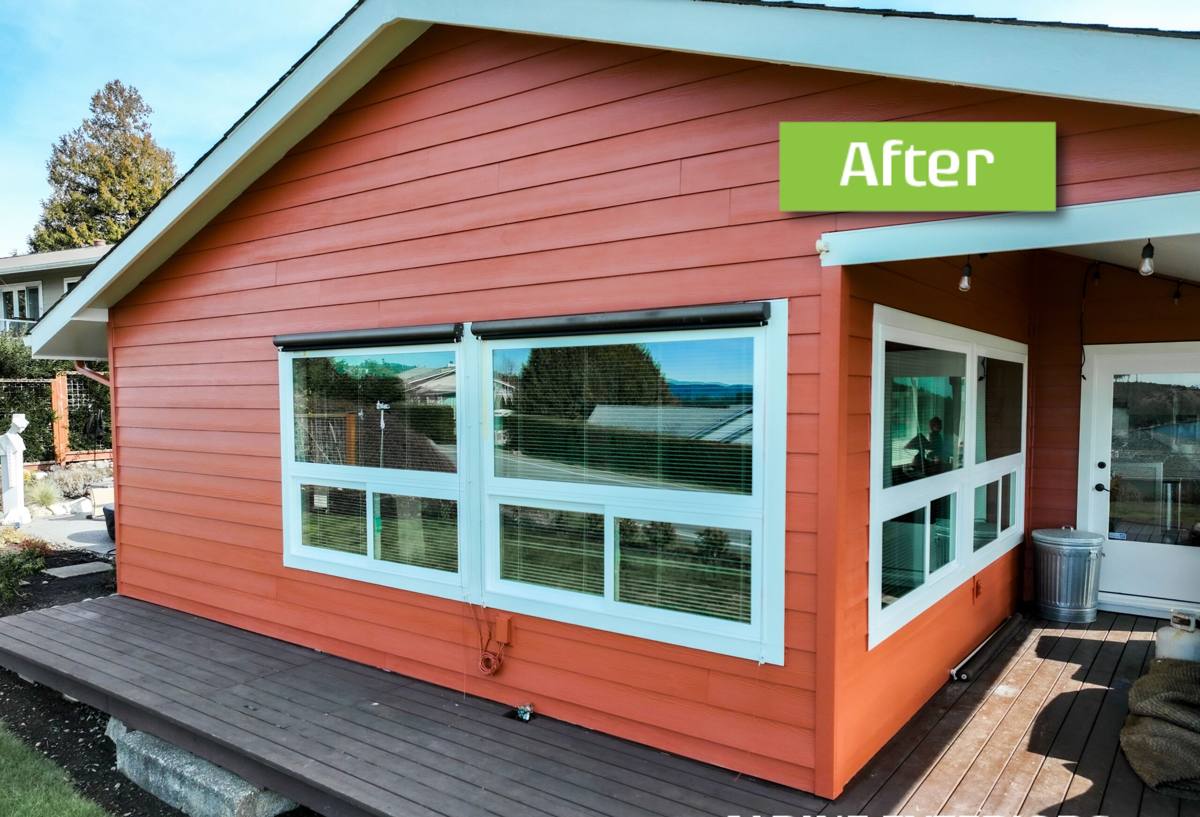
What Salt Air, Wind, and UV Actually Do to Siding
Salt Air and Corrosion
Airborne salt doesn't just sit on the surface of siding — it works into fasteners, joints, and any exposed edges. Over time, salt exposure accelerates corrosion of nails, screws, and metal trim pieces. When fasteners weaken or corrode, siding panels can loosen, shift, or pull away slightly from the wall, creating gaps where wind-driven rain gets behind the cladding.
Wind-Driven Rain
Standard rain falls mostly straight down. Wind-driven rain, which Longboat Key gets regularly from Gulf storms and tropical systems, is pushed sideways and even upward under eaves and around panel edges. This is why proper flashing, caulking, and panel overlap matter so much more here than in calmer climates — a repair that looks fine on a dry, still day can fail the first time wind pushes rain sideways into a gap.
UV Exposure
Florida sun is intense nearly year-round, and an island location with reflected light off open water adds to the exposure. UV breaks down caulking, degrades unprotected wood, and fades or chalks lower-quality siding finishes. Factory-applied finishes hold up far better than field-applied paint, which is one of several reasons product choice matters as much as installation quality.
Common Siding Repair Issues We See on Longboat Key Homes
- Fastener corrosion and panel loosening — salt-accelerated rust on nails or screws causing panels to shift or rattle in wind
- Failed caulking and sealant joints — UV and heat cycling breaking down sealant faster than inland homes, opening gaps at trim and corners
- Moisture intrusion behind panels — wind-driven rain finding its way behind loose or improperly lapped siding
- Impact damage — cracked or dented panels from storm debris, dropped ladders, or landscaping equipment
- Rot at butt joints and bottom edges — common on older wood or non-fiber-cement siding where moisture collects and doesn't fully dry between rain events
- Warping or buckling — heat and humidity cycling causing certain siding materials to expand, contract, and eventually distort
- Discoloration and chalking — UV breakdown of paint or lower-grade factory finishes, especially on south- and west-facing walls
What a Correct Siding Repair Actually Involves
A proper siding repair is not just about patching what's visible. On a barrier island property, the work needs to account for what's happening behind the panel, not just on its surface.
Assessment First
Before any repair, we check the extent of the damage — is it limited to the visible panel, or has moisture already reached the sheathing or framing behind it? Repairing over hidden rot or trapped moisture just delays a much bigger problem, and on a coastal property that hidden damage can spread faster than homeowners expect.
Matching Materials Correctly
Repairs need to match the existing siding in profile, reveal, and finish as closely as possible. With James Hardie fiber cement, this is straightforward because the product lines are consistent and well documented — replacement planks or panels can be matched precisely rather than patched with a mismatched substitute.
Fastening and Flashing Done to Spec
Given how much fastener corrosion contributes to failures here, repairs need corrosion-resistant fasteners installed at the correct spacing and depth, with flashing and house wrap integration restored properly — not just caulked over.
Sealing for Wind-Driven Rain
Joints, corners, and penetrations get sealed with sealants rated for the movement and UV exposure this environment produces, applied at the thickness and coverage the manufacturer specifies, not just a quick bead for appearance.
Repair vs. Replacement: How We Decide
Not every issue calls for full replacement, but not every problem should be patched either. We look at a few factors before recommending one over the other.
| Factor | Favors Repair | Favors Replacement |
|---|---|---|
| Extent of damage | Isolated to one or a few panels | Widespread across multiple wall sections |
| Underlying moisture | None found behind panels | Rot or moisture damage in sheathing |
| Age of existing siding | Newer, still within expected service life | Nearing end of expected lifespan or already failing broadly |
| Material type | James Hardie fiber cement in good condition elsewhere | Wood, vinyl, or lower-grade product showing systemic wear |
| Match availability | Product and color still available/matchable | Discontinued profile or badly faded original finish |
When damage is contained and the rest of the siding is sound, targeted repair is the honest recommendation — there's no reason to replace a whole elevation over a few damaged planks. But when we find recurring moisture problems, widespread fastener failure, or a material that's simply not holding up to island conditions, we'll tell you that directly rather than patching something that's going to keep failing.
Why We Only Repair and Replace With James Hardie Fiber Cement
When repair work does call for new material — whether patching a section or replacing a full wall — we use James Hardie fiber cement, and that's a deliberate standard, not a default. We don't install vinyl, LP SmartSide, Cemplank, Allura, or primed wood siding, and on a property like Longboat Key, the reasons matter more than most places in Sarasota County.
Fiber cement is non-combustible and dimensionally stable, meaning it doesn't expand and contract with heat and humidity the way vinyl or wood does — that stability matters when you're dealing with the temperature swings and constant moisture cycling of an island climate. Hardie's ColorPlus factory finish is baked on under controlled conditions, which holds color and resists the chalking and fading that UV causes on field-painted or lower-grade factory finishes far better. Hardie also engineers specific HZ (HardieZone) product formulations for humid, high-moisture climates like Florida's, which is exactly the environment a Gulf-facing barrier island produces.
None of this means other materials are without merit — vinyl is inexpensive and low-maintenance in mild climates, and wood has real aesthetic appeal. But on Longboat Key, where salt air, wind-driven rain, and intense UV compound each other, we've found that the combination of durability, finish retention, and manufacturer support behind James Hardie gives homeowners the best long-term outcome, backed by a strong transferable warranty.
Our Repair Process
- On-site inspection — we assess visible damage and check for signs of moisture behind the siding, not just what's on the surface
- Honest scope recommendation — repair, partial replacement, or full replacement, explained clearly with the reasoning behind it
- Material matching — sourcing the correct James Hardie profile, plank width, and finish to match existing siding where repair is appropriate
- Removal and prep — careful removal of damaged sections, inspection and repair of any underlying sheathing or house wrap issues found
- Installation to manufacturer spec — correct fastener type and spacing, proper flashing integration, and sealant applied for coastal wind and moisture exposure
- Final check — confirming panel alignment, sealed joints, and a finished appearance that blends with the surrounding siding
Why Hiring a Crew That Already Works Longboat Key Matters
Siding repair on a barrier island isn't the same job as siding repair in a subdivision fifteen miles inland, even though the materials might look identical. A crew that regularly works Longboat Key and the surrounding Sarasota coastline already understands how fast salt exposure accelerates fastener corrosion, how wind-driven rain behaves around corners and eaves in this specific setting, and where moisture tends to collect on homes exposed to open water on multiple sides.
That familiarity shows up in the details — the fastener spec used, how flashing is integrated, which sealants hold up under this level of UV and salt exposure over years, not just months. It also means fewer surprises: we've seen what island conditions do to different repair approaches over time, and we apply that experience instead of treating every job like it's the first coastal repair we've done.
What Homeowners Can Watch For Between Inspections
- Panels that feel loose or shift slightly when pressed
- Cracked, chipped, or missing caulking at corners, trim, and joints
- Visible rust streaking near fasteners or metal trim
- Soft spots or discoloration near the bottom edge of siding, especially near ground level or roof-to-wall intersections
- Fading or chalking that's noticeably worse on south- or west-facing walls
- Any gap or separation where two panels meet
Catching these early keeps a minor repair from becoming a bigger moisture problem, especially given how quickly conditions on the island can turn a small gap into a real entry point for water.
If you're noticing any of these signs on a Longboat Key property, or just want a professional look at where your siding stands, we're happy to come out for a free, no-pressure estimate — no obligation, just an honest assessment of what your home actually needs.