 Sarasota Roofing
 Building a Deck That Actually Holds Up in Rosemary District
Rosemary District sits just north of downtown Sarasota, in a part of the city that's been changing fast — older Florida bungalows and cottages sitting alongside new townhomes, condos, and modern infill construction. Whatever style your home is, a deck built for this neighborhood has to answer to the same thing every outdoor structure in Sarasota County answers to: a climate that doesn't let anything slide. Hurricane-force wind events, relentless UV exposure nearly every month of the year, wind-driven rain that finds its way into any gap you leave it, and salt-laden air that doesn't stay confined to the immediate waterfront. A deck that isn't specifically built with those four forces in mind will show it within a few seasons — loose boards, rusted fasteners, cupped or checked wood, or worse, a structure that isn't actually safe to stand on.
We build custom decks specifically for Sarasota conditions, and we've done work throughout Rosemary District and the surrounding downtown-adjacent neighborhoods. That matters more than it might seem — a deck design that works fine in Ohio or even in inland Florida can fail here in ways that aren't obvious until you're a few years in.
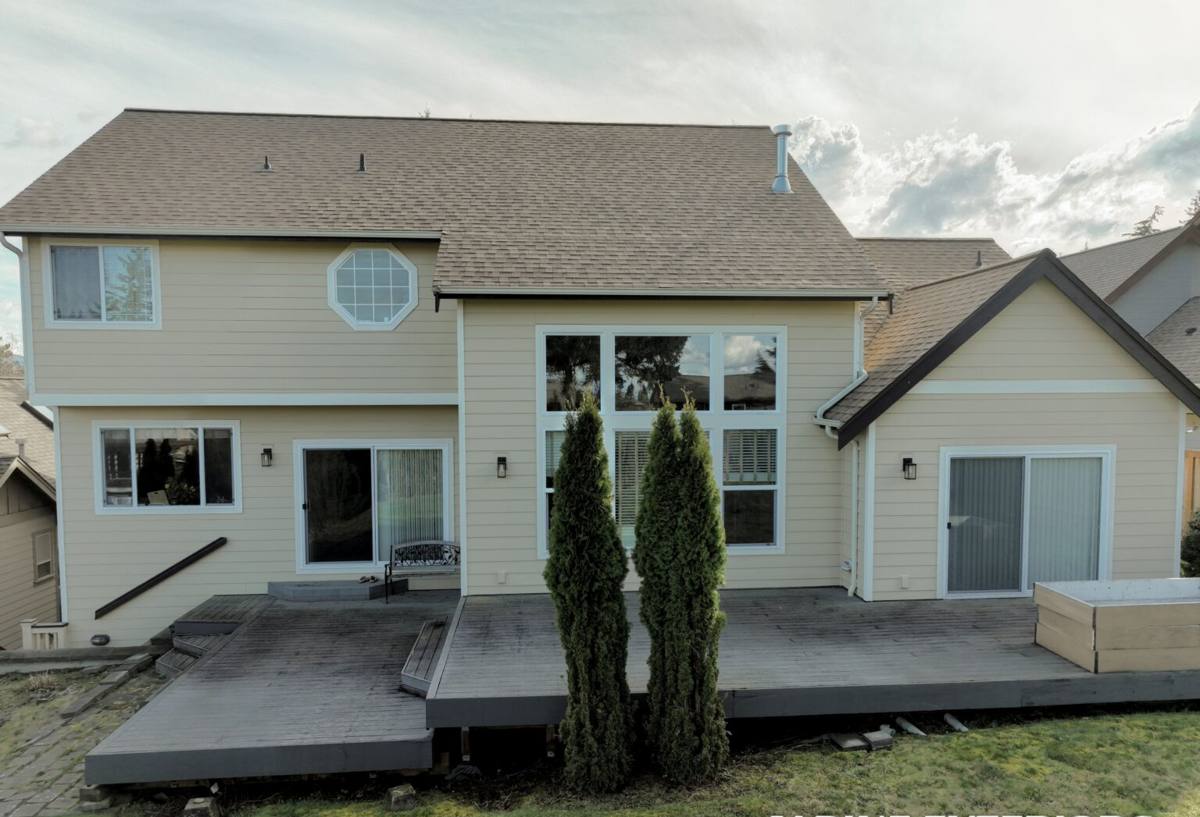
What Sarasota's Climate Actually Does to a Deck
Hurricane-Force Wind Loads
Sarasota County sits in one of the higher wind-design zones on the Gulf Coast, and the Florida Building Code reflects that with specific requirements for structural connections, post spacing, and railing attachment. A deck isn't just a platform sitting on posts — under wind load, it's a structure that has to transfer force down through the framing, into the footings, and into the ground without racking, lifting, or separating from the house. Undersized ledger connections and inadequate post-to-footing anchoring are the most common failure points we see on decks that weren't engineered for this wind zone.
Year-Round UV Exposure
Sarasota gets strong sun exposure nearly every month, not just in summer. UV breaks down the lignin in wood fibers, causing graying, splintering, and surface checking over time, and it degrades lower-quality composite and plastic products faster than their warranty literature usually suggests. Material selection and finish matter more here than in most parts of the country.
Wind-Driven Rain and Moisture
Storms here rarely arrive straight down. Wind-driven rain gets pushed sideways and upward into joints, fastener holes, and ledger connections that a calm-weather installation might never test. Any point where the deck attaches to the house is a potential water intrusion path into your home's structure if it isn't flashed correctly — this is one of the most common and most expensive mistakes we get called to fix on other contractors' work.
Salt Air and Corrosion
Rosemary District isn't directly on the water, but Sarasota is a coastal city, and salt-laden air travels well inland, especially with onshore breezes. Standard zinc-coated fasteners and hardware corrode faster here than in a landlocked climate. Over a few years, that corrosion weakens the very connections that are supposed to keep the deck attached to your house and stable under wind load.
Rosemary District's Mix of Older and Newer Homes
One thing that sets Rosemary District apart from a lot of Sarasota neighborhoods is the architectural mix. You've got original Florida cottages and bungalows on smaller lots next to newer townhomes and modern infill builds, often with tighter setbacks and less room to work with than you'd find in a suburban subdivision. That affects deck design in a few practical ways:
- Smaller lots mean footing placement and post layout often have to work around existing landscaping, utility lines, or property line setbacks with little margin for error
- Older homes may have ledger boards, sill plates, or foundation framing that needs closer inspection before we attach a new structure to it
- Newer construction often has HOA or design-review guidelines governing materials, railing style, and color that need to be checked before design begins
- Alley or side-yard access on urban lots can limit how materials and equipment get to the build site, which affects scheduling and staging
None of this is a reason to avoid a custom deck — it just means the design phase needs to actually account for your specific lot instead of using a one-size-fits-all layout.
Choosing the Right Decking Material for This Climate
There's no single "best" decking material for every home — it depends on your budget, how much upkeep you want to take on, and how the deck will be used. Here's how the common options actually perform under Sarasota conditions:
| Material | UV & Heat Performance | Moisture & Salt Air Resistance | Maintenance |
|---|---|---|---|
| Pressure-treated pine | Grays and can check under strong sun unless refinished regularly | Decent if properly sealed; needs reapplication over time | Highest — annual cleaning and periodic sealing |
| Capped composite | Strong resistance to fading and surface degradation | Very good; the cap layer resists moisture intrusion into the core | Low — periodic washing, no sealing or staining |
| PVC/cellular decking | Excellent UV stability, doesn't gray or split | Excellent; fully synthetic, no wood fiber to absorb moisture | Lowest — occasional cleaning only |
| Tropical hardwoods (e.g., ipe) | Naturally dense and UV-resistant, but color fades to gray without oiling | Naturally rot- and insect-resistant | Moderate to high — periodic oiling to maintain color |
We'll walk through the honest trade-offs of each option for your specific project during the design conversation — including upfront cost versus long-term maintenance, since the cheapest material on day one isn't always the cheapest option over ten years in this climate.
What a Correctly Built Deck Actually Involves
Footings and Framing
Footing depth and post spacing aren't guesswork — they're determined by the deck's size, height, expected load, and local soil conditions, and they have to meet Florida Building Code requirements for this wind zone. Framing lumber, joist spacing, and beam sizing all get calculated to the actual span and load, not just built to "what usually works."
Fasteners and Hardware
Given the salt air exposure discussed above, we use corrosion-resistant fastener and hardware systems rated for coastal environments — standard interior-grade hardware isn't sufficient here, regardless of what's cheaper at the moment of purchase. Hurricane ties, post bases, and joist hangers all get the same standard.
Flashing and Ledger Attachment
Where the deck meets your house is the single most important detail on the entire project. Proper ledger flashing directs water away from the house structure instead of trapping it against the rim joist, which is what leads to hidden rot years down the line. This detail is easy to rush and expensive to fix once it fails.
Railings and Code Compliance
Railing height, baluster spacing, and attachment strength are all governed by code, and railings take direct wind load in a storm — an under-built railing system is both a code violation and a genuine safety issue, not just a cosmetic detail.
Permitting in the City of Sarasota and Sarasota County
Most custom deck projects require a permit, and depending on your property's exact location, that permit may run through the City of Sarasota or Sarasota County, each with their own review process and inspection schedule. Permitted work means an independent inspector verifies footings, framing, and attachment points before the deck is closed in or finished — that inspection is a real safeguard, not just a bureaucratic step, and it protects you if you ever sell the home and a buyer's inspector looks closely at the structure. We handle the permit application and coordinate inspections as part of the build, so you're not managing that process yourself.
Our Process, Start to Finish
- Free on-site consultation — we look at your lot, discuss how you'll use the space, and talk through material options honestly, including cost and maintenance trade-offs
- Design and layout — we design around your specific lot constraints, any HOA guidelines, and your home's structure, not a generic template
- Permitting — we prepare and submit the permit application and structural documentation required by the City of Sarasota or Sarasota County
- Material selection and scheduling — you choose the decking, railing, and finish options; we schedule the build around permit approval
- Construction — footings, framing, ledger flashing, decking, and railings, built to code and to the standards described above
- Inspection — the permitting inspector reviews the completed work at the required stages
- Final walkthrough — we go over the finished deck with you, including care and maintenance guidance specific to the material you chose
Protecting Your Investment After the Build
A well-built deck in this climate still needs some routine attention. What that looks like depends on the material, but a general maintenance checklist applies to most Sarasota decks:
- Rinse off salt residue, pollen, and debris periodically, especially after storms
- Check railing connections and fastener heads once or twice a year for early signs of corrosion or loosening
- Keep gutters and downspouts near the deck clear so runoff isn't dumping extra water onto or under the structure
- Reseal or refinish wood decking on the schedule appropriate to the product — don't wait until graying and splintering are already advanced
- Inspect the ledger flashing area at the house connection for any signs of staining or moisture after major storms
Why Hiring a Crew That Already Works Rosemary District Matters
A deck contractor who's worked this neighborhood already understands the permitting path through the City of Sarasota, knows what wind-zone and flood-consideration requirements typically apply to lots in this part of the county, and has already worked around the access and setback challenges that come with Rosemary District's tighter, mixed-era lots. That experience shows up in fewer surprises during design, a smoother permitting process, and a finished deck that's actually built for the site it's sitting on — not a generic plan adjusted after the fact.
If you're considering a custom deck for your Rosemary District home, we're happy to take a look at your property and talk through honest options for your budget, your home's style, and how you actually want to use the space. There's no pressure and no obligation — just a straightforward conversation and a free estimate using the form below.