 Sarasota Roofing
 Osprey sits in Sarasota County between Sarasota and Venice, and like most of the Gulf Coast, the roofs out here don't have it easy. A roof over an Osprey home deals with hurricane-force wind loads, some of the most intense year-round UV exposure in the country, wind-driven rain that finds its way into details a calmer climate would never test, and salt air that works on metal components whether a home sits on the water or a few streets back from it. Roof replacement done right in Osprey isn't a bigger version of a roof job done anywhere else — it's a roof built and installed specifically to hold up against what this stretch of coast actually delivers. This page covers what wears an Osprey roof out, what a correct full replacement involves, and how our process works from first inspection to final walk-through.
What Actually Wears Out a Roof in Osprey
Four conditions do most of the damage to roofs in this part of Sarasota County, and they don't act one at a time — they compound each other over the life of a roof.
Hurricane-Force Wind
Wind is the condition Florida roofing code is built around, and for good reason. Sustained hurricane-force wind puts uplift pressure on every shingle, panel, and fastener, and it's usually the edges, ridges, and hips of a roof that take the worst of it — those are the areas where wind pulls hardest and where a marginal installation shows its weakness first. A roof that survives one storm season on a substandard fastening pattern doesn't necessarily survive the next one; wind damage is often cumulative, loosening material a little more with each event until a failure finally shows.
Intense Year-Round UV
Florida's UV exposure is among the highest in the continental United States, and unlike wind or rain, it's a daily condition rather than an occasional one. On asphalt shingles, constant UV breaks down the asphalt and granule adhesion over time, leading to brittleness, cracking, and granule loss well before the shingle's rated service life is up if the product or installation wasn't suited to this level of sun exposure. On any roofing material, UV is the reason a roof's real-world lifespan in Sarasota County is often shorter than the same product's rated life in a milder climate.
Wind-Driven Rain
Rain that comes in sideways behaves very differently than rain that falls straight down. It gets pushed up under shingle edges, into valleys, and around flashing details that would stay dry in an ordinary rain event. Most of the leaks we find on older Osprey roofs didn't start as a failure of the shingle or panel itself — they started at a flashing detail, a valley, or a penetration that wasn't built to handle water being driven into it sideways at speed.
Salt Air
Osprey isn't a barrier island, but it's close enough to the Gulf and the Intracoastal Waterway that salt-laden air still reaches most properties in the area, and it settles on metal continuously, not just during storms. Fasteners, flashing, vent stacks, and gutter hardware all corrode faster here than they would further inland, and that corrosion is usually invisible from the ground until it shows up as rust staining or a fastener that's lost its holding strength.
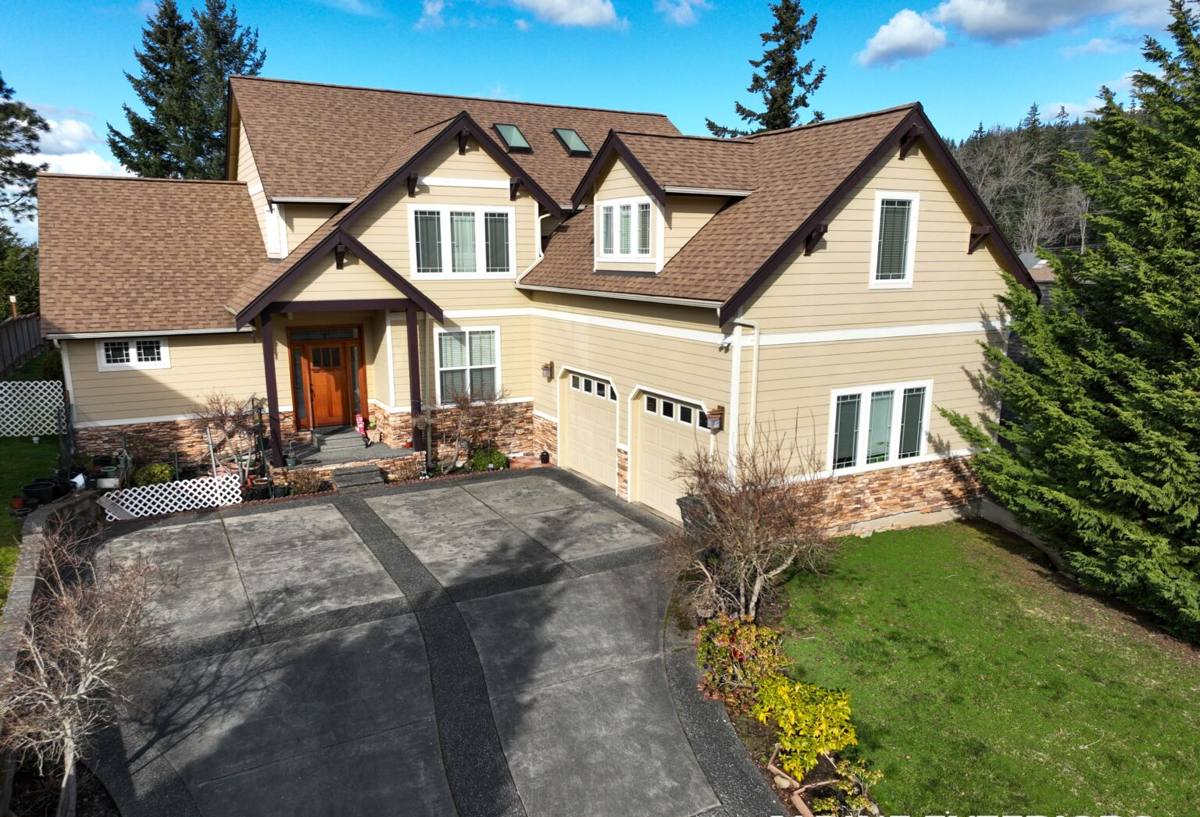
Signs Your Osprey Home Needs Full Replacement, Not a Repair
Not every roof problem calls for a full replacement, but these are the signs that usually point toward it rather than a patch:
- Shingles that are cupping, curling, or losing granules across large sections of the roof, not just one isolated area
- Multiple leaks showing up in different locations, especially during wind-driven rain rather than a steady straight-down rain
- Visible sagging in the roofline or soft spots in the decking underfoot
- Rust staining at fasteners, flashing, or vent stacks in more than a couple of spots
- Daylight visible through the roof deck from inside the attic
- A roof approaching or past its material's realistic service life for this climate, regardless of the manufacturer's rated life
- Storm damage — lifted or missing shingles, exposed underlayment, or compromised flashing — that's extensive enough that patching would just move the next failure to a different spot
- Rising insurance premiums or a wind mitigation inspection flagging the current roof's age or condition
Choosing a Roofing System for This Climate
Material choice matters more here than in a milder inland climate, since the product has to hold up to wind, UV, and salt exposure all at once. This is a general comparison — the right fit for a given home also depends on roof pitch, sun exposure, and budget.
| Material | Wind & Storm Performance | UV and Salt Air Durability | Typical Service Life Here |
|---|---|---|---|
| Architectural asphalt shingle | Good when installed with a high-wind fastening pattern and rated for local code | Moderate; UV shortens real-world life versus milder climates | 20–25 years with correct installation |
| Standing seam metal | Excellent; interlocking panels resist uplift well when properly fastened | High when specified with a coastal-rated finish | 40–50+ years |
| Concrete or clay tile | Very good; heavy profile resists uplift, but individual tiles can crack under storm debris impact | High; tile itself doesn't degrade from UV or salt | 40–50+ years for the tile, though underlayment typically needs replacement sooner |
| 3-tab asphalt shingle | Weakest of the common options against high wind | Lower; thinner profile degrades faster under constant UV | 15–18 years, often less in this climate |
We'll go over which option fits a specific roof's pitch, exposure, and budget during the estimate, including the honest trade-offs of each rather than steering every homeowner toward the same product.
What a Correct Roof Replacement Involves
Tear-Off and Deck Inspection
A full tear-off is the only way to see the actual condition of the roof deck underneath — rot, soft spots, or old water damage that would otherwise get covered up and buried under new roofing. Any compromised sheathing gets replaced before anything new goes down, since new material installed over a weak deck doesn't hold fasteners the way it should, no matter how good the roofing product is.
Underlayment
Given the wind-driven rain this area sees, underlayment isn't a place to cut corners. A synthetic underlayment with strong water resistance, combined with self-adhered membrane at eaves, valleys, and other vulnerable points, gives the roof a real second line of defense if wind ever drives water past the primary roofing surface.
Flashing
Flashing at chimneys, skylights, vent penetrations, and roof-to-wall transitions is where most leaks actually originate, not the field of the roof itself. We use corrosion-resistant flashing suited to salt air exposure and integrate it properly with the underlayment, rather than leaning on sealant to do a flashing detail's job.
Fastening and Wind Rating
Fastening pattern is one of the biggest differences between a roof that holds up through hurricane season and one that doesn't. We install to the wind-rating requirements that apply to this part of Sarasota County, with attention to fastener spacing at edges, hips, and ridges — the areas that see the highest uplift pressure and the first place an undersized install shows.
Ventilation
Proper intake and exhaust ventilation keeps the roof deck drier, reduces heat buildup under constant Florida sun, and protects against condensation damage on the underside of the deck. A roof that isn't ventilated correctly tends to run hotter and age faster, even if every other component was installed well.
Our Roof Replacement Process
- On-site inspection. We assess the existing roof, deck condition, ventilation, and any problem areas, and take accurate measurements for the estimate.
- Material and system selection. We go over the options that fit the home's pitch, exposure, and budget, with straightforward trade-offs for each.
- Permitting. We handle the permit application through Sarasota County so the homeowner isn't navigating that process alone.
- Tear-off and deck repair. Old roofing comes off, the deck is inspected, and any damaged sheathing is replaced before new material goes down.
- Underlayment and flashing installation. The moisture barrier and flashing go in first, since this layer determines whether the roof actually stays dry in wind-driven rain.
- Roofing material installation. The chosen system is installed to manufacturer specification and local wind-rating requirements, with attention to fastening pattern at edges and penetrations.
- Ventilation and final inspection. Intake and exhaust ventilation are confirmed working, and the completed roof is checked against code before close-out.
- Final walk-through. We review the finished roof with the homeowner and go over warranty and care details.
Cost Factors for an Osprey Roof Replacement
Every roof prices differently, and we don't quote a number without seeing the roof in person, but these are the variables that move a bid up or down.
| Factor | Why It Matters Here |
|---|---|
| Roof size and complexity | More valleys, hips, and penetrations mean more flashing work and more labor |
| Pitch and access | Steep or hard-to-access roofs take longer and require more safety setup |
| Material choice | Metal and tile cost more up front but generally need less maintenance and outlast asphalt in this climate |
| Deck condition | Rot or soft sheathing found during tear-off adds repair cost that isn't visible until the old roof is off |
| Underlayment upgrade | Full self-adhered membrane coverage costs more than minimum-code underlayment but reduces wind-driven rain risk |
| Wind-rated fastening requirements | Meeting local high-wind fastening specs takes more material and labor than a standard inland install |
Permitting and Wind Mitigation in Sarasota County
A full roof replacement in Sarasota County requires a building permit and inspection, and the new roof has to meet current Florida Building Code wind-resistance requirements for this region — not just whatever standard the old roof was built to. We handle that permitting and inspection process as part of the job. A new roof is also usually the point at which it's worth having a wind mitigation inspection done, since a properly installed, code-compliant roof can affect windstorm insurance premiums. We're glad to explain what a wind mitigation report actually documents and how the roof we install factors into it, though the insurance side of that conversation is ultimately between the homeowner and their carrier.
Why Hire a Crew That Already Works Osprey
A roofing crew that mostly works well inland isn't wrong about roofing in general — they're just working from a different set of defaults. Fastening patterns, flashing choices, and underlayment coverage that are adequate on a roof with less wind and salt exposure are often undersized for what a Sarasota County coastal climate delivers year after year. A crew that already works Osprey and the surrounding area has seen which details actually fail out here, not just which ones fail in a manual.
That familiarity also shows up in the estimate itself — fewer surprises once the tear-off is underway, because the inspection accounted for how wind, UV, and salt air actually behave in this area rather than applying a generic checklist built for a different climate.
Maintaining a New Roof in This Climate
- Keep gutters and downspouts clear so water isn't backing up under roof edges during heavy rain
- Have a professional inspection done after any major storm, even if no leak is visible from inside
- Trim back tree limbs that could drop debris on the roof or hold moisture against a shaded section
- Watch for granule buildup in gutters beyond normal light shedding, which can signal accelerated shingle wear
- Address any small leak signs immediately rather than waiting for the next rainy season
- Schedule a periodic check of flashing points around chimneys, skylights, and vents, since that's where most leaks start
If your roof is showing its age, took damage in the last storm season, or you're simply planning ahead, we're glad to take a look and give you a straight answer on where it stands. Reach out below for a free, no-pressure estimate.