 Sarasota Roofing
 Why Osprey Homes Need Siding Built for This Climate
Osprey sits along the Gulf Coast in Sarasota County, which means the exterior of your home is working against a specific combination of stresses almost every day of the year. Hurricane-force winds during storm season push moisture into every gap and seam a siding system has. Intense, near-constant UV exposure breaks down pigments and softens lesser materials over years of direct sun. Wind-driven rain finds its way behind poorly flashed panels and sits there. And salt air drifting in off the Gulf slowly corrodes fasteners and trim that aren't rated for a coastal environment.
None of this is unique to any one house in Osprey — it's the baseline condition for anything mounted to an exterior wall in this part of Florida. The siding material you choose, and more importantly how it's installed, determines whether your home shrugs off another decade of that punishment or starts showing problems in year three or four.
This page is specifically about James Hardie fiber cement siding installed on Osprey homes — what the material needs to do here, what a correct installation actually involves, and how we approach the work on houses in this neighborhood.
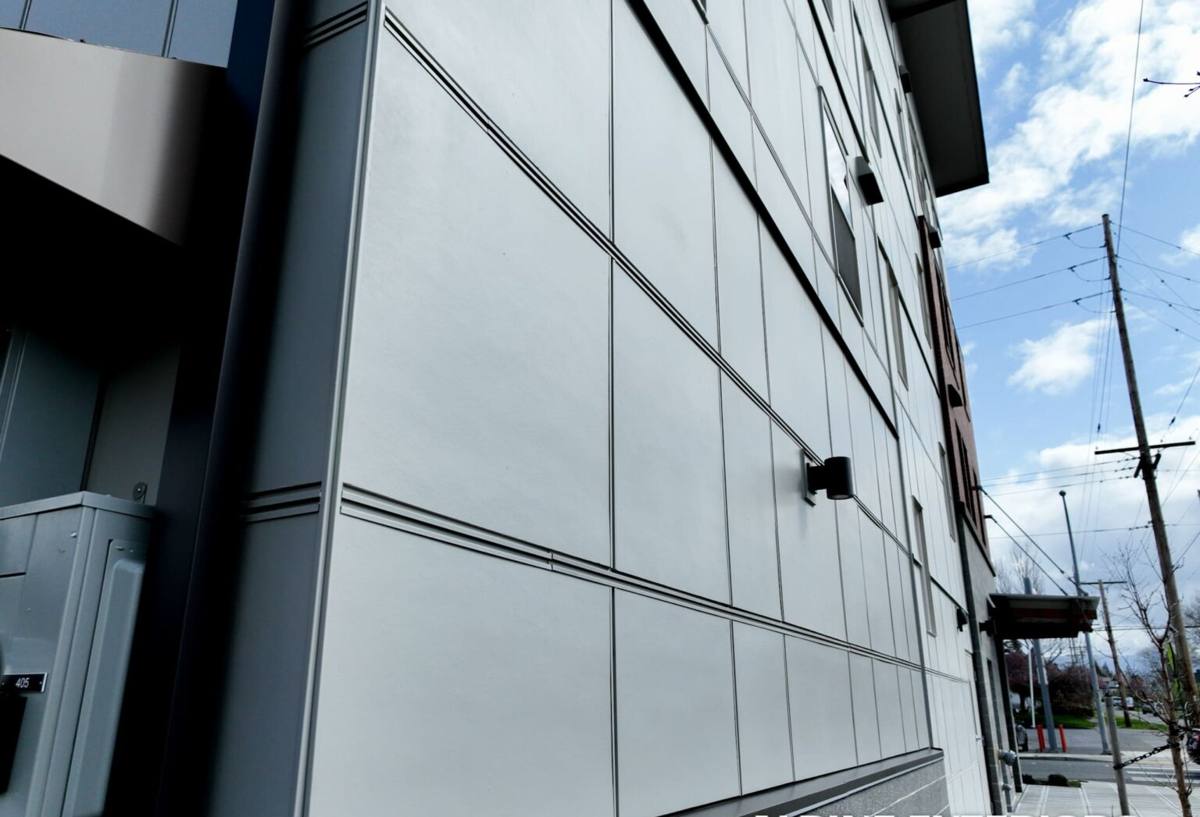
Why We Only Install James Hardie
We don't install vinyl siding, LP SmartSide, Cemplank, Allura, or primed wood siding. That's a deliberate standard, not a matter of one brand being available and another not. Fiber cement from James Hardie is engineered specifically for climates like ours, and the company's HZ5 product line is formulated for the exact combination of humidity, heat, and moisture cycling that Sarasota County homes deal with.
Vinyl siding can warp and distort in sustained high heat, and its seams and J-channels give wind-driven rain a path inward during tropical storms. It's also a combustible material, which matters more than people think until it doesn't. Wood-based and engineered wood products like LP SmartSide are more moisture-sensitive than fiber cement — if water gets behind a panel or into a cut edge and stays there, the material can swell, delaminate, or rot in ways that fiber cement simply doesn't. Other fiber cement brands may be dimensionally similar to Hardie, but we've standardized on Hardie specifically because of its factory-applied ColorPlus finish, its climate-engineered product lines, and the strength of its transferable warranty when the installation is done to spec.
None of this means other products are junk — plenty of them perform fine in the right application. It means that for coastal Florida exteriors, we've made a professional judgment call about which material gives homeowners the best long-term outcome, and we build our installation process around doing that one thing correctly rather than spreading our crews thin across five different systems.
What Correct Hardie Installation Actually Involves
Fiber cement siding is only as good as the installation behind it. Hardie's own installation guidelines are specific and detailed, and skipping steps is the single biggest reason siding jobs fail early — not the material itself.
Weather Resistive Barrier and Flashing First
Before a single piece of siding goes up, the wall needs a properly lapped weather-resistive barrier and correctly installed flashing at every window, door, and penetration. In a market with wind-driven rain, flashing details around openings are often the difference between a dry wall cavity and a slow, hidden leak that isn't discovered until interior damage shows up.
Fastening Pattern and Clearances
Hardie specifies fastener type, spacing, and embedment depth, and those specs exist for a reason — under-driven or over-driven nails, or the wrong fastener for the substrate, create weak points that show up as cracking or panel movement over time. Ground clearance and roofline clearance also matter more here than in drier climates: siding installed too close to grade or a roof deck stays damp longer after our frequent rain events, which accelerates wear at the bottom edge.
Joints, Caulking, and Painted Cut Edges
Every field-cut edge of a Hardie board needs to be sealed and primed before installation, and butt joints need to be treated correctly rather than just butted together and caulked over. This is one of the most commonly skipped steps on rushed jobs, and it's also one of the most consequential — an unsealed cut edge is a direct path for moisture into the board itself.
Fastener and Trim Corrosion Resistance
Given the salt air along this stretch of coast, we use corrosion-resistant fasteners and trim components rather than standard-grade hardware. Standard fasteners can start showing rust streaking on light-colored siding within a few years in a coastal zone — a cosmetic problem that's entirely avoidable with the right hardware spec from day one.
Our Process for an Osprey Siding Project
| Stage | What Happens |
|---|---|
| Assessment | On-site inspection of existing siding, sheathing, and any moisture or rot already present behind the wall |
| Product Selection | Choosing the right Hardie plank profile, exposure, and ColorPlus color for the home's style and sun exposure |
| Prep and Tear-Off | Removal of old siding, inspection and repair of sheathing, installation of weather-resistive barrier and flashing |
| Installation | Hardie boards installed to manufacturer fastening, clearance, and joint-treatment specifications |
| Trim and Detail Work | Corrosion-resistant trim, corner treatments, and caulking at all penetrations and joints |
| Final Walkthrough | Inspection with the homeowner before closing out the project |
We don't skip the prep stage to get to the visible part of the job faster. What's behind the siding matters as much as the siding itself, and any existing moisture or sheathing damage needs to be addressed before new material goes up — otherwise you're covering a problem instead of fixing it.
Choosing the Right Hardie Product Line for This Area
James Hardie makes several plank profiles and product lines, and the right choice depends on the home's style and exposure, not just personal preference. HardiePlank lap siding in a smooth or cedar-textured finish is the most common choice for traditional Florida home styles in this area. Homes with more architectural detail sometimes pair HardiePlank with HardieTrim boards for a more finished look around windows, corners, and fascia.
For Osprey specifically, we lean toward Hardie's HZ5 climate-engineered formulation, which is built for the humidity and moisture-cycling conditions of the Southeast and Gulf Coast rather than a general-purpose national formulation. It's a small distinction on paper but a meaningful one over a 20-30 year ownership horizon.
ColorPlus Factory Finish
We recommend ColorPlus finished boards over field-painted siding whenever possible. The factory finish is baked on and warranted separately from the substrate, and it resists the fading that intense Florida UV exposure causes in ordinary field-applied paint within just a few years. It also means less repainting maintenance over the life of the siding.
Cost Factors for a Siding Project in Osprey
| Factor | Why It Affects Price |
|---|---|
| Home size and wall complexity | More square footage and more corners, gables, and dormers mean more material and labor |
| Existing wall condition | Rotted or water-damaged sheathing found during tear-off adds repair scope before new siding goes on |
| Product line and finish | ColorPlus factory-finished boards cost more upfront than field-painted primed boards but reduce future maintenance |
| Trim and detail level | Homes with more architectural trim require more precision cutting, sealing, and finish work |
| Accessibility | Two-story sections, tight lot lines, and landscaping can add labor time and equipment needs |
We don't quote a project sight unseen because these factors vary house to house. A proper estimate comes from an actual walk-around of the home, not a generic per-square-foot number.
Signs Your Osprey Home's Siding Needs Attention
- Visible cracking, buckling, or warping in siding panels, especially on sun-exposed walls
- Soft or spongy spots when pressing on the siding near the base of the wall or below windows
- Peeling or bubbling paint that keeps returning in the same spot after repainting
- Rust streaking running down from fasteners or trim pieces
- Gaps opening up at joints, corners, or around window and door trim
- A musty smell or visible staining on interior walls that back up to exterior siding
- Siding that flexes or feels loose when pushed on
Any one of these on its own isn't necessarily an emergency, but they're worth having looked at before the next storm season rather than after.
Why Local Installation Experience Matters
Fiber cement siding installed to Hardie's specifications performs the same way anywhere in the country on paper. In practice, a crew that regularly works homes in Osprey and the surrounding Sarasota County area has already worked through the specific flashing, fastening, and clearance decisions that this climate calls for — not just the general manufacturer instructions, but the judgment calls that come from having done it here repeatedly. That includes knowing how much ground clearance actually holds up through our rainy season, which fastener grades hold their finish through a full salt-air exposure cycle, and how to sequence a tear-off and re-side around Florida's storm season rather than leaving a wall open to weather at the wrong time of year.
A crew unfamiliar with coastal installation can follow the same written spec and still make choices that work fine in a drier, calmer climate but fall short here. That gap usually doesn't show up on installation day — it shows up two or three years later.
Get an Estimate for Your Osprey Home
If you're weighing a siding replacement or repair in Osprey, we're happy to take a look and give you a straightforward, no-pressure assessment of what your home actually needs. Fill out the form below to request a free estimate.