 Sarasota Roofing
 Deck Repair Built for Osprey's Climate, Not a Generic Fix
Osprey sits close enough to the water that every deck in the neighborhood is fighting the same slow battle: salt-laden air, punishing UV exposure nearly year-round, sudden wind-driven rain, and the occasional hurricane-force gust that tests every fastener and ledger connection. A deck repair that would hold up fine in a dry inland climate often fails fast here because it wasn't built to account for what Sarasota County weather actually does to wood, fasteners, and connections over time. We repair decks in Osprey specifically, and we build every repair around those local conditions rather than a one-size-fits-all approach.
This page covers deck repair as its own service for Osprey homeowners — what typically goes wrong, what a correct repair actually involves, how we approach the job, and why local experience matters more with decks than with almost any other exterior component.
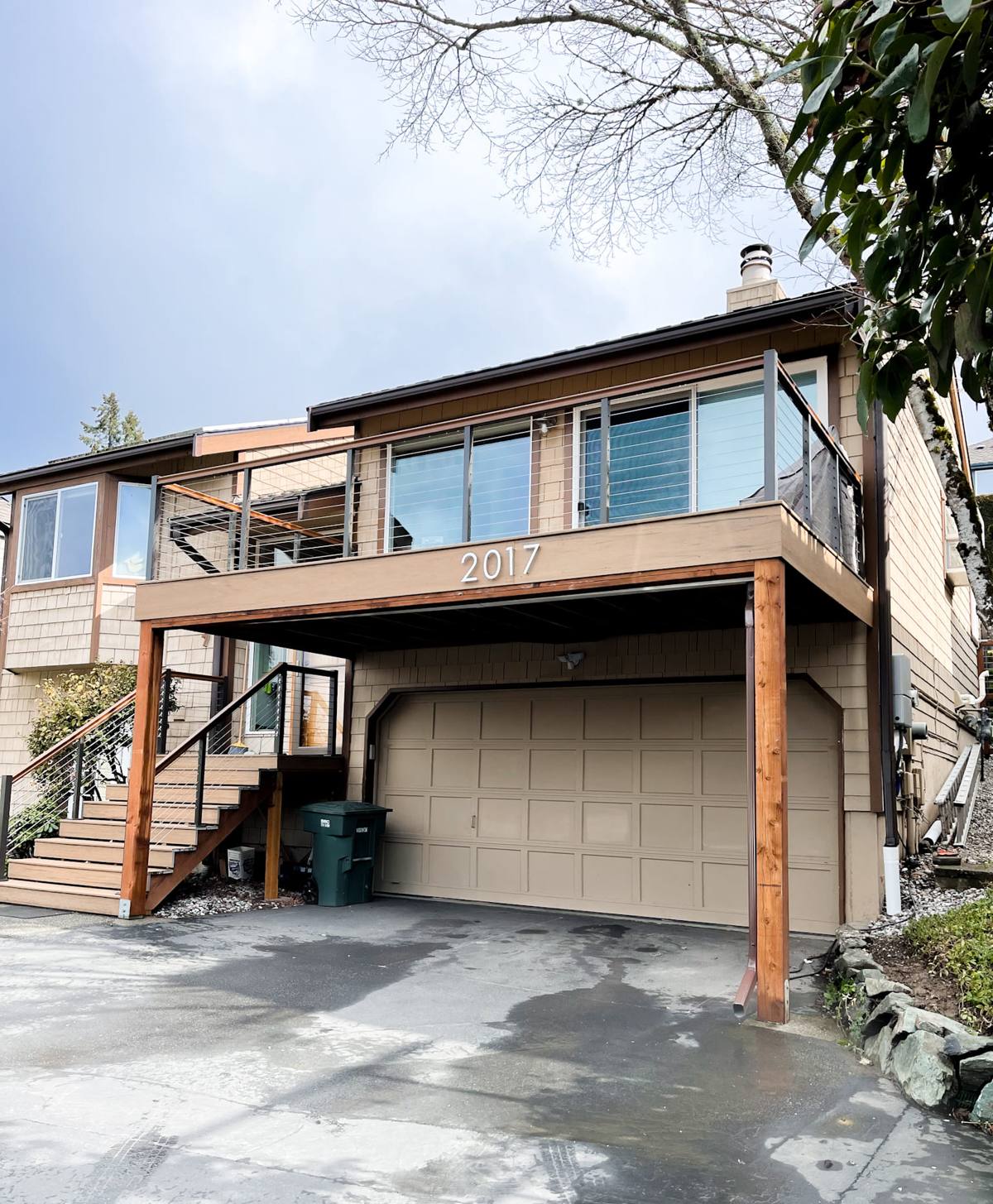
What Sarasota's Climate Does to a Deck Over Time
Decks take more direct environmental abuse than almost any other part of a house. They're horizontal, so they collect standing water and pooling moisture after every rain. They're exposed to full sun for hours at a stretch. And in a coastal-influenced area like Osprey, salt air accelerates corrosion on every piece of exposed metal hardware — nails, screws, joist hangers, bolts, and railing brackets.
- UV exposure breaks down wood fibers and dries out protective finishes faster than most homeowners expect, leading to graying, splintering, and surface checking.
- Wind-driven rain gets pushed sideways into ledger connections, under flashing, and into end-grain cuts where boards meet the house or posts.
- Salt air corrodes standard fasteners and hardware from the inside out — often the metal fails before the wood around it shows obvious damage.
- Humidity and standing water feed rot and fungal growth in framing members that don't get a chance to fully dry between rain events.
- Hurricane-season wind loads stress every connection point, and a deck with weakened fasteners or a compromised ledger board is a real safety risk in a storm.
None of this is unique to any one Osprey property — it's the baseline condition every deck in the area is dealing with. The difference between a deck that lasts and one that needs constant patching usually comes down to how well the original build and past repairs accounted for these conditions.
Signs Your Osprey Deck Needs Repair — Not Just Cosmetic Attention
Some deck problems are obvious. Others hide until they become a safety issue. Here's what we look for, and what homeowners should watch for between inspections.
Surface-Level Signs
Graying, splintering, or a rough, fuzzy texture on the wood surface usually means the finish has worn through and UV exposure is attacking the wood fibers directly. This is cosmetic at first, but left alone it accelerates moisture absorption and shortens the life of the boards.
Structural Warning Signs
These matter far more and should never be ignored:
- Soft or spongy spots underfoot, especially near the house connection or around post bases
- Visible gaps, separation, or rust streaking at the ledger board where the deck meets the house
- Wobbly or loose railings and posts
- Fasteners that are backing out, rusted, or leaving dark stains in the wood around them
- Cracked, split, or sagging joists visible from underneath the deck
- Stairs that feel bouncy or uneven
A deck can look fine from a few feet away and still have a failing ledger connection or rotted framing underneath. That's why a proper repair starts with an actual inspection of the structure, not just a look at the surface boards.
What a Correct Deck Repair Actually Involves
Deck repair isn't just swapping out a few bad boards. A repair done right addresses the whole system, because a deck is only as strong as its weakest connection.
The Ledger Board and House Connection
This is the single most important structural connection on most decks — it's what ties the deck to the house and carries a large share of the load. In Osprey's climate, this is also where we most often find hidden rot from water intrusion behind flashing that's failed or was never properly installed. A correct repair means pulling back decking to inspect the ledger, correcting flashing so water sheds away from the house, and replacing any compromised lumber before it becomes a bigger structural problem.
Framing: Joists, Beams, and Posts
We check for rot, checking (splitting along the grain), insect damage, and connection integrity at every joist hanger and post base. Sistering a damaged joist with new lumber is sometimes appropriate; other times a joist has to be fully replaced. Post bases sitting in or near standing water are a common trouble spot and often need proper elevation or drainage correction as part of the fix, not just a board swap.
Decking Boards and Fasteners
Individual board replacement is the most visible part of a repair, but the fasteners matter as much as the boards. Using the wrong grade of fastener in a coastal-influenced climate like Sarasota County is one of the most common causes of repeat repairs — a board can be solid while the screws holding it down are corroding underneath.
Railings and Guards
Railings take constant hand pressure and lateral force, and loose railing posts are a common safety issue we find during inspections. Repair means resetting posts into solid framing, not just re-tightening a loose bolt into wood that's already begun to soften.
Wood, Composite, and Pressure-Treated Decking: Repair Considerations
What your deck is built from changes how it fails and how it should be repaired. Here's how the common decking materials compare when it comes to repair work in this climate.
| Material | Common Failure Points | Repair Considerations |
|---|---|---|
| Pressure-treated wood | Surface checking, fastener corrosion, rot at ground contact and ledger areas | Widely repairable board-by-board; needs periodic sealing to keep UV and moisture resistance intact |
| Composite decking | Fading, surface delamination on older products, hidden framing rot underneath a sound-looking surface | Boards typically replace in sections; framing below still needs full wood-standard inspection |
| Hardwood/exotic species | Surface graying, splitting if not maintained with oil finish | Repairable but finish maintenance is more frequent in high-UV climates |
Whatever the surface material, the framing underneath is almost always standard lumber — which means the structural risks from moisture and corrosion apply no matter what decking is on top. This is why we treat the inspection of the framing as equally important regardless of what the surface boards are made of.
Our Deck Repair Process
We keep the process straightforward and honest, because deck repair is one area where over-selling a full replacement — or under-scoping a repair that needed more — both end badly for the homeowner.
- Full inspection. We check the ledger connection, framing, posts, fasteners, and surface boards, including looking underneath the deck where visible.
- Honest scope assessment. We tell you plainly whether this is a targeted repair, a larger structural repair, or a case where replacement makes more financial sense long-term.
- Written estimate. Clear about what's being repaired, what materials and fasteners we're using, and why.
- Repair work. Structural issues are corrected first — framing, ledger, connections — before any cosmetic board or railing work.
- Fastener and hardware upgrade. Where corrosion was part of the original problem, we address the hardware, not just the wood.
- Final walkthrough. We check the repair with you, including confirming rail and stair stability by hand.
Repair or Replace? What Actually Drives That Decision
Homeowners often ask this upfront, and it's a fair question — replacement is a bigger investment, but a repair on a deck with widespread hidden damage can end up costing more over time than doing it right once.
| Factor | Favors Repair | Favors Replacement |
|---|---|---|
| Ledger board condition | Solid, no rot found | Rot or repeated water intrusion found |
| Extent of framing damage | Isolated to one or two members | Widespread rot or corrosion across joists |
| Age of the deck | Younger structure, isolated issue | Original construction near or past typical service life |
| Prior repair history | First significant issue | Deck has needed repeated patch repairs |
| Code compliance | Meets current railing/spacing requirements | Older deck built to outdated code |
We won't recommend a full replacement when a targeted repair will genuinely hold up — but we also won't patch over a structural problem that's going to come back in a year. The inspection findings drive the recommendation, not a sales target.
Permits and Code Considerations in Sarasota County
Structural deck repair work — particularly anything touching framing, the ledger connection, or railings — commonly falls under permitting requirements in Sarasota County. This exists for a real reason: a deck failure is a fall hazard, and improperly repaired connections are exactly the kind of thing local building codes are designed to catch before they become a safety issue. We handle the permitting conversation as part of the repair process so you're not left figuring out what's required on your own, and so the finished repair is something you can stand behind if you ever sell the home.
Why Hiring a Crew That Already Works in Osprey Matters
Deck repair is one of those services where local experience genuinely changes the outcome. A crew that regularly works Osprey and the surrounding Sarasota County area has already seen how ledger connections fail in this specific salt-air, high-UV, storm-exposed environment — and knows which fastener grades, flashing details, and framing practices actually hold up here versus what looks fine on paper but fails in three years. That's different from general repair experience picked up in a drier or less coastal-influenced climate.
It also means faster, more direct service — no long mobilization time, and a crew familiar with the kind of permitting and inspection expectations local to Sarasota County. When it comes to something homeowners and their families physically stand and walk on, that local track record is worth something real.
Deck Maintenance Checklist Between Repairs
A few habits between inspections go a long way toward preventing the kind of hidden damage that turns into a bigger repair later:
- Sweep debris off the deck surface regularly so water doesn't pool under leaves or organic material
- Check railings by hand periodically for looseness at the posts
- Look underneath the deck once or twice a year for staining, sagging, or visible rot on framing
- Reseal or refinish wood decking on the manufacturer's recommended schedule — UV exposure here shortens that interval compared to less sunny climates
- Watch for rust staining around fasteners, which often signals corrosion before the wood shows damage
- After any major storm, do a visual check of the ledger connection and post bases
Ready for a Straightforward Deck Inspection?
If your Osprey deck has soft spots, loose railings, rust staining, or you just haven't had it looked at in a while, we're glad to come take an honest look. Fill out the form below for a free, no-pressure estimate — we'll tell you exactly what we find and what it would take to fix it right.