 Sarasota Roofing
 Board & Batten Siding Built for Osprey's Coastal Exposure
Osprey sits along the Intracoastal Waterway in Sarasota County, which means homes here take a harder hit from the elements than siding manufacturers assume in their generic installation specs. Board and batten siding — with its narrow vertical boards and raised battens covering the seams — has become a popular choice for Osprey homes because it reads as clean, modern, and coastal-appropriate. But that same profile, with more seams and more exposed vertical edges than standard lap siding, is also less forgiving of a sloppy install. In a climate that cycles through intense UV, sudden wind-driven rain, hurricane-force gusts, and salt-laden air off the Gulf, every one of those seams is a potential failure point if it isn't detailed correctly.
We install board and batten siding in Osprey with that reality in mind. This page walks through what the style actually requires here, what a correct installation looks like, and why the product we put behind it matters as much as the look on the surface.
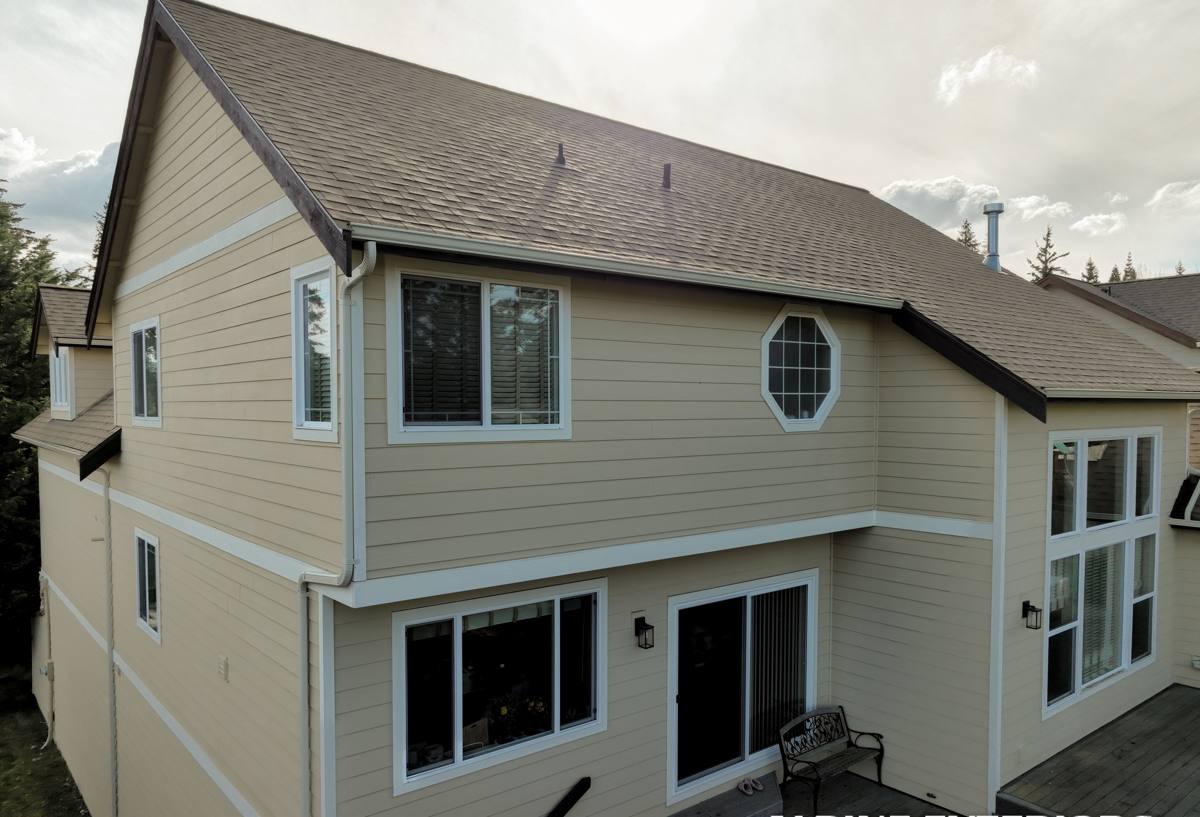
Why Osprey's Climate Is Hard on Vertical Siding
Board and batten's vertical lines create more opportunities for water to find a way in than horizontal lap siding does, simply because there are more seams running the height of the wall. In Sarasota County's climate, four factors compound that risk:
- Wind-driven rain: Storms off the Gulf don't just fall straight down — rain gets pushed sideways into vertical seams and batten edges under pressure, which is exactly where a weak fastening pattern or missing drainage plane shows up first.
- Hurricane-force wind loads: Battens and boards act as individual panels catching wind. Fastener spacing and type have to meet wind-load requirements for the area, not just look right on the wall.
- Year-round UV intensity: Constant sun exposure breaks down paint film, primer, and lesser substrates faster here than in milder climates, which shows up as fading, chalking, or cracking well ahead of schedule.
- Salt air: Being close to the water means airborne salt accelerates corrosion on fasteners and trim, and it works into any gap in a coating faster than it would further inland.
None of this means board and batten is a bad choice for Osprey — it means the substrate, the fasteners, the flashing, and the finish all have to be selected and installed to handle it, not just the general climate of Florida but this specific stretch of Sarasota County coastline.
What a Correct Board & Batten Installation Actually Involves
The substrate underneath matters more than the boards
A board and batten wall is only as good as what's behind it. That starts with a proper weather-resistive barrier installed over sound sheathing, correctly lapped and sealed at every penetration, window, and door opening. Skipping or shortcutting this step is the single most common cause of hidden moisture problems behind board and batten siding, because homeowners and even some contractors assume the boards themselves are the waterproofing layer. They're not — they're the first line of defense, and the barrier behind them is the second.
Fastening pattern and reveal
Boards and battens need to be fastened per the manufacturer's engineered pattern for the local wind zone, not a generalized "every 16 inches" rule of thumb. Reveal spacing (the gap between boards, covered by the batten) has to stay consistent for the wall to read correctly, and battens need enough overlap on each side to keep water from tracking sideways under wind pressure.
Corners, trim, and terminations
Outside corners, window and door casings, and the bottom termination near grade are where board and batten installations most often fail. Each of these needs proper flashing and a drip edge or kick-out detail so water sheds away from the wall assembly instead of running behind it. A rushed trim package is usually invisible on installation day and obvious three years later.
Why We Install James Hardie Fiber Cement — Not Vinyl, LP, or Cedar
We install board and batten in one material: James Hardie fiber cement. That's a deliberate standard, not a lack of options, and homeowners in Osprey deserve to know why.
Vinyl board and batten is affordable and low-maintenance in mild climates, but it's a thin plastic product that softens in direct heat and becomes brittle with age and UV exposure. In a hurricane wind event, vinyl panels are far more likely to crack, warp, or blow off than a fiber cement panel fastened to spec. It also doesn't hold paint, so if it fades or you want to change the color, your only real option is replacement.
LP SmartSide is an engineered wood product with a resin-treated strand substrate. It performs reasonably well when installation and caulking are perfect and maintained, but it's still wood at its core — meaning any breach in the factory coating, a missed caulk joint, or standing moisture at a cut edge gives it a path to swell and deteriorate. In a climate with this much wind-driven rain and humidity, that margin for error is thinner than we're willing to install on.
Cedar and primed spruce board and batten look beautiful when new, but real wood in coastal Florida requires an aggressive, ongoing maintenance schedule — recoating, caulking, and monitoring for rot — to hold up against salt air and constant moisture cycling. Most homeowners don't want that as a recurring line item, and skipped maintenance is where wood siding fails fastest.
James Hardie fiber cement is non-combustible, dimensionally stable in heat and humidity, and engineered specifically for climates like ours through its HZ5 product line, built for high-humidity, moisture-prone regions. It takes a factory-applied ColorPlus finish that resists fading far longer than field-applied paint, and it's backed by a strong transferable warranty. It costs more upfront than vinyl and is priced comparably to or above quality engineered wood — but it's the product we're willing to put our name behind on an Osprey wall facing Gulf weather for the next several decades.
Board & Batten Style Choices for Osprey Homes
Board and batten works two ways on most Osprey properties we see: as a full-elevation siding choice on a coastal, farmhouse, or modern-craftsman style home, or as an accent — on a gable end, a porch surround, or a front entry feature — paired with lap siding on the rest of the house. Both are legitimate approaches, and the right one depends on the home's existing architecture and how much of a style statement you're after.
James Hardie's vertical siding system comes in a range of board widths and reveals, and ColorPlus finishes give you dozens of factory colors that hold up under Sarasota's UV load far better than a job-site paint job. If salt air and sun fade are a concern, factory finish is the difference-maker — it's baked on and warrantied, not brushed on and left to weather.
Full elevation vs. accent application
| Consideration | Full-Elevation Board & Batten | Accent Application |
|---|---|---|
| Visual impact | Strong, consistent statement across the whole home | Highlights an entry, gable, or feature wall |
| Material cost | Higher — covers full wall area | Lower — limited square footage |
| Detailing complexity | More corners, more window/door transitions | Fewer transitions, but must tie in cleanly to adjacent siding |
| Best fit | Coastal, farmhouse, or modern builds designed around it | Homes wanting a style upgrade without a full re-side |
What Drives Cost on an Osprey Board & Batten Project
There's no honest flat price for board and batten siding without seeing the house, but the same handful of factors move the number up or down on every job we quote in this area:
| Factor | Why It Matters |
|---|---|
| Substrate condition | Rotted sheathing or damaged framing found once old siding comes off adds repair cost before new siding can go on |
| Coverage area | Full-elevation jobs run higher than accent walls simply on material and labor volume |
| Board width and reveal | Wider boards with fewer seams install faster than narrow boards with tighter spacing |
| Trim and corner detailing | Homes with more windows, dormers, or architectural breaks need more precise (and more time-consuming) trim work |
| Height and access | Second-story gables and steep rooflines require more scaffolding and safety setup |
| Existing siding removal | Tear-off and disposal of old vinyl, wood, or damaged siding adds labor beyond a straightforward install |
Our Process, Start to Finish
- On-site assessment: We walk the exterior, check existing substrate condition where accessible, and measure for board and batten coverage.
- Design and estimate: We review board width, reveal spacing, color, and full-elevation vs. accent options, then provide a written estimate.
- Substrate prep: Any damaged sheathing or framing is repaired before a weather-resistive barrier goes on, lapped and sealed at every seam and penetration.
- Installation: Boards and battens go up per James Hardie's engineered fastening pattern for our wind zone, with proper flashing at every corner, window, door, and termination point.
- Final inspection: We walk the finished wall with you, checking reveal consistency, caulking, and trim before calling the job complete.
Maintenance in Sarasota County's Climate
One of the real advantages of fiber cement board and batten over wood or vinyl alternatives is how little ongoing maintenance it demands in a climate this tough on exterior materials. That said, "low-maintenance" isn't "no-maintenance." A simple annual routine keeps an Osprey home's siding performing as designed:
- Rinse the siding periodically to clear salt residue and airborne grit, especially on walls facing the water or open exposure
- Check caulk joints at trim, corners, and penetrations once a year for cracking or separation
- Look at the bottom termination near grade for signs of moisture staining or plant growth trapping water against the wall
- Watch for any impact damage after storm season and have it repaired promptly rather than leaving an exposed seam
- Keep sprinklers and irrigation heads aimed away from the siding to avoid constant wetting of one section
Why Hire a Crew That Already Works in Osprey
Board and batten siding is detail-sensitive work, and the details that matter most here are specific to this stretch of coast — the wind-load requirements, the humidity behind the wall, the salt exposure on fasteners and trim. A crew that already works Osprey and greater Sarasota County has already made the adjustments that come from installing in this exact climate: the flashing details that hold up to wind-driven rain, the fastening patterns that meet local wind requirements, and the substrate prep that accounts for our humidity instead of a mainland-average spec sheet. That local repetition is what separates a board and batten wall that looks right on installation day from one that still looks right five hurricane seasons later.
If you're weighing board and batten siding for a home in Osprey, we're happy to take a look and give you a straight answer on what it would take — no pressure, no hard sell. Request a free estimate below and we'll walk the exterior with you and talk through your options.