 Sarasota Roofing
 Roofing in Osprey: What the Climate Actually Demands
Osprey sits in that stretch of Sarasota County where the roof over your head has to do more work than it would almost anywhere else in the country. You're close enough to the barrier islands and Little Sarasota Bay that salt-laden air is a constant, even a few miles inland. Add in Florida's flat, intense sun beating down nearly every day of the year, the wind-driven rain that comes sideways during summer storms, and the real possibility of hurricane-force gusts, and you've got a combination that ages a roof faster than milder climates ever would. A shingle roof that would last three decades in a drier, cooler region can wear out well ahead of schedule here if it wasn't installed with these conditions in mind.
That's the core of what we do differently on Osprey homes: we don't treat asphalt shingle roofing as a one-size-fits-all product. The materials, the fastening pattern, the underlayment, and the ventilation all get chosen and installed with wind uplift, UV degradation, and moisture intrusion specifically in mind, because those are the three things that actually take roofs down here.
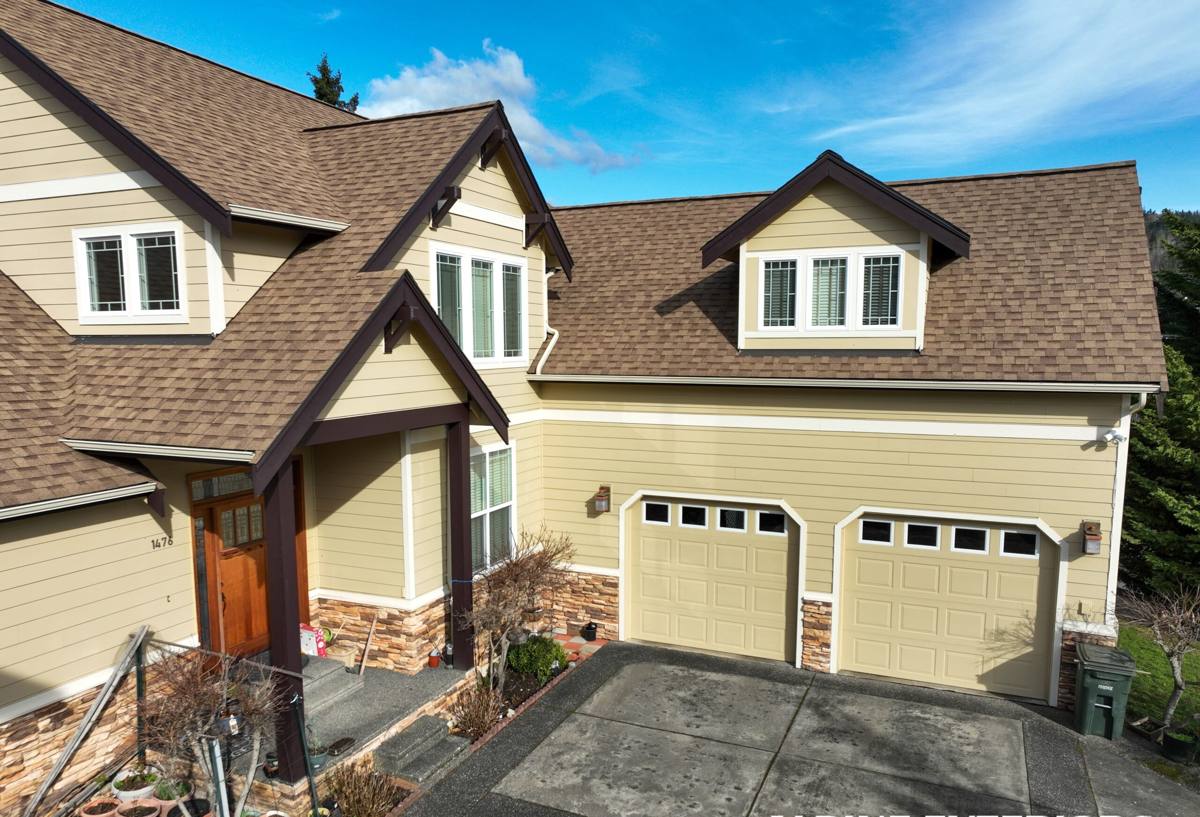
Why Asphalt Shingles Still Make Sense for Osprey Homes
Metal and tile get a lot of attention in coastal Florida, and they have their place. But asphalt shingles remain one of the most practical roofing choices for many Osprey homes, for a few honest reasons:
- Lower upfront cost than tile or standing-seam metal, with a shorter payback period if you're budgeting a renovation or planning to sell
- Modern architectural shingles carry wind ratings that hold up well in this region when installed to spec
- Easier and cheaper to repair in sections after storm damage, versus tile that's often discontinued or hard to match
- Wide range of colors and profiles that fit both older Florida ranch-style homes and newer construction in the area
The trade-off is that asphalt shingles are more sensitive to installation quality than some other materials. A tile roof installed slightly wrong can still shed water reasonably well for years. A shingle roof installed slightly wrong — wrong nail pattern, wrong starter course, skipped flashing detail — will show that mistake as a leak or a wind loss much sooner. That's why the install matters more here than the brand name on the wrapper.
Where Shingles Aren't the Right Call
We'll say this plainly: if a home has a very low-slope section, sits directly exposed to open water with nothing breaking the wind, or has a roof deck in poor condition, we'll tell you that up front rather than sell you a shingle roof that's fighting an uphill battle from day one. Part of an honest estimate is telling you when a different approach, or at least a different approach for one section of the roof, is the better long-term answer.
What a Correct Asphalt Shingle Installation Involves
Tear-Off and Deck Inspection
We don't install new shingles over old ones, and we don't recommend it for Osprey homes even though it's technically allowed in some cases. A full tear-off lets us actually look at the roof deck — the plywood or OSB underneath everything else — and check it for soft spots, rot, or delamination caused by long-term moisture. Salt air and humidity work on wood decking slowly and quietly; you often can't tell there's a problem until the old shingles come off. Any bad decking gets replaced before anything new goes down. Skipping this step is one of the most common shortcuts in the industry, and it's the one that causes the most expensive surprises later.
Underlayment and Water Barrier
This is arguably more important in Sarasota County than the shingles themselves. We use a synthetic or self-adhering underlayment system suited to wind-driven rain, with extra attention to the eaves, valleys, and any roof-to-wall transitions where water tends to find its way in during a sideways storm. In a climate where a single named storm can dump more rain in a day than some regions see in a month, the underlayment is your real backup line of defense if any shingle ever gets compromised.
Shingle Selection and Wind Rating
Not all asphalt shingles are rated the same for wind resistance, and the rating on the package only means something if the shingle is installed with the matching nailing pattern and the manufacturer's specified number of fasteners per shingle. We match the shingle's wind rating to what's appropriate for the property's exposure and install to that spec, not to a shortcut version of it. This is also where local permitting and code requirements come in — Sarasota County has specific wind-zone requirements, and a correctly documented install matters for both code compliance and insurance.
Flashing and Ventilation
Flashing around chimneys, skylights, sidewalls, and vent penetrations is where most shingle roof leaks actually originate — not from the field of the roof itself. We replace flashing rather than reuse it wherever a tear-off exposes it, and we make sure the roof has proper intake and exhaust ventilation. Good ventilation does double duty here: it extends shingle life by reducing heat buildup under the roof deck (a real issue with year-round Florida sun), and it helps manage moisture in the attic space.
Architectural vs. 3-Tab Shingles: A Practical Comparison
| Factor | 3-Tab Shingles | Architectural (Laminate) Shingles |
|---|---|---|
| Typical wind rating | Lower, generally suited to milder exposure | Higher-rated options available, better fit for storm-prone areas |
| Expected lifespan in this climate | Shorter, more sensitive to UV and heat | Longer, thicker laminate resists UV degradation better |
| Upfront cost | Lower | Moderate, but often better value over the roof's life |
| Appearance | Flat, uniform look | Dimensional, shadow-line look |
| Best fit | Budget-driven projects, secondary structures | Primary residences in wind- and sun-exposed areas like Osprey |
For most Osprey homes, architectural shingles are the better long-term match given the wind and UV exposure, but we'll always walk through both options and the honest reasoning behind our recommendation rather than assume.
Our Process, Start to Finish
- On-site inspection and estimate. We look at the existing roof, note any deck concerns visible without tearing it open, and measure for an accurate material quantity — not a rough guess.
- Written estimate with real numbers. You get a clear scope of work and pricing before anything is scheduled, with no pressure to sign on the spot.
- Permitting. We handle the permit process through Sarasota County so the job is documented and inspected properly, which also matters if you ever file an insurance claim later.
- Tear-off and deck inspection. Old material comes off, the deck gets checked, and you're told immediately if anything needs replacing before we go further.
- Underlayment, flashing, and shingle installation. Done in the sequence and to the fastening spec that actually earns the wind rating on the shingle.
- Cleanup and final walkthrough. Nail sweep of the property, debris hauled off, and a walkthrough so you know exactly what was done.
What Affects the Cost of a Shingle Roof in Osprey
| Cost Factor | Why It Matters |
|---|---|
| Roof size and pitch | More surface area and steeper pitches mean more labor and material |
| Deck condition | Rotted or soft decking found during tear-off adds material and labor to replace |
| Shingle grade and wind rating | Higher-rated architectural shingles cost more per square than basic 3-tab |
| Number of penetrations | Chimneys, skylights, and vents each require flashing work that adds time |
| Layers to remove | Tearing off multiple existing layers takes longer than a single layer |
| Access and complexity | Steep or hard-to-access roofs require more safety setup and time |
We don't publish a flat per-square price because the range genuinely depends on these factors, and quoting a number without seeing the roof would be a guess dressed up as a fact. What we can promise is a written estimate that breaks down exactly where the cost is going.
Maintenance That Actually Extends Roof Life Here
A correctly installed shingle roof still needs basic upkeep in this climate. This is the short list we give Osprey homeowners:
- Have the roof visually inspected after any major storm, even if there's no obvious interior leak
- Keep gutters and valleys clear of debris so water doesn't pool or back up under shingles
- Trim back overhanging tree limbs that can abrade shingle surfaces in wind
- Watch for granule buildup in gutters, which signals accelerating UV wear
- Address small flashing or sealant issues promptly, before they become deck-level water damage
- Schedule a professional inspection every couple of years, not just when there's already a problem
Why Hiring a Crew That Already Works in Osprey Matters
A roofing crew that mostly works inland or up north brings inland habits with them — habits that don't hold up against Gulf Coast wind and salt exposure. Fastening patterns that pass in a low-wind region aren't enough here. Underlayment choices that are "good enough" elsewhere aren't good enough a few miles from the water. A crew that regularly works Sarasota County roofs already knows the wind-zone requirements, already has a working relationship with the county permitting process, and already understands which details actually matter on a property like yours versus which are just industry busywork.
There's also a practical, unglamorous reason local experience matters: familiarity with how quickly weather can turn here, and building the schedule and material staging around that, so a job doesn't get caught half-finished when a system rolls through.
If you're weighing a shingle roof replacement or repair on your Osprey home, we're happy to take a look and give you a straightforward, no-pressure estimate — just fill out the form below to get started.