 Sarasota Roofing
 Why Window Replacement on Longboat Key Is Different
Longboat Key sits out on the barrier islands off Sarasota County, which means every window in a home there faces a harder job than a window fifteen miles inland. You've got salt-laden air rolling off the Gulf and the bay almost constantly, intense year-round UV that doesn't let up in winter the way it does farther north, wind-driven rain that finds any weak seal within a season or two, and the real possibility of hurricane-force winds during storm season. None of that is dramatic on its own, but stacked together over years it's what separates a window that lasts two decades from one that starts failing in five or six.
Replacing windows here isn't just a cosmetic upgrade. It's a chance to correct whatever the original installation got wrong for this environment, and to bring a home up to a wind and moisture standard that actually matches where it sits.
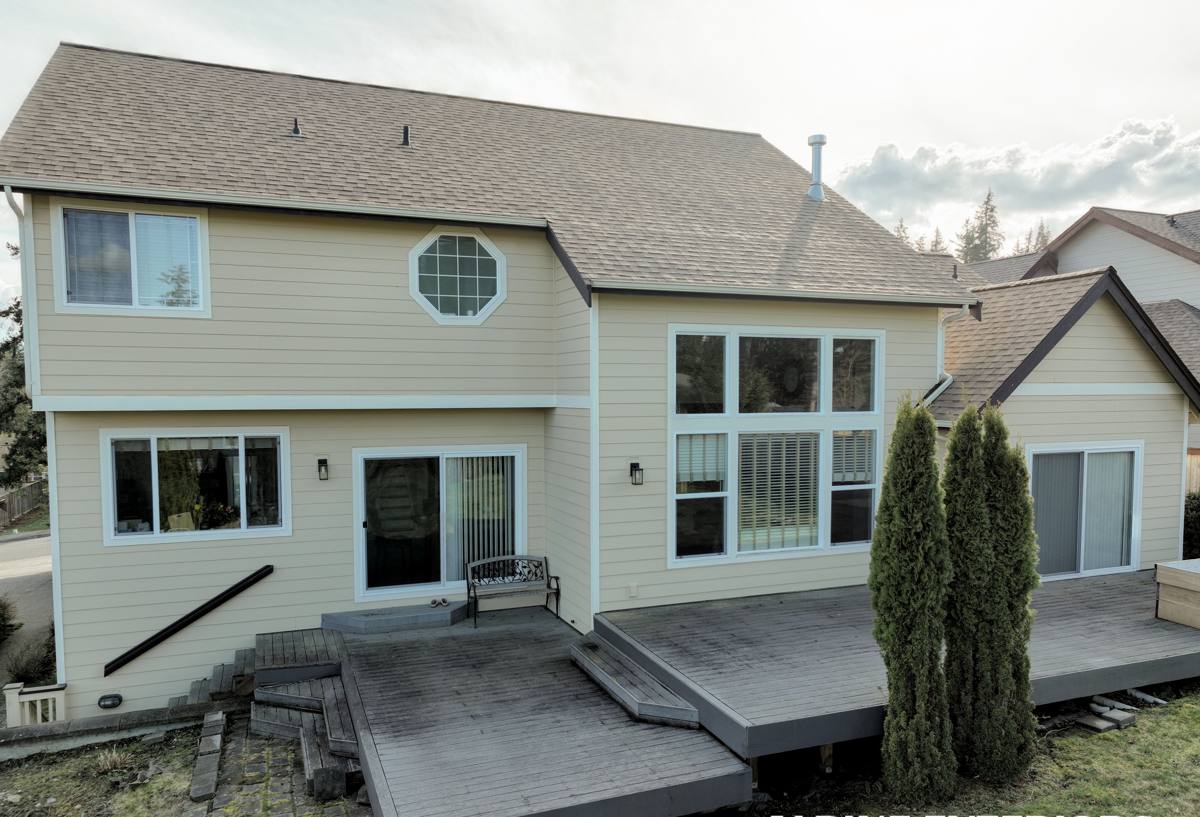
What Longboat Key's Environment Actually Does to a Window
Salt Air and Corrosion
Salt in the air settles on hardware, frames, and screens, and it doesn't wash off completely with rain. Over time it corrodes weak-grade aluminum, pits poorly coated fasteners, and breaks down cheaper vinyl compounds faster than the same materials would degrade a few miles inland. This is why the hardware and frame material we spec for a Longboat Key home is not automatically the same as what we'd use on a job in a landlocked Sarasota County neighborhood.
UV Exposure
Florida sun year-round means constant UV load on seals, gaskets, and any exposed vinyl or composite trim. Cheap seals go brittle and shrink, which opens tiny gaps that let in air and moisture long before a homeowner notices a visible problem. Glass coatings matter here too — the wrong glazing package lets in more heat and UV than a home this close to the water should have to deal with.
Wind-Driven Rain and Storm Wind Loads
Wind-driven rain doesn't behave like a normal rainstorm. It gets pushed sideways and upward under pressure, which means it can find its way past a window that would be perfectly watertight in a calmer climate. Add in the wind loads a barrier island home has to be engineered for, and the installation details — flashing, sealant, anchoring, the structural connection between the window and the rough opening — carry more weight here than in most parts of the country.
What a Correct Installation Involves Here
A window replacement done right on Longboat Key isn't just "remove old window, set new window." It's a sequence where each step protects against a specific failure mode common to this environment.
- Confirming the replacement windows meet the wind-borne debris and pressure requirements that apply to the home's location and elevation
- Choosing frame and hardware materials rated for coastal/salt-air exposure, not standard-grade equivalents
- Full removal of old flashing and sealant so the new installation isn't sealed over hidden rot or old failures
- Correct flashing and weatherproofing at the rough opening, sequenced so water is always directed outward, never trapped behind the frame
- Proper anchoring per the window's engineering specs, not just "enough screws to hold it in place"
- Sealant appropriate for coastal UV and salt exposure, applied at the manufacturer's specified joints — not smeared over gaps as a shortcut
- A final check for level, plumb, square, and smooth operation before we call the job done
Skipping or rushing any one of these is usually invisible on install day and shows up two or three years later as a leak, a stuck sash, or corroded hardware.
Impact-Rated Glass vs. Shutters and Panels
Homeowners on Longboat Key generally protect their windows one of two ways: impact-rated glass built into the window itself, or traditional windows paired with removable shutters or panels. Both are legitimate approaches, and the right one depends on the home, the budget, and how the owner wants to live day to day.
| Factor | Impact-Rated Windows | Standard Glass + Shutters/Panels |
|---|---|---|
| Storm prep effort | None — protection is built in | Requires installing panels or closing shutters before a storm |
| Everyday look | Clean, unobstructed views year-round | Unobstructed when open; shutters visible when deployed |
| Upfront cost | Higher per window | Lower window cost, but shutters/panels add their own cost |
| UV and noise reduction | Better, even outside storm season | No added benefit unless shutters are closed |
| Maintenance | Glass and frame seals only | Glass seals plus shutter hardware and tracks |
We'll walk through both options honestly during an estimate rather than push one over the other — for some homes, especially those with HOA or condo association rules about exterior appearance, one option may already be decided for you.
Frame Materials Worth Considering
Vinyl, aluminum, fiberglass, and composite frames all show up on barrier island homes, and each has real trade-offs in a salt-air, high-UV environment.
- Vinyl — affordable and low-maintenance, but quality varies a lot between manufacturers; a coastal-grade vinyl formulated to resist UV breakdown holds up far better than a builder-grade product
- Aluminum — strong and slim-profile, but needs a proper marine-grade or coated finish to resist salt corrosion; untreated or low-grade aluminum hardware is one of the more common failure points we see on older coastal homes
- Fiberglass — dimensionally stable and resistant to warping from heat and humidity, generally a strong long-term option for this climate, at a higher price point
- Composite — blends some of the durability of fiberglass with a lower cost than premium fiberglass lines, worth discussing case by case
We don't push one material as universally "best" — we size the recommendation to the home's exposure, the budget, and how the owner wants to maintain the property long term.
Signs Longboat Key Windows Need Replacing, Not Just Repair
- Fogging or a permanent haze between panes — the seal has failed and the insulated glass unit can't be repaired, only replaced
- Frames that feel soft, chalky, or show visible corrosion on hardware and hinges
- Windows that are difficult to open, close, or lock, especially after humidity swings
- Visible daylight or a draft around the frame when the window is shut
- Water staining on interior sills or walls after wind-driven rain events
- Single-pane or older glazing that doesn't meet current wind-borne debris standards
- A noticeable rise in cooling costs that lines up with window age and condition
If a window shows one or two of these, repair may still be reasonable. If several show up together, replacement is usually the more cost-effective long-term call.
Our Process for a Longboat Key Window Replacement
1. On-Site Assessment
We look at every window being considered, note the home's exposure (direct waterfront, bay side, more sheltered interior lot), and check existing framing condition before recommending anything.
2. Product and Glazing Recommendation
Based on exposure, budget, and any HOA or condo association requirements, we lay out realistic options — frame material, glazing package, and impact protection approach — with honest trade-offs for each.
3. Permitting
Window replacement on a barrier island in Sarasota County typically requires a building permit, and installed products need to meet the wind and pressure ratings that apply to the property's location. We handle this as part of the job rather than leaving it to the homeowner to sort out.
4. Removal and Installation
Old windows come out down to the rough opening so we can inspect for hidden moisture damage before anything new goes in. New units are flashed, sealed, and anchored to spec, not just set in place and caulked around the edges.
5. Final Walkthrough
Every window gets checked for smooth operation, a tight seal, and a clean finish before we consider the job complete.
What Affects Cost
| Factor | Why It Matters |
|---|---|
| Impact rating and glazing package | Impact-rated glass and low-E coatings cost more than standard glazing but reduce storm prep and UV/heat load |
| Frame material | Coastal-grade vinyl, aluminum, fiberglass, and composite are priced differently and hold up differently in salt air |
| Window size and configuration | Large picture windows, sliders, and custom shapes cost more than standard double-hungs |
| Number of windows and access | Whole-home replacements have better per-unit pricing than one-off repairs; upper-floor or hard-to-access units add labor |
| Existing condition behind the frame | Hidden rot or moisture damage found during removal adds repair work before the new window can go in correctly |
| Permitting requirements | Barrier island permitting and any condo/HOA review add time and, occasionally, documentation costs |
We give straightforward numbers during the on-site estimate rather than a rough guess over the phone, since so much depends on what we find at the property.
Permitting, HOA, and Condo Considerations
A lot of Longboat Key properties are part of a condo association or HOA with rules about window appearance, color, and sometimes approved product lines — on top of the standard Sarasota County building permit for exterior wall openings. We factor this into the process up front so a homeowner isn't caught off guard mid-project by an association review requirement they didn't know applied to them.
Why Local Experience Matters on a Barrier Island
A crew that only occasionally works out on the Key is going to learn the site-specific lessons — logistics of getting materials and equipment onto the island, how a particular building's exposure to open water changes the wind and salt load, what condo associations typically expect from a contractor on their property — on your project. A crew that already works Longboat Key regularly has already learned those lessons elsewhere. That shows up in fewer surprises during the job and a finished installation that's actually built for where the home sits, not a generic Sarasota County spec applied without adjustment.
Caring for New Windows in a Salt-Air Environment
- Rinse frames, tracks, and hardware periodically to clear salt buildup before it can accelerate corrosion
- Keep weep holes clear so water drains out rather than pooling at the sill
- Check and re-apply exterior sealant at manufacturer-recommended intervals — UV exposure here is more aggressive than in most of the country
- Operate locks and hardware periodically even on windows you don't open often, so mechanisms don't seize
- Have windows inspected after any major storm for hidden seal or flashing damage, even if nothing looks wrong from inside
New windows are a long-term investment, and a little routine maintenance is what keeps that investment performing for the full length of its warranty and beyond.
If you're weighing a window replacement for a Longboat Key home, we're happy to take a look and lay out honest options for your specific property. Fill out the form below for a free, no-pressure estimate.