 Sarasota Roofing
 Why Decks on Longboat Key Wear Out Faster
Longboat Key sits on a barrier island, which means every deck here is exposed to conditions that inland Sarasota County homes simply don't deal with to the same degree. Salt-laden air moves across the island constantly, and it doesn't take a direct ocean view for that air to reach fasteners, connectors, and wood fibers. Add in the intense, near year-round Florida UV, seasonal wind-driven rain, and the threat of hurricane-force gusts, and you have a combination that ages a deck structure well before it would fail on a typical drought-free, salt-free property elsewhere in the state.
Most deck problems we find on Longboat Key aren't cosmetic surprises — they're the predictable result of that environment working on wood, metal, and connections year after year. Understanding what's actually happening to the structure is the first step toward a repair that holds up rather than one that just covers up the symptoms.
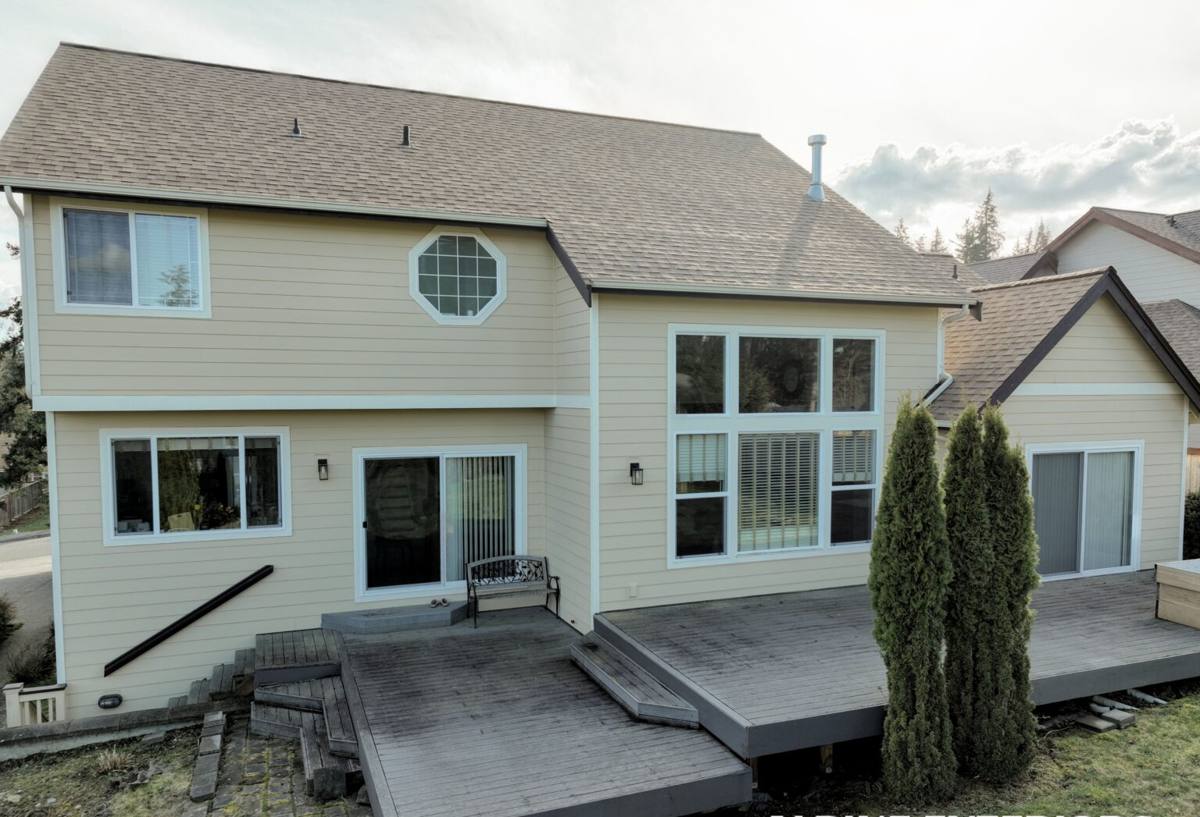
How Salt Air, Sun, and Storms Damage a Deck
Salt Air and Corrosion
Airborne salt is conductive and corrosive. It settles into fastener heads, joist hangers, bolts, and any exposed metal connector, accelerating rust and corrosion far faster than in a non-coastal environment. A nail or screw that might last decades inland can weaken in a fraction of that time on a barrier island deck, especially if it wasn't rated for coastal exposure to begin with.
UV Exposure
Constant sun breaks down the lignin in wood fibers, drying and graying the surface, opening it up to moisture intrusion, and making boards brittle over time. Composite and PVC decking resist this better than wood, but even those products can fade or chalk under sustained Florida sun if the manufacturer's UV protection is lower grade.
Wind-Driven Rain and Moisture Cycling
Florida's storms don't just drop rain straight down — wind pushes it sideways and up under boards, into ledger connections, and around railing posts. Decks that stay wet longer after a storm, especially in shaded or poorly ventilated areas, are the ones where we most often find rot, soft spots, and hidden decay under boards that still look fine from above.
Wind Load
Hurricane-force winds put real lateral and uplift stress on railings, stairs, and the connection between the deck and the house. A deck that was built to minimum code decades ago, or repaired with mismatched hardware over the years, may not have the connection strength that current coastal wind requirements call for.
Signs Your Longboat Key Deck Needs Repair
Some warning signs are obvious. Others hide beneath the surface until they've done real damage. Walk your deck and check for the following:
- Boards that feel spongy, soft, or bounce noticeably underfoot
- Rust streaks running down from screws, nails, or metal brackets
- Railings or posts that wiggle or feel less rigid than they used to
- Gaps opening up where the deck meets the house (ledger board area)
- Visible cracking, splitting, or graying/silvering on wood surfaces
- Fasteners backing out or showing corrosion around the screw head
- Musty smell or dark staining underneath the deck near support posts
- Stair stringers that flex or feel unstable when you step on them
Any one of these on its own might be minor. Several together, or anything involving the ledger connection or main support posts, usually means it's time for a professional look before the next tropical system tests the structure.
What a Correct Deck Repair Actually Involves
A repair that only replaces the boards you can see is a cosmetic fix, not a structural one. On Longboat Key in particular, we treat every repair call as an opportunity to inspect what's underneath, because surface damage is often just the visible tip of a corrosion or moisture problem that started below deck level.
Structural Inspection First
Before replacing anything, we check the framing: joists, beams, support posts, and — most importantly — the ledger board connection to the house. This is the single most common source of catastrophic deck failure nationally, and it's worth extra scrutiny in a coastal environment where fastener corrosion accelerates the problem.
Fastener and Hardware Condition
We look closely at joist hangers, bolts, and screws for rust, pitting, or loosening. On a barrier island property, hardware that would still be serviceable inland may already be compromised. Replacing boards while leaving corroded connectors underneath just delays the next repair call.
Moisture and Rot Assessment
We probe suspect areas — around posts, under boards, near the ledger — to find soft or decayed wood that isn't obvious from a casual look. Rot doesn't stay contained; a small soft spot today is a larger structural repair in a year or two if it's not addressed at the source.
Board and Railing Replacement
Once the structure underneath is confirmed sound (or repaired), we replace damaged decking boards, railings, and stair components to match the existing structure or upgrade to a more durable material where it makes sense.
Repair vs. Replace: How We Help You Decide
Not every deck needs a full rebuild, and not every deck should be patched. The right call depends on how much of the structure is affected and how the framing has held up.
| Factor | Points Toward Repair | Points Toward Replacement |
|---|---|---|
| Framing condition | Joists and beams are solid, only surface boards affected | Multiple joists or the ledger connection show rot or corrosion |
| Age of structure | Deck is relatively young with isolated damage | Deck is old and multiple systems are failing at once |
| Extent of damage | Damage is localized to one section or a few boards | Damage is spread across the deck or recurring in new spots |
| Code compliance | Original build meets current coastal wind/connection standards | Structure predates current codes and lacks proper hurricane connections |
| Cost over time | Repair cost is a fraction of what replacement would run | Repeated repairs are starting to approach replacement cost |
We'll walk the deck with you, explain exactly what we're seeing, and give you an honest recommendation — not the most expensive option by default.
Material and Fastener Choices for a Coastal Repair
What you repair with matters as much as the repair itself, especially this close to the Gulf.
Wood
Pressure-treated wood is affordable and familiar, but it requires consistent maintenance — sealing, staining, and inspection — to hold up against salt air and UV on Longboat Key. Skipping that upkeep is the fastest way to end up back in a repair cycle.
Composite and PVC Decking
These products resist rot and don't need staining, which is a real advantage in a high-salt, high-UV environment. The trade-off is a higher upfront material cost and the need to choose a product with a UV and moisture warranty suited to coastal Florida conditions — not every composite line is rated the same way.
Fasteners and Hardware
This is where we don't cut corners. On a barrier island property, we use stainless steel or coated fasteners and connectors rated for coastal, high-corrosion exposure rather than standard-grade hardware. It costs more upfront, but standard fasteners are one of the most common reasons we get called back to the same deck within a few years.
Our Deck Repair Process
- On-site inspection of decking, framing, ledger connection, and hardware condition
- Clear explanation of what's damaged, what's causing it, and what your repair-vs-replace options are
- Written estimate with the scope of work spelled out before anything is scheduled
- Permit handling with Sarasota County when the scope of repair requires it
- Removal of damaged boards, railings, or framing members as needed
- Repair or reinforcement of the underlying structure using coastal-rated hardware
- Installation of new decking material and railings to match or upgrade the existing deck
- Final walkthrough so you know exactly what was done and what maintenance to expect going forward
Permits and Coastal Building Requirements
Barrier island properties like those on Longboat Key often fall under stricter wind-load and flood-zone building requirements than mainland Sarasota properties. Depending on the scope of the repair — particularly anything touching structural framing, the ledger connection, or railings — Sarasota County permitting may apply. We handle that process as part of the job rather than leaving it for the homeowner to sort out, and we build repairs to meet current coastal connection standards, not just match what was there before if that original work no longer meets code.
Why It Matters to Hire a Crew That Already Works Longboat Key
A deck repair on a barrier island isn't quite the same job as the same repair five or ten miles inland. Crews who don't regularly work this environment can miss corrosion that's more advanced than it looks, under-spec fasteners because "that's what's normally used," or overlook the flood-zone and wind-load requirements that apply to coastal Sarasota County properties. Working Longboat Key regularly means we already know what salt air does to a deck over time, what hardware actually holds up here, and what the permitting process looks like for island properties — so the repair is done right the first time instead of becoming a recurring expense.
Keeping Your Repaired Deck in Good Shape
A quality repair still needs some upkeep to get its full lifespan out of a coastal environment:
- Rinse off salt residue and debris periodically, especially after storms
- Inspect fasteners and connectors annually for early rust or loosening
- Reseal or restain wood decking on the manufacturer's recommended schedule
- Keep gutters and drainage clear so water isn't pooling near posts or the ledger
- Address small soft spots or loose boards right away instead of waiting
If your Longboat Key deck is showing signs of wear, or you just want a second opinion on whether a repair or replacement makes more sense, we're happy to take a look. Reach out for a free, no-pressure estimate using the form below.