 Sarasota Roofing
 Why Longboat Key Decks Take More Abuse Than Most
Longboat Key sits on a barrier island between Sarasota Bay and the Gulf, which means every deck out here is exposed to a combination of stresses that inland Sarasota County homes simply don't deal with in the same intensity. Salt-laden air moves through the wood or composite boards daily, not occasionally. UV exposure is close to constant for most of the year. And when a tropical system or a strong summer thunderstorm rolls through, wind-driven rain gets pushed sideways into every joint, fastener, and board edge on an exposed deck or lanai extension.
None of that is exotic knowledge to anyone who has lived on the Key for a few years, but it matters enormously when you're choosing decking material and picking who installs it. A deck built the way you'd build one in Ohio or even inland Sarasota won't hold up the same way out here. We install composite decking specifically with barrier-island conditions in mind, and that shapes real decisions about material grade, fastening, substructure, and drainage.
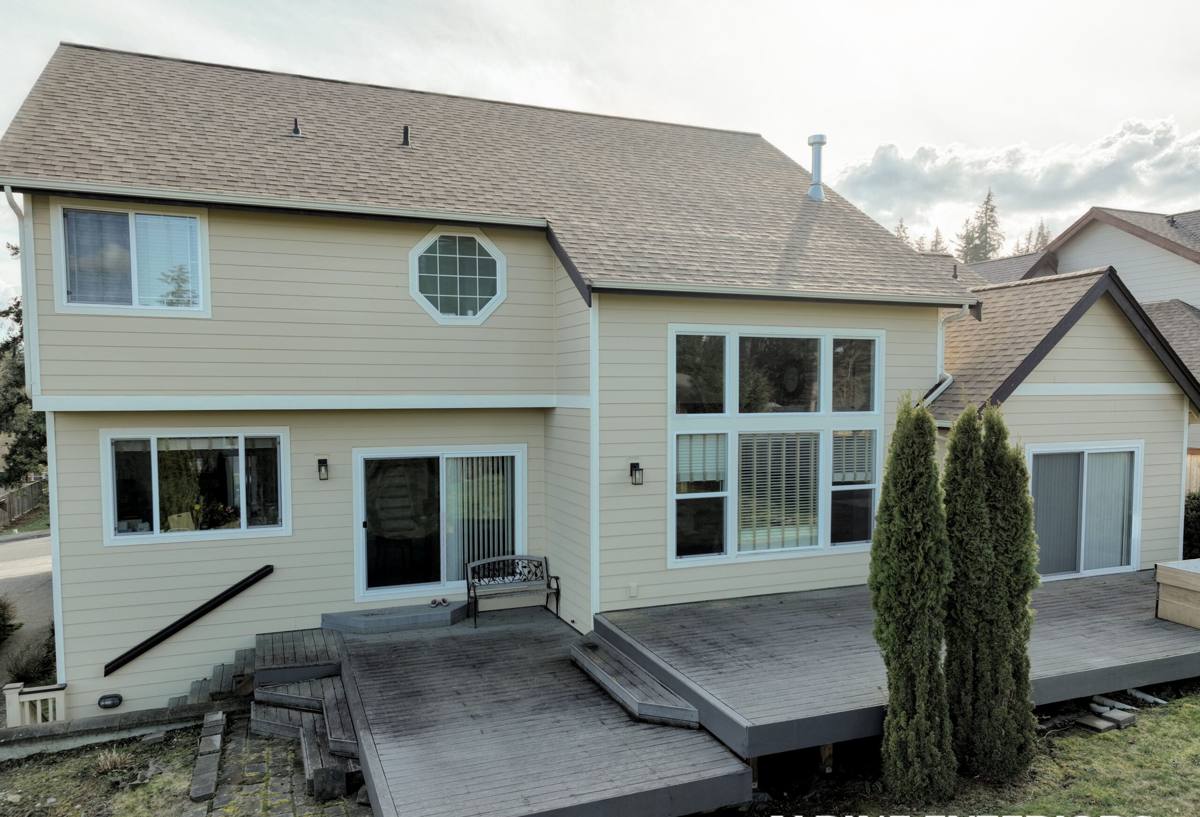
What Salt Air and Coastal Humidity Actually Do to a Deck
Salt air is corrosive to metal and abrasive to finishes over time. On a Longboat Key deck, the parts most at risk are usually not the boards themselves but everything holding them together and everything underneath them.
- Fasteners and hardware: Standard hardware corrodes faster near the coast. Screws, joist hangers, post bases, and structural connectors need a coastal-rated coating or stainless steel, or they become the weak point of an otherwise good deck.
- Substructure: Wood framing under a composite deck is still exposed to salt-humid air even though it's hidden. Ventilation gaps and proper flashing keep moisture from sitting against the framing.
- Board surface and edges: Quality composite boards resist salt staining and won't rot, but cut edges and drilled holes need to be treated or capped correctly during install, since an exposed core edge is where moisture intrusion starts.
- Railings and metal accents: Aluminum or coastal-grade stainless railing systems hold up far better near the water than standard steel components.
UV Load and Color Stability
Sarasota County gets intense, close to year-round sun, and Longboat Key's open water exposure adds reflected UV off the Gulf and bay on top of direct sun. Cheaper composite boards can fade unevenly or chalk on the surface within a few seasons under that kind of load. This is one of the biggest differences between composite product tiers, and it's worth understanding before you pick a board:
| Factor | Entry-Level Composite | Capped / Premium Composite |
|---|---|---|
| UV fade resistance | Noticeable fading in 2-4 years under intense sun | Engineered cap resists fading much longer, often backed by a fade warranty |
| Moisture/salt resistance | Core can absorb some moisture at cut edges | Fully capped boards shed moisture and salt spray better |
| Surface feel underfoot (bare feet, summer heat) | Can run hotter and feel rougher over time | Better heat-and-texture engineering, more consistent surface |
| Typical warranty | Shorter, often prorated | Longer, often full replacement terms for defects |
| Upfront cost | Lower | Higher, but often lower lifetime cost given local exposure |
We don't push homeowners toward the most expensive board on the shelf as a rule. But on an exposed Longboat Key lot, especially anything facing open water or with limited tree cover, we're honest that entry-level composite is going to show its age faster here than it would on a shaded inland lot. That's a maintenance and appearance trade-off worth knowing before you commit, not after.
Wind: Building a Deck That Doesn't Become a Problem in a Storm
Composite decking itself isn't usually the weak link in a windstorm — the framing, fastening, and attachment to the house are. A deck that's ledger-bolted, joist-hung, and post-anchored correctly stays put. One that's under-fastened or was framed to a lighter standard can become a hazard, and loose boards or railing sections are exactly the kind of thing that turns into wind-borne debris in a hurricane.
For Longboat Key specifically, we pay close attention to:
- Proper ledger board attachment and flashing where the deck meets the house, so wind-driven rain doesn't find its way behind the siding or into the wall assembly
- Joist hangers and structural connectors rated for coastal exposure, fastened per manufacturer and code spec, not just "close enough"
- Railing posts anchored into structural framing, not just decking boards, since railings take direct wind load
- Board fastening patterns that keep boards secure under uplift without over-tightening, which causes buckling as boards expand and contract in heat
Florida's coastal construction code exists largely because of exactly this kind of failure mode, and barrier islands like Longboat Key get extra scrutiny for good reason. We build to hold up, not just to pass an inspection.
What a Correct Composite Deck Installation Actually Involves
A composite deck looks straightforward from the top, but the parts that determine whether it lasts 10 years or 25 years are mostly underneath. Here's what we actually do on a Longboat Key job:
1. Site and Structural Assessment
We look at sun exposure, water exposure, existing framing (if this is a re-deck), drainage under and around the deck, and how close the structure is to open water or unobstructed wind paths. This shapes hardware selection and framing spec before a single board is ordered.
2. Framing and Substructure
Where framing needs to be built or replaced, we use coastal-rated fasteners and connectors throughout, not just at the ledger. Joist spacing follows the composite manufacturer's spec for the specific board — this varies by product and matters for long-term flatness and warranty validity.
3. Ventilation and Drainage
Trapped moisture under a deck is a slow, quiet problem. We make sure there's airflow beneath the deck surface and that water has somewhere to go, rather than pooling against framing or the house foundation.
4. Board Installation
Hidden fastener systems are standard on most composite jobs now, giving a cleaner surface with no exposed screw heads to corrode or work loose. We follow manufacturer-specified gapping for thermal expansion, which matters more here given how much boards heat-cycle under Florida sun.
5. Edges, Trim, and Transitions
Cut edges get properly finished per the manufacturer's install guide. Fascia boards, stair stringers, and transitions to the house or pool deck are detailed so water sheds away rather than sitting against a seam.
6. Railings and Final Details
Railing systems are anchored into structural blocking, checked for level and plumb, and all hardware is verified coastal-rated before we call the job done.
Composite vs. Wood on a Barrier Island Property
We get asked regularly whether wood is still worth considering for a Longboat Key deck given it's typically cheaper upfront. Our honest answer: on this island, wood asks a lot more of the homeowner over time. It's not that wood "fails" — it's that the maintenance burden in this specific salt-and-sun environment is heavier and more constant than most homeowners want to sign up for.
- Refinishing: Wood needs periodic sealing or staining to resist salt and UV damage — realistically more often here than inland, given the exposure.
- Splintering and graying: Sun and salt accelerate surface breakdown on wood decking faster on the coast than inland.
- Fastener maintenance: Wood decking often uses exposed fasteners that need periodic checking and replacement as they corrode.
- Composite's trade-off: Higher upfront material cost, but no sealing/staining cycle and much better long-term dimensional stability under heat and moisture swings.
Neither material is wrong — it's a genuine trade-off between upfront cost and ongoing maintenance, and we'll walk through both honestly for your specific property and budget.
Maintenance: What Composite Actually Needs Out Here
One of composite decking's real selling points is lower maintenance, but "lower" doesn't mean zero, especially in a coastal environment. A simple, realistic maintenance routine for a Longboat Key composite deck looks like this:
- Rinse salt residue off the surface periodically, especially after storms or extended dry salt-air stretches
- Wash with mild soap and water a few times a year to prevent surface buildup, mildew, or algae in shaded areas
- Check railing hardware and fasteners annually for any early corrosion, particularly in the first couple years after install
- Keep planters, grills, and furniture feet from trapping moisture or debris against the board surface for long stretches
- Inspect the area under the deck occasionally for drainage or ventilation issues, especially after heavy rain events
None of this is heavy work, but skipping it entirely is how a coastal deck ages faster than it should.
Why Hiring a Crew That Already Works Longboat Key Matters
Barrier-island jobs come with logistics and code considerations that aren't universal across Sarasota County. Permitting requirements, wind-load expectations, and even material handling can differ from what a crew used to inland subdivisions is used to. A contractor who regularly works Longboat Key and the surrounding coastal areas already knows:
- Which hardware and fastener grades actually hold up here versus what's "supposed to" on paper
- What local permitting and inspection expects for deck framing and railing attachment on coastal properties
- How to sequence a job around barrier-island access, parking, and delivery logistics that differ from mainland Sarasota jobs
- Which composite product lines perform best under sustained Gulf-facing sun exposure, based on what we've actually installed and seen age over time
That local track record is the difference between a deck that's built to a generic spec and one that's built for the specific conditions of your property.
Getting Started
Every Longboat Key property is a little different depending on how exposed it is to open water, sun, and wind, so we don't quote decking jobs off a generic price list. If you're planning a new composite deck or replacing an aging wood or composite deck, we're happy to come take a look, talk through material options honestly, and give you a straightforward, no-pressure estimate. Use the form below to get started.