 Sarasota Roofing
 Board & Batten Siding on a Barrier Island: What's Different
Longboat Key sits on a narrow strip of land between the Gulf of Mexico and Sarasota Bay, and that location changes what "good siding" means. A board and batten look that would hold up fine ten miles inland can fail early here because every material on the exterior of a Longboat Key home is dealing with salt-laden air, near-constant humidity, intense UV exposure, and the real possibility of a direct or near-direct hurricane hit. Board and batten is one of the most popular siding profiles on the Key because of its clean, vertical lines and the way it reads against both classic Florida cottages and newer coastal builds — but the profile itself has more seams, more fastener points, and more places for water to find a way in than a standard lap siding job. That makes material choice and installation quality matter more here than almost anywhere else in Sarasota County.
We install board and batten exclusively in James Hardie fiber cement. We do not install it in vinyl, LP SmartSide, primed spruce, cedar, or other fiber cement brands, and on a barrier island project that is not a marketing preference — it is a decision built around what actually survives salt air and wind-driven rain over the long haul.
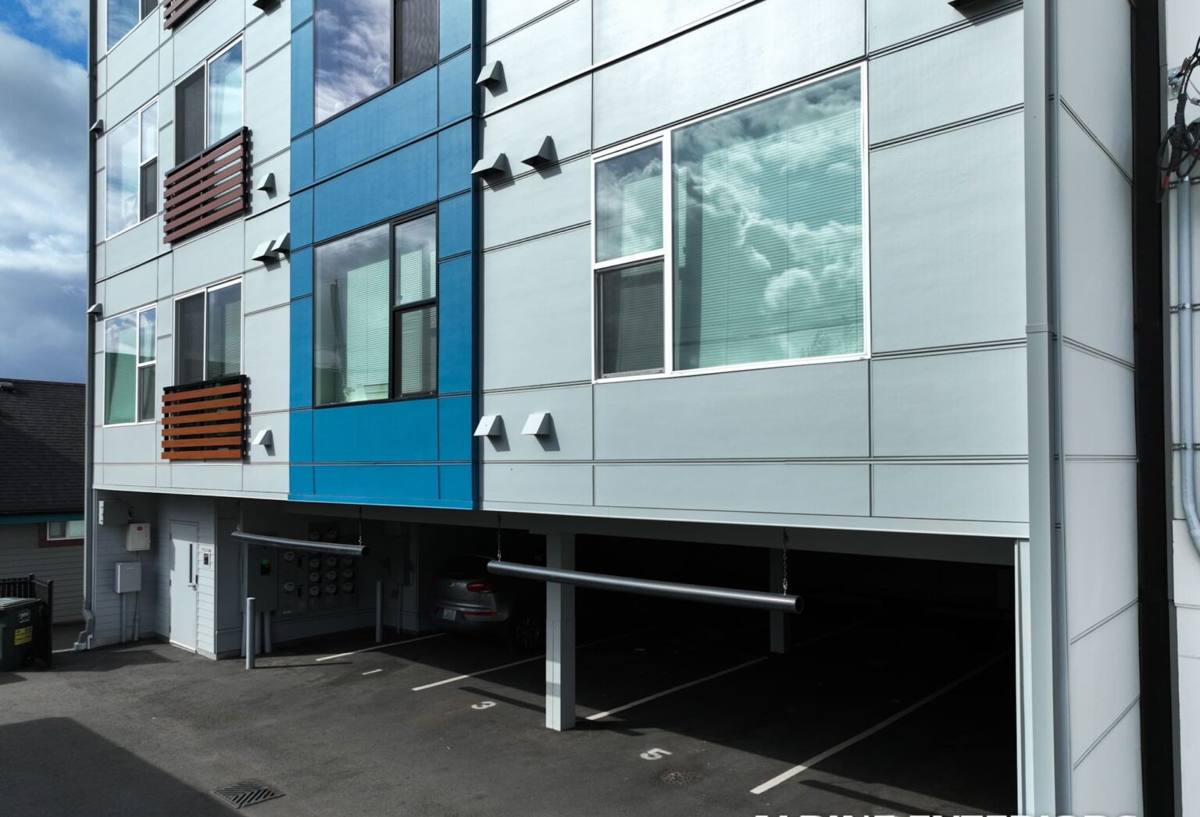
Why Board & Batten Is Harder to Get Right Than Lap Siding
A standard horizontal lap profile has one basic job: shed water downward, panel over panel, like shingles. Board and batten reverses that logic. The vertical boards and the battens that cover the seams between them create a series of butt joints and overlaps running up and down the wall, which means water is fighting gravity at every seam instead of being carried away by it. Done correctly, with the right underlying panel system, fastening pattern, and flashing details, this is not a weak point. Done poorly — undersized battens, wrong fastener spacing, no rainscreen gap, caulk used to cover installation shortcuts — it becomes the first place a home shows moisture damage.
What Tends to Go Wrong on Coastal Board & Batten Jobs
- Battens face-nailed directly through both boards without accounting for expansion and contraction in high heat and humidity
- No drainage plane or rainscreen gap behind the boards, trapping moisture against the sheathing
- Fastener spacing that meets inland code minimums but not the wind-load reality of a barrier island
- Cut edges of fiber cement left unsealed, allowing moisture intrusion at the most vulnerable point in the panel
- Standard fasteners used instead of corrosion-resistant hardware, leading to streaking and early fastener failure in salt air
What Longboat Key's Climate Actually Demands
Sarasota County sits squarely in a hurricane-exposed coastal zone, and Longboat Key takes the brunt of it before the storm even reaches the mainland. Four conditions drive nearly every siding decision we make out here:
Hurricane-Force Wind
Wind doesn't just push against a wall — it creates pressure differentials that pull siding away from the structure, especially at corners, edges, and around openings. Board and batten has more individual fastening points than lap siding, which is an advantage when the fastening schedule is correct and a liability when it isn't.
Wind-Driven Rain
During a tropical system, rain doesn't fall straight down — it's driven sideways and upward under eaves and into seams. A siding system that only manages water in calm conditions isn't enough here; the water-resistive barrier, flashing, and joint details behind the boards have to hold up under horizontal pressure.
Salt Air Corrosion
Being surrounded by the Gulf and the bay means airborne salt is a constant, not an occasional event. Salt accelerates corrosion of fasteners, trim hardware, and paint film, and it degrades materials that aren't formulated to resist it far faster than the same materials would degrade a few miles inland.
Year-Round UV
Florida sun is intense and nearly constant. Field-applied paint on wood or on job-primed siding chalks, fades, and cracks noticeably faster here than in most of the country, which turns "paint every few years" into a real, recurring cost on a barrier island home.
Why We Only Install James Hardie Board & Batten
James Hardie's fiber cement is engineered specifically to resist the conditions above. It's non-combustible, dimensionally stable in heat and humidity, and manufactured with a factory-applied ColorPlus finish that's baked on and warranted against fading — which matters enormously in a climate that eats field-applied paint. Hardie also builds HZ5 product formulations specifically for high-humidity, high-moisture climates like ours, engineered to resist moisture-related damage better than their standard product lines.
We've made a deliberate decision not to install vinyl, LP SmartSide, primed spruce, or cedar board and batten. Each of those products has real strengths, and we're not going to pretend otherwise:
- Vinyl is affordable and low-maintenance in mild climates, but it softens and can distort in intense heat, and it's more vulnerable to cracking and blow-off in hurricane-force wind than fiber cement.
- Cedar and primed spruce offer a natural look many homeowners love, but real wood requires an ongoing maintenance commitment — sealing, repainting, and monitoring for rot — that's especially demanding in a humid, salt-air coastal environment.
- LP SmartSide is a capable engineered wood product, but it's a wood-strand composite, which means its long-term moisture performance depends heavily on sealed edges and diligent caulk maintenance, something we're less comfortable guaranteeing on a barrier island than we are with fiber cement.
Fiber cement doesn't rot, doesn't attract termites, and won't warp or delaminate the way wood-based products can when a seal fails. That combination is why it's the only board and batten product we put our name behind on Longboat Key.
How a Correct Board & Batten Install Works
The visible boards and battens are the last piece of the system, not the first. What's underneath them determines whether the siding lasts fifteen years or forty.
- Substrate inspection. We check existing sheathing for water damage, soft spots, or prior moisture intrusion before anything new goes up. On the Key, we occasionally find this on homes where a previous siding system trapped moisture against the wall for years without anyone knowing.
- Water-resistive barrier. A continuous, properly lapped weather barrier goes over the sheathing, with all seams taped and all penetrations flashed before the first board is hung.
- Rainscreen gap. We install furring or a drainage mat behind the boards so that any moisture that does get past the surface has somewhere to drain and air can circulate to dry the wall assembly out.
- Vertical board installation. Hardie vertical panels or individual boards go up with manufacturer-specified fastener type, spacing, and edge distance — tightened for the wind exposure of a coastal property, not just code minimum.
- Batten placement. Battens are installed over the board seams with the fastening pattern and gap tolerances that let the material expand and contract with heat and humidity without stressing the joint.
- Flashing and trim details. Every window, door, corner, and roofline transition gets flashed to shed water outward and downward, not just caulked and hoped for.
- Cut-edge sealing. Every field-cut edge of the fiber cement is sealed per manufacturer spec, closing off the one place raw fiber cement is vulnerable to moisture.
Comparing Board & Batten Options for a Coastal Longboat Key Home
| Factor | James Hardie Fiber Cement | Vinyl | Cedar / Primed Wood |
|---|---|---|---|
| Hurricane wind resistance | Engineered and rated for high-wind installation | More prone to cracking or blow-off in extreme gusts | Depends heavily on fastening; wood can split under stress |
| Salt air / humidity resistance | Non-combustible, dimensionally stable, HZ5 formulations available | Doesn't corrode but can warp or fade in intense heat | Requires ongoing sealing to resist moisture and rot |
| UV / color retention | Factory ColorPlus finish, warranted against fading | Color molded in, but can chalk and fade over time | Field-applied paint fades and needs repainting every few years |
| Maintenance burden | Periodic washing; no repainting needed with ColorPlus | Low, but limited repair options if damaged | Ongoing sealing, repainting, and rot monitoring |
| Fire resistance | Non-combustible material | Combustible | Combustible |
Why a Crew That Already Works Longboat Key Matters
Board and batten installation on a barrier island isn't the same job as the same profile fifteen miles inland, and it shows in the details a homeowner can't always see from the ground. A crew that regularly works Sarasota County's coastal properties already knows where wind-driven rain tends to find weak points on this style of home, how to detail flashing around openings that face open water, and which fastening and edge-sealing shortcuts simply don't hold up out here — because they've seen what happens when those shortcuts were taken on a prior job. That local, repeated experience is what turns a correct installation from a checklist into a habit.
Working on the Key also means dealing with the practical realities of an island job site: tighter access on some lots, coordination with HOA or architectural review requirements common in Longboat Key communities, and scheduling around the seasonal weather windows that make sense for exterior work in this climate. A crew unfamiliar with those realities can turn a straightforward siding project into a slow, frustrating one.
What a Homeowner Should Ask Before Hiring for This Job
- Is the board and batten material James Hardie fiber cement, or a different product being marketed under a similar look?
- What water-resistive barrier and rainscreen approach is being used behind the boards?
- What is the fastener type and spacing, and is it specified for coastal wind exposure or just code minimum?
- How are cut edges sealed, and how are corners, window, and door openings flashed?
- What does the manufacturer's warranty cover, and what does it require of the installer to stay valid?
- Has this crew installed board and batten specifically on Longboat Key or similarly exposed coastal properties before?
What Correct Installation Protects You From
The cost of getting board and batten wrong on a coastal home rarely shows up immediately. It shows up two, five, or ten years later as soft spots at the base of boards, streaking around fasteners, paint failure on field-painted wood, or, in the worst cases, boards coming loose during a wind event because the fastening schedule wasn't built for the exposure. A correct install is slower and more detail-intensive up front specifically to avoid that timeline. On Longboat Key, where the next tropical system is never far off the calendar, that upfront diligence is the difference between siding that's a non-issue for decades and siding that becomes a recurring repair project.
If you're weighing board and batten for a home on Longboat Key, we're happy to walk the exterior with you, talk through what your specific home and exposure call for, and give you a straightforward, no-pressure estimate — use the form below to get started.