 Sarasota Roofing
 Roof Repair Built Around How Lakewood Ranch Weather Actually Wears a Roof
Lakewood Ranch sits inland from the coast, but that doesn't mean the roofs here get an easy ride. Between Sarasota County's summer storm cycle, near-daily UV exposure, and the salt-laden air that drifts in off the Gulf, roofing materials in this area age differently than they would further north. A roof repair here has to account for all three at once — not just patch a leak and move on, but restore a section so it holds up against the next round of wind-driven rain and the next several months of intense sun.
We repair roofs across Lakewood Ranch's mix of housing — newer development homes with architectural shingle or tile roofs, and older properties where the roofing has already been through a few Florida summers. The right repair approach is different depending on which situation you're in, and a good contractor should be able to explain why before ever getting on the roof.
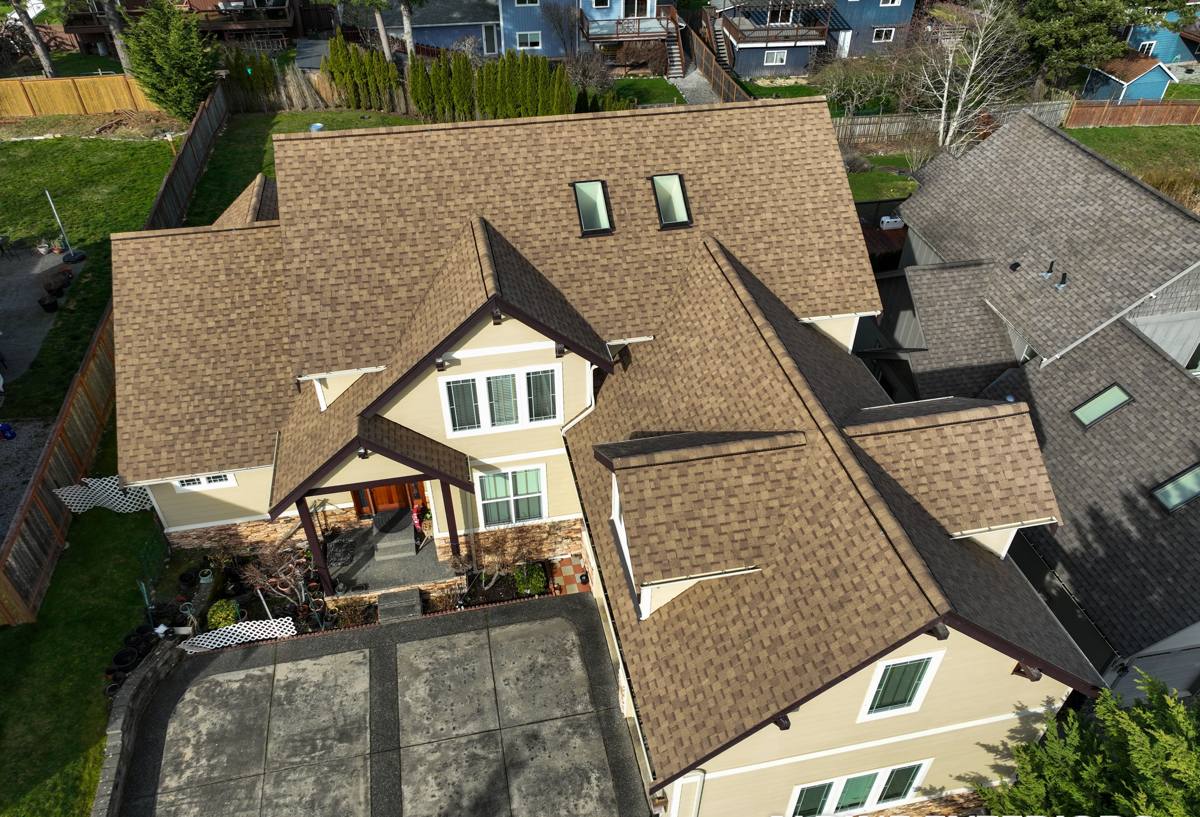
What Sarasota County's Climate Does to a Roof Over Time
Roof repair in this part of Florida is rarely just about one bad shingle or one cracked tile. The damage usually has a cause, and understanding that cause is what separates a repair that lasts from one that fails again in a year.
Hurricane-Force Wind and Wind-Driven Rain
Wind doesn't just tear off loose shingles — it gets underneath the roof covering at edges, ridges, and penetrations, lifting fasteners and breaking seals that were never designed to flex repeatedly. Once wind lifts an edge even slightly, wind-driven rain follows the same path in during the next storm, often showing up as a leak nowhere near where the actual opening is. Water tracks along the underlayment or decking before it drips through the ceiling, which is why so many "mystery leaks" turn out to be damage from a storm months earlier.
Year-Round UV Exposure
Central Florida doesn't get a winter break from sun the way northern climates do. Asphalt shingles lose their protective granules faster here, and the asphalt underneath becomes brittle sooner than the manufacturer's rated lifespan might suggest. Tile roofs handle UV better on the surface, but the underlayment beneath the tile — the part actually keeping water out — still degrades on the same accelerated timeline. A tile roof can look fine from the driveway while the underlayment underneath is already failing.
Salt Air
Lakewood Ranch is far enough from the coast that salt exposure is less severe than beachfront properties, but it's not zero. Salt-laden air corrodes exposed metal faster than inland-only environments — flashing, fasteners, vent stacks, and drip edge. Corroded flashing is one of the most common root causes we find when we're called out for a leak that the homeowner assumed was a shingle problem.
Signs a Lakewood Ranch Roof Needs Repair, Not Just Watching
- Water stains on interior ceilings or walls, especially after a storm with heavy wind
- Missing, cracked, curling, or lifted shingles visible from the ground
- Cracked or displaced tiles, or tiles that shift underfoot on inspection
- Granules collecting in gutters or at downspout outlets
- Visible rust or corrosion on flashing, vent boots, or metal roof edges
- Soft spots in the decking felt when walking the roof
- Daylight visible through the attic at ridges, valleys, or penetrations
- A recent storm with confirmed high wind in the area, even without an obvious leak yet
That last one matters more than most homeowners realize. Wind damage doesn't always announce itself right away. A lifted shingle edge or a cracked tile can sit unnoticed for weeks before a rain event finally pushes water through. After any significant wind event, a roof check is worth doing even if nothing looks wrong from the ground.
What a Correct Roof Repair Actually Involves
A repair that holds up in Sarasota County conditions goes beyond swapping out the damaged material. Here's what we consider a complete job:
1. Find the Real Source, Not Just the Symptom
Because wind-driven rain travels along the underlayment before it shows up inside, we trace the leak path rather than just repairing whatever's damaged closest to the ceiling stain. That often means checking flashing, valleys, and penetrations uphill from the visible damage.
2. Match the Repair to the Existing Roof System
Shingle repairs need to tie into the existing shingle course correctly, with proper nail placement and sealant that will actually bond in Florida heat. Tile repairs require handling tile without cracking adjacent pieces, and rebuilding the underlayment section properly rather than just resetting the tile on top of compromised material.
3. Rebuild the Underlayment Where Needed
If the underlayment has failed — which is common on tile roofs and older shingle roofs alike — replacing the surface material without addressing the underlayment underneath is a temporary fix at best. We replace underlayment in the repair zone when it shows UV degradation or storm damage.
4. Address Flashing and Fasteners
Given how much of our leak calls trace back to corroded or improperly sealed flashing, every repair includes a check of nearby flashing and fastener condition, not just the primary damage area.
5. Confirm Drainage Is Working
A repair near a valley or gutter line is only as good as the water's ability to actually leave the roof. We check that repaired areas drain properly rather than creating a new low point.
Shingle vs. Tile Repair: What's Different
| Factor | Asphalt Shingle Roofs | Tile Roofs |
|---|---|---|
| Most common failure point | Wind-lifted edges, UV-brittle granule loss | Cracked or slipped tile, degraded underlayment beneath |
| Repair complexity | Generally faster; matching shingle color/age can be a factor | Slower; tiles must be handled carefully to avoid cracking neighbors |
| Hidden damage risk | Underlayment can be UV-damaged even if shingles look intact | Underlayment failure often invisible until tiles are lifted |
| Wind vulnerability | Edge and ridge shingles most exposed | Ridge and ridge-cap tiles, plus battens in some installs |
| Typical repair lifespan if done correctly | Should match remaining life of surrounding roof | Underlayment repair often outlasts the tile itself |
Neither system is inherently better for every home — the right choice depends on the home's structure, budget, and how the existing roof was installed. What matters for a repair is understanding which system you have and repairing it to that system's actual requirements, not treating every roof the same way.
How Our Repair Process Works
- Inspection and diagnosis. We get on the roof, trace the actual leak path, and check surrounding flashing, fasteners, and underlayment condition — not just the spot where the stain appeared inside.
- Honest explanation. We tell you what we found, what caused it, and what it will take to fix it correctly. If a repair isn't the right call because the roof's underlying condition won't support one, we say so.
- Written estimate. You get a clear scope of work and price before anything happens, with no pressure to decide on the spot.
- The repair itself. Matched materials, proper fastening and sealing methods suited to Florida wind exposure, and underlayment replacement where the inspection showed it was needed.
- Final check. We confirm the repair area drains correctly and that no secondary issues were missed nearby.
Why It Matters to Hire a Crew That Already Works in Lakewood Ranch
Roofing crews who work Sarasota County regularly develop a working knowledge of what actually goes wrong on roofs here, versus what a national playbook assumes. That shows up in a few concrete ways:
- Recognizing storm damage patterns specific to how wind moves through this part of the county
- Knowing which underlayment and fastening approaches actually hold up under repeated humidity and heat cycles, not just what a spec sheet claims
- Understanding permitting and code requirements that apply to roof repairs in the county, so a repair doesn't create a problem at resale or insurance renewal
- Being available quickly after a storm, when timing matters for preventing a small leak from becoming a bigger interior problem
A roofer who mainly works elsewhere and takes the occasional Lakewood Ranch job doesn't build that same pattern recognition. It's not about loyalty to a neighborhood — it's about having actually seen how roofs in this specific climate fail, over and over, and knowing what a correct fix looks like before the ladder even goes up.
What to Ask Before Hiring Anyone for a Roof Repair
Whoever you hire, these are reasonable questions to ask before work starts:
- Will you show me what's actually causing the leak, not just where it's showing up inside?
- Are you licensed and insured to do roofing work in Sarasota County?
- Will the repair include checking and, if needed, replacing underlayment — or just the visible surface material?
- What's your plan if you find damage beyond the original problem once you're on the roof?
- Is the estimate in writing, with the scope of work spelled out?
A contractor who's confident in their work won't have a problem answering any of these directly.
When a Repair Is the Right Call — and When It Isn't
Most localized damage — a section of wind-lifted shingles, a handful of cracked tiles, a compromised flashing seal — is a legitimate repair, not a reason to replace the whole roof. But repair has limits. If the underlayment has failed across a large portion of the roof, if there's widespread granule loss showing the shingles are past their functional life, or if repeated repairs keep surfacing in different spots, that's usually a sign the roof's overall condition has moved past what spot repairs can reasonably fix. Part of an honest inspection is telling you which situation you're actually in, rather than defaulting to whichever answer is more profitable for the contractor.
If you're dealing with a leak, storm damage, or just want a straight answer on a roof's condition, we're happy to come take a look. Use the form below to request a free, no-pressure estimate for your Lakewood Ranch home.