 Sarasota Roofing
 What Lakewood Ranch Siding Has to Survive
Lakewood Ranch sits inland from the Gulf, but "inland" doesn't mean protected. Homes here still face the same hurricane season as the rest of the Sarasota region — sustained tropical-storm and hurricane-force winds that don't just push on a wall, they drive rain sideways into every seam, corner, and fastener hole on the exterior. Outside of storm season, the workload doesn't let up: Southwest Florida gets some of the most intense, near-constant UV exposure in the continental U.S., and that sun bakes painted surfaces, breaks down adhesives, and fades color year after year. Add in salt-laden air that moves well inland from the coast on prevailing winds, plus the humidity that keeps a wet wall assembly damp far longer here than it would stay in a drier climate, and you have a combination that exposes every weak point in a siding system — the material itself, the fasteners, the flashing details, and the quality of the original installation.
This is the environment we build Lakewood Ranch siding jobs around. A product or installation method that holds up fine in a milder climate can fail here in a fraction of the time, which is exactly why the material choice and the install details in this guide matter as much as they do.
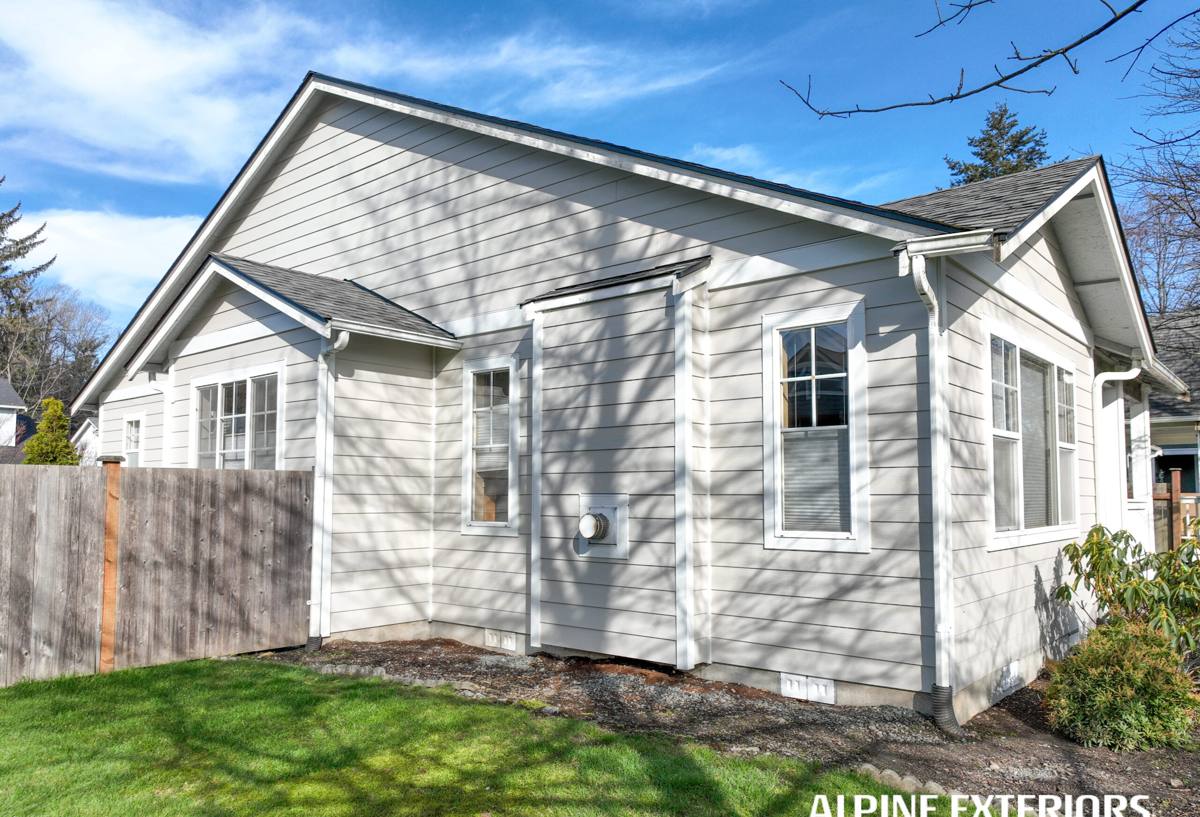
Why Fiber Cement Is the Right Material for This Climate
Fiber cement siding is manufactured from cement, sand, and cellulose fiber, pressed and cured into planks and panels that are dimensionally stable and dense. For a home in the Sarasota area, that composition solves several problems at once. It doesn't feed termites or other wood-boring insects, which are active year-round in Florida's climate. It won't rot the way untreated or poorly maintained wood siding does when it stays damp after a storm. It's non-combustible, which matters for both wildfire-adjacent inland brush conditions and for how some insurers evaluate exterior materials. And because it's engineered to resist moisture absorption, it holds paint and factory finish far longer than materials that swell, crack, or degrade when they take on water.
We're upfront that this isn't the only siding material on the market, and other options aren't without their own merits. Vinyl is inexpensive and lightweight, but it's a petroleum-based product that expands and contracts noticeably with Florida's heat swings, and it can soften or crack under sustained wind-driven debris impact. Wood siding — including primed spruce and cedar — can look great initially, but it demands a maintenance schedule (repainting, caulk inspection, moisture checks) that most homeowners in a climate this aggressive don't want to keep up with indefinitely. Engineered wood products like LP SmartSide bring real improvements over raw wood, but they're still wood-strand based, which means they carry more sensitivity to sustained moisture exposure than a cement-based product does. We made a standard for our own crews based on those trade-offs, and that standard is fiber cement — specifically James Hardie.
Fiber Cement vs. Common Alternatives
| Material | Moisture behavior | UV/color stability | Wind/impact resistance |
|---|---|---|---|
| James Hardie fiber cement | Engineered for humid climates, doesn't rot | ColorPlus factory finish resists fading | Dense, rigid panel construction |
| Vinyl siding | Doesn't absorb water, but seams can trap it | Can fade and chalk with sustained UV | Can crack or deform in high heat and wind |
| Wood / primed spruce / cedar | Absorbs moisture, prone to rot if not maintained | Repainting needed on a regular cycle | Vulnerable to swelling and splitting |
| Engineered wood (LP SmartSide) | Improved over raw wood, still wood-strand based | Needs factory or field finish upkeep | Generally solid, but moisture-sensitive at cut edges |
Why We Install Only James Hardie
We don't install LP SmartSide, vinyl, Cemplank, Allura, primed spruce, or cedar. That's a deliberate standard, not a limitation in what we're capable of installing. James Hardie's fiber cement is manufactured with HZ5 formulations specifically engineered for hot, humid, high-moisture climates like Florida's — the cement composition is tuned to resist swelling, cracking, and moisture-related failure in exactly the conditions Lakewood Ranch homes deal with every year. The ColorPlus finish is baked on in a factory-controlled process rather than field-applied, which gives it a more consistent, fade-resistant finish than most job-site painting can match, and it carries its own finish warranty separate from the product warranty. Combined with a strong transferable product warranty, that adds up to a siding system we're confident standing behind on every home we touch — which is why we don't split our installation standards across multiple product lines.
Hardie Product Lines Used on Lakewood Ranch Homes
- HardiePlank lap siding — the standard horizontal lap profile for most single-family homes, available in a range of textures and exposures.
- HardiePanel vertical siding — used for board-and-batten style facades and accent walls.
- HardieTrim — corner boards, fascia, and window/door trim that match the siding's moisture and UV performance.
- HardieSoffit — vented and non-vented panel options for soffit areas, which take heavy UV and moisture exposure in this climate.
What a Correct Installation Actually Involves
Fiber cement siding is only as good as the details underneath it. A huge share of the siding failures we get called out to inspect in this region aren't material failures — they're installation shortcuts that let water find its way behind the siding. A correct installation follows a specific set of clearances and sequencing:
- A code-compliant weather-resistant barrier installed over sound sheathing before any siding goes up.
- Minimum clearance from grade (generally 6 inches) so splash-back and standing water can't wick into the bottom edge of the siding.
- Proper clearance from roof lines and horizontal surfaces (generally 2 inches) to prevent water from pooling against the siding.
- Corrosion-resistant fasteners driven to the manufacturer's specified depth and pattern — over-driven or under-driven nails are one of the most common causes of early failure.
- Flashing at every window, door, and horizontal trim transition, including kick-out flashing where a roofline meets a wall.
- Properly sized and sealed joints, with the right sealant for a fiber cement substrate rather than a generic caulk.
Skip any one of these steps and the siding itself can be flawless while the wall assembly behind it still takes on water. That's why we treat the installation process, not just the product choice, as the thing that determines whether siding lasts 10 years or 30.
Our Process for a Lakewood Ranch Siding Project
- On-site assessment. We walk the home, check the condition of the existing siding and the sheathing underneath where accessible, and note problem areas — gable ends, window returns, areas with a history of moisture staining.
- Tear-off and substrate check. Old siding comes off and we inspect the sheathing for hidden rot or damage before anything new goes up. Problems found here get addressed before the wall is closed back up, not covered over.
- Weather barrier and flashing. A new weather-resistant barrier goes on, along with flashing at every penetration and horizontal transition.
- Siding installation. HardiePlank, HardiePanel, or a combination is installed to manufacturer clearance and fastening specifications, with attention to consistent reveal lines and tight, properly sealed joints.
- Trim and finish details. HardieTrim and HardieSoffit go in around windows, doors, corners, and eaves, matching the ColorPlus finish where applicable.
- Final walkthrough. We go over the completed job with the homeowner, point out anything worth knowing for future maintenance, and address any punch-list items before calling it finished.
Problems We Commonly Find on Existing Lakewood Ranch Homes
When we're called out to look at an existing home's siding in this area, a handful of issues show up repeatedly. Moisture intrusion behind older siding is the most common — usually traced back to missing or failed flashing around windows, or siding installed with no clearance at grade that's been wicking water for years without an obvious sign on the surface. UV-related fading and chalking is common on older vinyl and field-painted wood siding that's been through several Florida summers without a UV-stable finish. Wind damage tends to concentrate at gable ends, corners, and areas where fastening was inconsistent — these are the first spots to loosen or fail in a strong wind event. And caulk failure at joints and trim transitions is nearly universal on older installations, since standard caulk breaks down under UV and heat far faster than a proper fiber-cement-rated sealant.
Cost Factors for a Lakewood Ranch Siding Project
Every home is different, so we don't publish flat prices, but the main variables that move the cost of a fiber cement siding project are consistent from house to house:
| Factor | How it affects cost |
|---|---|
| Home size and wall area | More square footage means more material and labor |
| Existing siding removal | Tear-off of old siding and disposal adds time and cost over new construction |
| Substrate condition | Sheathing repair or replacement, if found during tear-off, is a separate line item |
| Siding profile | Lap siding vs. panel/board-and-batten styling affects material and labor time |
| Trim complexity | Homes with more corners, windows, and architectural detail take more trim work |
| Finish | Factory ColorPlus finish vs. field-applied paint affects material cost and long-term upkeep |
| Accessibility | Multi-story sections or difficult access can add labor time |
Maintaining Fiber Cement Siding in a Florida Climate
Fiber cement is low-maintenance compared to wood, but "low-maintenance" doesn't mean "no maintenance," especially in a climate this demanding. A short annual routine keeps a Hardie installation performing the way it's designed to for decades:
- Rinse the siding with a garden hose once or twice a year to clear salt residue, pollen, and grime — avoid pressure washing directly at the joints.
- Walk the exterior after major storms and check for loosened trim, damaged caulk joints, or debris impact marks.
- Inspect caulk at window and door trim periodically; failed caulk is easy to catch early and cheap to fix before it becomes a moisture problem.
- Keep landscaping and irrigation heads from spraying directly on the siding — constant sprinkler contact accelerates wear at the base.
- If any field-painted trim is used alongside ColorPlus siding, plan on repainting that trim on a normal exterior paint cycle.
Why a Crew That Already Works Lakewood Ranch Matters
Lakewood Ranch is a heavily planned community, and many sections carry HOA or architectural review requirements that affect exterior color choices, trim styles, and sometimes even siding profile. A crew that's worked in the area knows to check for those requirements up front rather than after materials are ordered. Local experience also means familiarity with Florida Building Code wind-load requirements for this region, and with the local permitting and inspection process, so a project doesn't stall waiting on paperwork nobody anticipated. And because we schedule around hurricane season realities rather than around a generic calendar, a crew based in this region can plan tear-off and installation timing in a way that doesn't leave a home's wall assembly exposed longer than necessary.
If you're weighing a siding project for a Lakewood Ranch home, we're happy to take a look and walk you through what your home specifically needs — no pressure, no obligation. Request a free estimate and we'll set up a time to assess your siding in person.