 Sarasota Roofing
 Ellenton's Climate Is Hard on Siding — Here's Why
Homes in the Ellenton area sit in one of the more demanding exterior-materials climates in the country. You've got hurricane-force wind events that test every fastener and seam, near year-round UV exposure intense enough to degrade paint and break down plastics, wind-driven rain that gets pushed sideways into wall assemblies during summer storms, and salt-laden air drifting in off the Gulf and the surrounding waterways that accelerates corrosion on anything metal. Any one of those factors alone would be enough to shorten the life of a mediocre siding product. Together, over a Florida ownership timeline, they expose weak siding fast — usually within the first five to ten years.
That's the backdrop for every recommendation on this page. We install James Hardie fiber cement siding exclusively, and in the Ellenton area specifically, the reasons for that come down to how the product actually behaves under sun, wind, and moisture — not marketing claims.
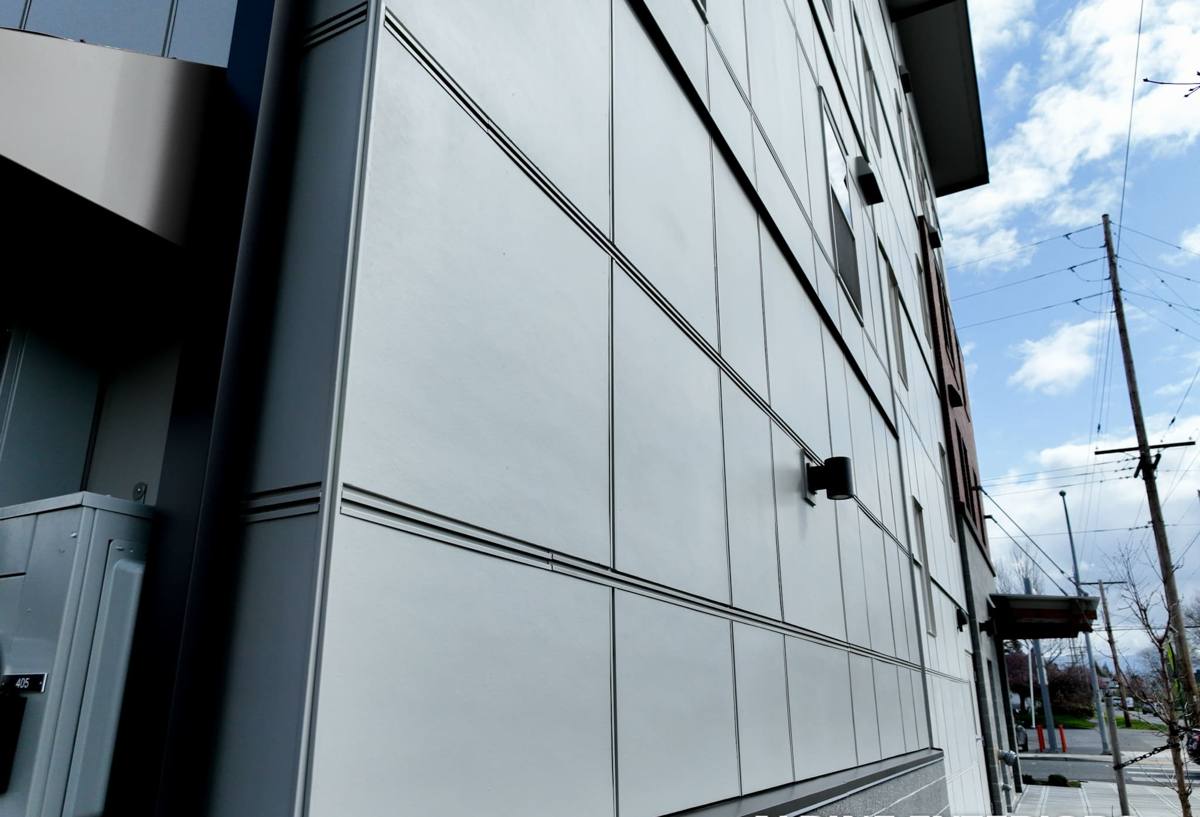
What James Hardie Siding Brings to a Home Like Yours
James Hardie fiber cement is a mix of cellulose fiber, cement, and sand, engineered to be dimensionally stable and resistant to moisture-driven swelling. For homes in our climate zone, Hardie makes HZ5 products specifically engineered for high-humidity, high-moisture regions like ours — a distinction that matters because not all fiber cement is built the same way for the same climate.
Non-Combustible Core
Fiber cement doesn't burn. That matters less for hurricane resilience and more for everyday peace of mind — wildfire and ember exposure, grill mishaps, and electrical issues near the exterior wall don't turn siding into fuel.
ColorPlus Factory Finish
Rather than field-painted siding that starts fading and chalking within a few Florida summers, ColorPlus finish is baked on at the factory in multiple coats, engineered specifically to resist UV fade. In a region where the sun is doing damage twelve months a year, that finish durability is one of the biggest practical differences between Hardie and lower-cost alternatives.
Moisture and Wind Behavior
Fiber cement doesn't absorb and swell the way wood-based products can, and it doesn't get brittle and crack under UV and heat cycling the way some vinyl and composite products do. Properly fastened per Hardie's published wind-zone specifications, it holds up to the wind loads our storm events generate.
Signs Your Ellenton Home's Siding Needs Attention
Because damage from sun, wind, and salt air builds gradually, a lot of homeowners don't notice a problem until it's already affecting the wall behind the siding. Walk your exterior and check for these:
- Visible warping, bowing, or buckling of siding panels or boards
- Chalky residue or noticeable fading, especially on the sun-facing (typically south and west) walls
- Soft spots, or a "give" when you press on siding near the bottom courses or around window trim
- Cracked, peeling, or bubbling paint that keeps coming back after repainting
- Gaps opening up at seams, corners, or where siding meets trim and window/door frames
- Streaking, staining, or dark patches that suggest moisture is tracking behind the siding
- Rust bleed at fastener heads or metal trim
- Visible insect activity or soft, spongy wood trim adjacent to the siding
Any one of these on its own might just mean a repair. Several at once, especially combined with the age of the siding, usually means it's time to talk about a full replacement before the underlying sheathing and framing start absorbing damage.
What a Correct James Hardie Installation Actually Involves
Hardie siding's real-world performance depends heavily on installation quality — this is a product that rewards correct technique and punishes shortcuts. A few details that separate a job that lasts decades from one that fails early:
Flashing and Water Management
Every window, door, and penetration needs proper flashing so water is directed out and away from the wall assembly, not trapped behind the siding. In a climate with wind-driven rain, this is arguably more important than the siding material itself — bad flashing behind great siding still leads to rot.
Clearances and Gaps
Hardie specifies clearance from grade, roofing, decks, and other abutting surfaces, plus gaps at butt joints and around trim to allow for the material's minor expansion and contraction. Installers who nail siding tight to grade or hard against trim with no gap are setting up moisture problems down the road.
Fastening Pattern and Wind Rating
Hardie publishes specific fastener types, spacing, and embedment requirements tied to wind zones. Our region calls for installation that meets the higher wind-load specifications — this isn't optional detail, it's the difference between siding that stays put in a tropical storm and siding that doesn't.
Caulking and Sealant Practices
Correct sealant at seams and penetrations, using products compatible with ColorPlus finish, keeps water out without trapping moisture in. Over-caulking or using the wrong sealant can do as much harm as under-caulking.
Field-Cut Edge Treatment
Any cut edge exposes raw fiber cement that isn't factory-finished. Those edges need to be primed and sealed per manufacturer spec, especially on butt joints and around openings, or they become a moisture entry point.
Comparing Siding Options for This Climate
| Factor | James Hardie Fiber Cement | Vinyl | Wood / Engineered Wood |
|---|---|---|---|
| UV fade resistance | Strong — factory ColorPlus finish engineered for UV | Moderate — can chalk and fade, especially darker colors | Weak — repaint cycle required regularly |
| Wind performance (properly installed) | Rated for high wind zones per manufacturer spec | Can crack, warp, or blow off in high wind events | Depends on install; panels can lift or split |
| Moisture/humidity behavior | HZ5 lines engineered for humid climates; dimensionally stable | Doesn't rot, but seams can let water behind panel | Prone to swelling, rot, and insect damage without diligent upkeep |
| Fire resistance | Non-combustible | Combustible, can melt/deform near heat sources | Combustible |
| Salt air / corrosion resistance | Cement-based core unaffected by salt exposure | Generally resistant but hardware and trim can corrode | Fasteners and trim corrode; wood itself is unaffected by salt directly |
This isn't a knock on every alternative product across the board — vinyl and wood siding both have legitimate use cases elsewhere. It's why, for our climate and for the standard we hold our own work to, we made James Hardie the only siding we install.
How Our Process Works, Start to Finish
- Free on-site estimate. We walk the exterior, check for the warning signs above, and measure for material.
- Product and color selection. We go over Hardie's plank, shingle, and panel lines and ColorPlus color options suited to your home and neighborhood.
- Removal and inspection. Old siding comes off and we inspect the sheathing and framing underneath for hidden moisture or rot damage before anything new goes up.
- Weather barrier and flashing. We install or repair the water-resistive barrier and flash every window, door, and penetration correctly before siding goes on.
- Installation to Hardie spec. Fastening pattern, clearances, gaps, and edge treatment follow manufacturer requirements for our wind zone.
- Final walkthrough. We review the finished job with you, point out anything worth knowing for long-term care, and answer questions.
What Drives the Cost of a Siding Project
| Factor | Why It Matters |
|---|---|
| Home size and wall complexity | More square footage, more corners, and more window/door openings all add labor and material |
| Siding profile (lap, shingle, panel) | Different Hardie lines have different material and labor costs |
| Condition of existing sheathing | Hidden rot or moisture damage found during removal may need repair before siding goes on |
| Trim and detail work | Corner boards, window trim, and architectural detail add time and material |
| Access and site conditions | Multi-story sections, tight lot lines, or landscaping can affect labor |
We don't quote from a distance — every estimate is based on an actual walk-around of your home, because the factors above vary too much house to house for a rough number to mean much.
Why a Crew That Already Works the Ellenton Area Matters
Installation quality is the single biggest variable in how long Hardie siding actually lasts on a given house — the product's engineering only pays off when the fastening, flashing, and clearances are done right for the conditions the home actually faces. A crew that regularly works in and around Ellenton and the broader Sarasota area already understands what that means in practice: the wind-load requirements that apply here, the humidity behavior that affects sequencing and sealant choice, and the kind of wind-driven rain exposure that makes flashing detail non-negotiable rather than an afterthought.
That local familiarity also means faster, more accurate estimates, fewer surprises once removal starts, and a crew that's used to coordinating around the seasonal weather windows that affect scheduling in this part of Florida.
Caring for Hardie Siding After Installation
Correctly installed Hardie siding is low-maintenance, but "low-maintenance" isn't "no-maintenance." A few habits extend its life:
- Rinse down the exterior periodically to clear salt residue and airborne debris, especially on walls facing prevailing wind and rain
- Keep an eye on caulking at seams and trim, and have it refreshed if it starts cracking or pulling away
- Trim back landscaping so foliage isn't holding moisture against the siding
- Have gutters and downspouts checked so water isn't dumping directly onto or behind wall sections
- Address any impact damage (lawn equipment, storm debris) promptly rather than letting a chip become a moisture entry point
If you're noticing early signs of wear on your current siding, or you're ready to talk through what a James Hardie installation would look like for your specific home in the Ellenton area, we're happy to come take a look. The estimate is free, there's no pressure, and you'll get a straight answer about what your home actually needs.