 Sarasota Roofing
 Why Siding Replacement Looks Different in Ellenton
Ellenton sits in that stretch of the Sarasota area where three climate stresses stack on top of each other: hurricane-force wind events, some of the most intense year-round UV exposure in the continental U.S., and salt-laden air drifting in off the Gulf and the surrounding waterways. Any one of these will wear down cheap siding. Together, they turn a marginal installation into a five-year problem instead of a twenty-year one.
That's the lens we use every time we look at a siding job in this area. It's not just "what material looks good" — it's "what will still be flat, sealed, and holding paint after another decade of Sarasota summers and storm seasons." A siding replacement done right in Ellenton has to account for wind-driven rain finding every gap, UV breaking down anything with a weak factory finish, and moisture behind the cladding that never fully dries out during humid stretches.
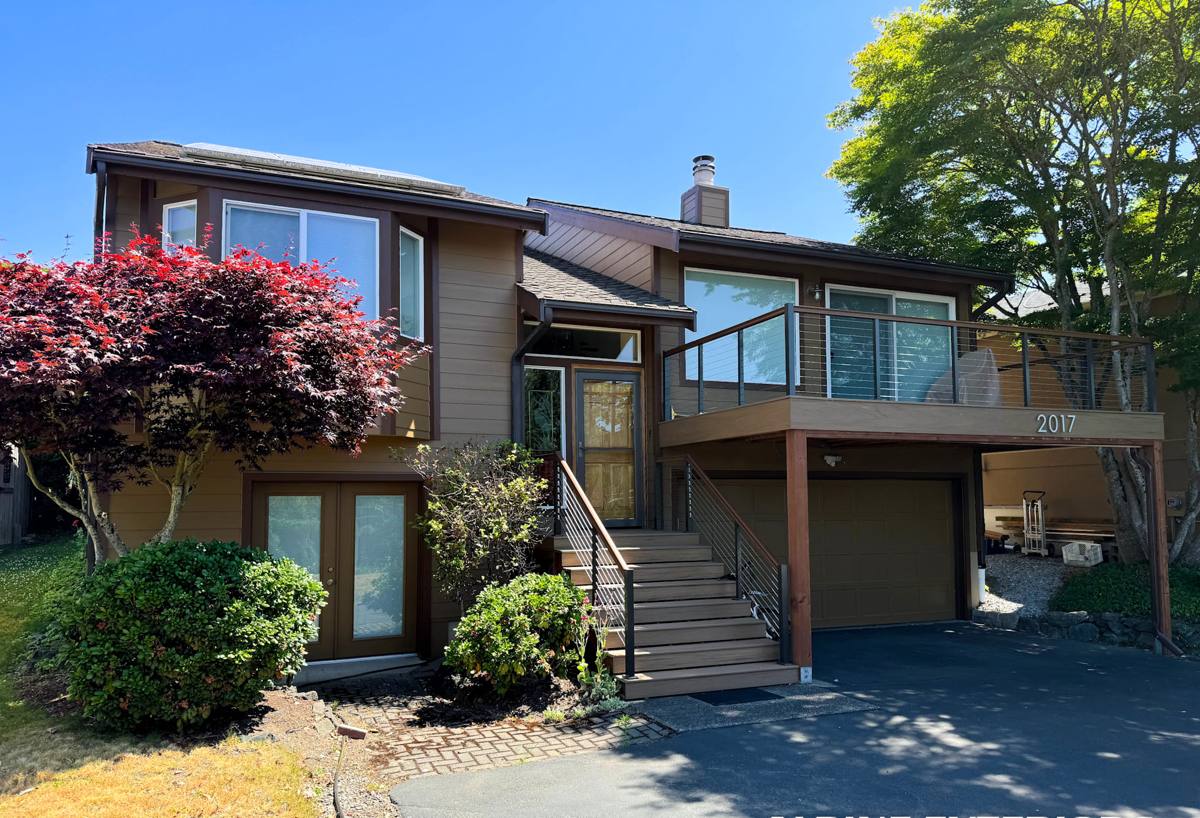
Signs Your Ellenton Home Needs New Siding, Not Another Patch
Homeowners often call us for a repair and find out the underlying siding is past the point where patching makes sense. A few patterns we see repeatedly in this area:
- Bubbling, peeling, or chalky paint that comes back within a year or two of repainting
- Soft or spongy spots when you press on the siding, especially near the bottom courses and around window trim
- Visible warping, buckling, or panels that have pulled away from the wall line after wind events
- Persistent staining or dark streaking that pressure washing won't fully remove
- Gaps at seams and corners that have widened over time, letting light or moisture show through
- An interior wall or ceiling stain that lines up with an exterior siding seam
Any one of these on its own might be a repair. Several at once, or any sign of moisture getting behind the material, usually means the siding system itself has failed and a full replacement is the honest recommendation.
What a Correct Siding Replacement Actually Involves
Siding replacement is often sold as a cosmetic upgrade. In a climate like ours, it's structural work with a cosmetic result. The parts that don't show are the parts that determine whether the job lasts.
Tear-off and substrate inspection
Old siding comes off down to the sheathing so we can actually see what's underneath — soft wood, rot, or water staining doesn't get covered up, it gets repaired. Installing new siding over a compromised substrate just hides a problem that will resurface, usually as rot spreading further before anyone notices.
Weather-resistive barrier and flashing
A correctly detailed water-resistive barrier, properly lapped and taped, is what actually keeps wind-driven rain out of the wall assembly — the siding itself is the second line of defense, not the first. Flashing at windows, doors, and any wall penetration has to be installed so water sheds outward at every layer, not just caulked and hoped for.
Fastening for wind load
Sarasota County falls under high-velocity wind design requirements, and fastener spacing, type, and embedment have to match the manufacturer's engineered specs for the local wind zone — not a generic pattern. Under-fastened siding is one of the most common causes of wind failure we see after storms.
Finish and trim details
Cut edges, joints, and trim need to be sealed and finished to the manufacturer's specification, not just caulked generically. This is where a lot of the long-term weather resistance either holds up or quietly fails a few years down the road.
Why We Install Only James Hardie Fiber Cement
We don't install vinyl siding, LP SmartSide, Cemplank, Allura, or primed wood products like spruce or cedar. That's a deliberate standard, not a limitation of what we're capable of installing. Here's the honest reasoning behind it.
Vinyl is inexpensive and low-maintenance in mild climates, but it softens and deforms in extreme heat, becomes brittle with UV exposure over time, and simply isn't rated to withstand the wind speeds this area can see in a serious storm. We've seen too many vinyl installations fail exactly when a home needed its siding to hold.
Wood-based products — including engineered wood like LP SmartSide, and traditional primed spruce or cedar — bring genuine appeal but carry an unavoidable moisture vulnerability. In a humid, rain-heavy, salt-air climate, wood-based siding needs more diligent maintenance to avoid swelling, delamination at cut edges, and eventual rot, and the margin for error during installation is smaller.
Other fiber cement brands like Cemplank and Allura are legitimate products in the same category as Hardie, but James Hardie is the one we've standardized on because of its factory-applied ColorPlus finish, its HZ5 product engineering specifically built for high-humidity, high-wind climates like ours, and the strength of its transferable warranty when installation follows spec.
James Hardie fiber cement is non-combustible, doesn't expand and contract with humidity the way wood does, and holds its factory finish far longer under direct Florida sun than field-applied paint on other substrates. It's not the cheapest material on the shelf, but it's the one we're willing to put our name behind on every Ellenton-area home we work on.
Comparing Siding Options for an Ellenton Home
| Material | Wind & Storm Resistance | UV / Fade Resistance | Moisture Behavior | Typical Maintenance |
|---|---|---|---|---|
| James Hardie Fiber Cement | Engineered HZ5 lines rated for high-wind climates | Factory ColorPlus finish resists fading for years | Non-combustible, doesn't swell or rot | Occasional wash, repaint on your schedule, not out of necessity |
| Vinyl | Can deform or blow off in high winds | Fades and becomes brittle over time | Doesn't rot, but seams can let water behind panels | Low, but limited repair options once damaged |
| Engineered Wood (LP SmartSide) | Moderate, dependent on installation quality | Needs field-applied finish upkeep | Vulnerable to moisture at cut edges and seams | Regular inspection and resealing needed |
| Primed Wood (Spruce/Cedar) | Moderate, sensitive to fastening quality | Repainting needed on a recurring cycle | Highest moisture sensitivity of the group | Most maintenance-intensive option |
Our Siding Replacement Process, Start to Finish
Homeowners in Ellenton generally go through the same sequence with us, whether the home is a smaller single-story or a larger two-story property:
- On-site assessment of existing siding, trim, and any visible moisture or rot damage
- Written estimate detailing scope, material, and what the tear-off is expected to reveal
- Tear-off and substrate inspection, with any rot or damaged sheathing repaired before new material goes on
- Installation of weather-resistive barrier and flashing at all windows, doors, and penetrations
- James Hardie panel or plank installation, fastened to manufacturer spec for our local wind zone
- Trim, corner, and joint finishing, sealed to manufacturer detail
- Final walkthrough so you can see the completed work and ask questions before we close out the job
We don't skip the substrate step to move faster. It's the single biggest reason siding jobs fail early, and it's the part that's impossible to fix once the new siding is up.
What Drives the Cost of a Siding Replacement in This Area
Every home is different, but the same handful of factors move the price up or down on most Ellenton-area projects:
| Cost Factor | Why It Matters |
|---|---|
| Extent of substrate repair needed | Rot or water damage found during tear-off has to be repaired before new siding goes on |
| Home size and wall complexity | More corners, gables, and trim detail mean more labor and material cutting |
| Siding profile chosen | Lap plank, shingle-style, and panel products carry different material and install costs |
| Existing moisture barrier condition | A full weather-barrier replacement adds labor but is not optional if the old one has failed |
| Trim and accessory scope | Fascia, soffit, and window trim work bundled into the project affects total cost |
We don't quote by square footage alone — the estimate reflects what your specific home actually needs, based on what we find during the assessment.
Why Hiring a Crew That Already Works Ellenton Matters
Siding installation isn't uniform across Florida. A crew that mostly works inland, low-wind-zone jobs won't automatically know the fastening schedules, flashing details, and permitting requirements that apply to homes exposed to Sarasota-area wind and salt conditions. A crew that already works this area brings a few concrete advantages:
- Familiarity with local wind zone requirements and how they affect fastener spacing and material choice
- An eye for the specific failure patterns salt air and UV cause on homes in this part of Florida
- Established relationships with local permitting offices, so inspections don't stall the project
- A realistic sense of how long materials actually hold up here, not just manufacturer claims from a cooler, drier climate
That local track record is also why we're comfortable standing behind one product system instead of offering a menu of options we'd have to caveat differently for every homeowner. We know how James Hardie performs on homes in this specific climate because we install it here, repeatedly, and see how it ages.
Maintaining Your New Siding After Installation
James Hardie fiber cement is low-maintenance, not zero-maintenance. A yearly rinse to clear off salt residue and organic buildup, prompt attention to any caulking that starts to crack at trim joints, and a quick visual check after major storms for impact damage will keep a correctly installed system performing for the long haul. None of this is intensive work — it's the kind of upkeep that takes an afternoon and prevents small issues from becoming siding-replacement issues again a decade early.
If you're noticing early signs of wear on your Ellenton home's siding, or you're planning ahead before the next storm season, we're glad to take a look and give you a straightforward, no-pressure estimate — just fill out the form below.