 Sarasota Roofing
 Downtown Sarasota Decks Take a Different Kind of Beating
A deck a few blocks from the bay lives a harder life than the same deck fifty miles inland. Downtown Sarasota homes sit close to open water, which means salt-laden air settles on every exposed surface, metal fastener, and joint almost daily. Add in Sarasota County's long stretch of intense summer UV, sudden wind-driven downpours, and the occasional direct hit from tropical systems, and you have a structure that's constantly being stressed from four directions at once: heat, moisture, salt, and wind.
Most deck problems we see downtown aren't the result of bad luck. They're the predictable outcome of a deck built to a generic spec instead of a coastal one. Fastener corrosion, ledger board rot, cupped or splitting boards, and railing that's gone soft at the post base all show up faster here than they would in a landlocked neighborhood. Repairing a deck correctly in this part of Sarasota means understanding that pattern, not just patching whatever board looks bad.
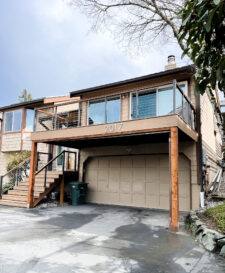
What Actually Wears Out a Deck Near Downtown Sarasota
Salt Air and Corrosion
Salt in the air doesn't need direct ocean spray to do damage — it travels on humidity and settles on metal. Screws, joist hangers, bolts, and nails that aren't rated for coastal exposure start corroding from the inside, often while the wood around them still looks fine. By the time a fastener head snaps off or a hanger visibly rusts through, the connection has usually been weakening for a year or more.
UV Exposure
Florida sun breaks down the lignin in wood fibers and degrades the UV inhibitors in sealers and stains far faster than most manufacturers' labels assume for a "typical" climate. A deck that isn't resealed on a realistic local schedule will gray, dry out, and start splitting at the surface — which then lets moisture in through cracks that wouldn't exist on a properly maintained board.
Wind-Driven Rain
It's rarely rain falling straight down that causes rot — it's rain driven sideways by wind, forced up under boards, into ledger connections, and behind railing posts where it can't drain or dry quickly. This is why so much hidden rot starts at the house-to-deck ledger connection and at post bases, both areas a homeowner can't easily inspect from a casual walk-around.
Storm Load
Hurricane-force wind doesn't just threaten roofs. It puts real lateral and uplift load on railings, stair stringers, and ledger connections. A deck that was adequately fastened for everyday use can still have marginal connections for storm-force wind, especially if it was built or last repaired before current attachment standards were common practice.
Signs a Downtown Sarasota Deck Needs Repair, Not Just Cleaning
- Boards that flex, bounce, or feel spongy underfoot, especially near the house
- Visible gaps opening up between deck boards or where the deck meets the house
- Rust streaks running down from screw heads or hardware
- Railings or posts that wiggle when pushed firmly
- Soft or discolored wood around the ledger board where the deck attaches to the house
- Stair stringers that feel uneven or have visible cracking
- Peeling, graying, or flaking finish that hasn't been addressed in more than a year or two
- Standing water that doesn't drain within a few minutes after rain
Any one of these on its own might be minor. Several at once, or anything involving the ledger board or a structural post, means it's time for an actual inspection rather than a surface cleaning.
What a Correct Deck Repair Actually Involves
A repair that's done right starts below the decking, not on top of it. We check the framing, the ledger connection, and the fasteners before we ever talk about which boards need replacing. Cosmetic work over a compromised frame just hides a problem instead of fixing it.
Structural Inspection
We check joists, beams, posts, and the ledger board connection to the house for rot, corrosion, and movement. This includes probing wood that looks sound on the surface — rot often travels inward before it shows outside.
Fastener and Hardware Assessment
Every joist hanger, bolt, and structural screw gets evaluated for corrosion given the coastal exposure this area sees. Hardware that's marginal gets flagged even if it hasn't failed yet, since replacing it now is far cheaper than replacing it after a failure.
Board-by-Board Evaluation
Not every deck board that looks weathered needs replacing, and not every board that looks fine is actually sound. We check for splitting, cupping, soft spots, and fastener pull-through board by board rather than assuming a uniform fix across the whole surface.
Railing and Stair Integrity
Railings and stairs get load-tested by hand, not just eyeballed. A railing that looks straight can still have a rotted post base or a loose connection that won't show until someone leans on it.
Repair vs. Replacement: How We Decide
| Condition | Typical Fix | Why |
|---|---|---|
| Isolated board rot or splitting | Board replacement | Framing is sound; only the wear surface needs attention |
| Corroded fasteners, sound wood | Hardware replacement with coastal-rated fasteners | Prevents future corrosion without disturbing good wood |
| Ledger board rot | Ledger repair or rebuild with proper flashing | This connection carries structural load; it can't be patched cosmetically |
| Widespread framing rot | Partial or full deck rebuild | Repairing individual joists piecemeal doesn't restore overall structural margin |
| Loose or soft railing posts | Post and connection rebuild | Railings are a safety system, not a cosmetic one |
| Faded or peeling finish only | Cleaning, sanding, and resealing | No structural issue — just protecting the wood going forward |
We'll always tell you honestly when a repair is enough and when a rebuild is the more responsible call. Stretching a patch over failing framing just delays a bigger, more expensive fix later.
Materials: What We Use and Why
Given the coastal exposure downtown, we favor stainless steel or heavily corrosion-resistant coated fasteners and hardware over standard galvanized options wherever budget allows. Standard galvanized coatings can still hold up reasonably well, but they don't have the same margin against salt air over the long run, and replacing hardware later means opening the deck back up. We'll walk through the trade-offs honestly rather than defaulting to the cheapest option without explaining what it means down the road.
For decking material itself — whether the existing deck is wood or composite — the repair approach has to match what's already there. Composite boards need manufacturer-matched fastening systems and can't simply be swapped for lumber without changing how the whole surface performs. Wood repairs need lumber rated for ground or weather exposure as appropriate, sealed properly before the finish coat goes on, not after.
Our Repair Process
- Inspection and assessment — we check framing, fasteners, ledger connection, and surface boards, and explain what we find in plain terms
- Written scope and estimate — you know exactly what's being repaired, replaced, or reinforced before any work starts
- Demolition of failed material — only what needs to come out comes out; we don't upsell unnecessary tear-out
- Structural repair first — framing, ledger, and hardware are addressed before any cosmetic work begins
- Board and railing repair or replacement — matched to the existing deck material and fastening system
- Sealing or finishing — appropriate for Sarasota's UV and moisture exposure, not a generic one-size finish
- Final walkthrough — we go over what was done and what maintenance schedule makes sense for this specific deck
Maintaining a Repaired Deck in This Climate
- Reseal or restain wood decking on a schedule that accounts for Sarasota's UV intensity — waiting until it visibly grays means protection already failed months earlier
- Rinse salt residue off the deck surface and railings periodically, especially after windy stretches off the water
- Keep gutters and downspouts clear so runoff isn't dumping extra water onto or under the deck
- Check fastener heads and hardware visually once or twice a year for early rust staining
- Address small issues — a single loose board, a hairline split — before the next storm season rather than after
Why Hire a Crew That Already Works Downtown Sarasota
A deck built or repaired to a generic national spec often underperforms here because it wasn't designed around this specific combination of salt exposure, UV load, and storm wind. Crews who work this area regularly know which fastener grades hold up, which ledger details actually keep water out, and which board species and coatings are worth the extra cost versus which ones just add expense without adding service life.
Local experience also means fewer surprises during the job itself. Downtown Sarasota's older housing stock and mix of construction styles mean no two decks are framed quite the same way, and a crew that's seen the local variations moves through inspection and repair more efficiently than one working from assumptions.
Get a Straight Answer About Your Deck
If your deck is showing any of the warning signs above, or it's just been a while since anyone looked at the framing underneath it, we're happy to take a look. We'll give you a straightforward assessment — what needs fixing now, what can wait, and what it's likely to cost — with no pressure either way. Use the form below to request a free estimate.