 Sarasota Roofing
 Bradenton Sits in One of the Toughest Climates for Exterior Siding
Bradenton and the surrounding Sarasota County coastline put more stress on a home's exterior than almost anywhere else in the country. Homes here deal with sustained hurricane-force wind loads, months of intense subtropical UV exposure, wind-driven rain that gets forced sideways into seams and laps, and a steady drift of salt air off Tampa Bay and the Gulf. Any one of those factors will shorten the life of a mediocre siding product. Together, they're why so many older Bradenton homes show chalking, warping, delamination, or rot well before a homeowner expects to be thinking about siding again.
We install James Hardie fiber cement siding exclusively, and this page is specifically about what that means for a Bradenton house — not siding in general. If you're comparing products or trying to understand what a correct installation looks like in this part of Sarasota County, this is written for you.
What Bradenton's Climate Actually Does to Siding
Wind Load
Bradenton sits close enough to the coast that wind design pressures used for fastening schedules are meaningfully higher than they'd be further inland. Siding that isn't fastened to the manufacturer's engineered spacing — or that's installed with the wrong nail pattern for the exposure — can lift, crack at the corners, or blow off panels in a storm. This isn't a hypothetical; it's the single most common storm-damage callback we see on homes where siding was installed without regard to local wind zones.
UV and Heat
Florida sun is relentless on painted surfaces. Field-applied paint on wood or engineered wood products chalks, fades, and needs recoating on a cycle that most homeowners underestimate — often inside five to seven years on a south or west-facing wall. Factory-applied finishes hold color longer because they're cured under controlled conditions rather than brushed or sprayed on-site in variable heat and humidity.
Wind-Driven Rain
Rain in a Gulf Coast thunderstorm rarely falls straight down. It gets pushed sideways into laps, corners, and penetrations — around windows, hose bibs, and vents. Siding systems that rely on tight seams rather than proper flashing and drainage planes will eventually let moisture behind the cladding, and once moisture gets behind siding in Florida's humidity, it doesn't dry out on its own.
Salt Air
Bradenton isn't directly oceanfront everywhere, but Tampa Bay and Gulf-adjacent moisture carries salt further inland than people expect. Salt accelerates corrosion of fasteners and trim metal and speeds up the breakdown of anything not engineered to resist it.
Why James Hardie's Engineering Matters Here, Specifically
James Hardie fiber cement is cement, sand, and cellulose fiber — not wood, and not a wood-plastic composite. That composition is the reason it doesn't rot, doesn't attract termites, and is non-combustible, which matters in a state where wildfire and lightning-strike house fires are both real risks. It also doesn't expand and contract with humidity the way wood-based products do, which is a big deal in a climate that swings between soaking-wet summers and dry winter stretches.
Just as important for Bradenton specifically: James Hardie makes climate-engineered product lines. HZ5 siding is formulated for hot, humid, high-moisture climates like Florida's — it's built to resist moisture-related damage in exactly the conditions this region produces. We don't treat that as marketing; it's the reason we spec HZ5 by default on Sarasota County jobs rather than a generic formulation meant for a drier climate.
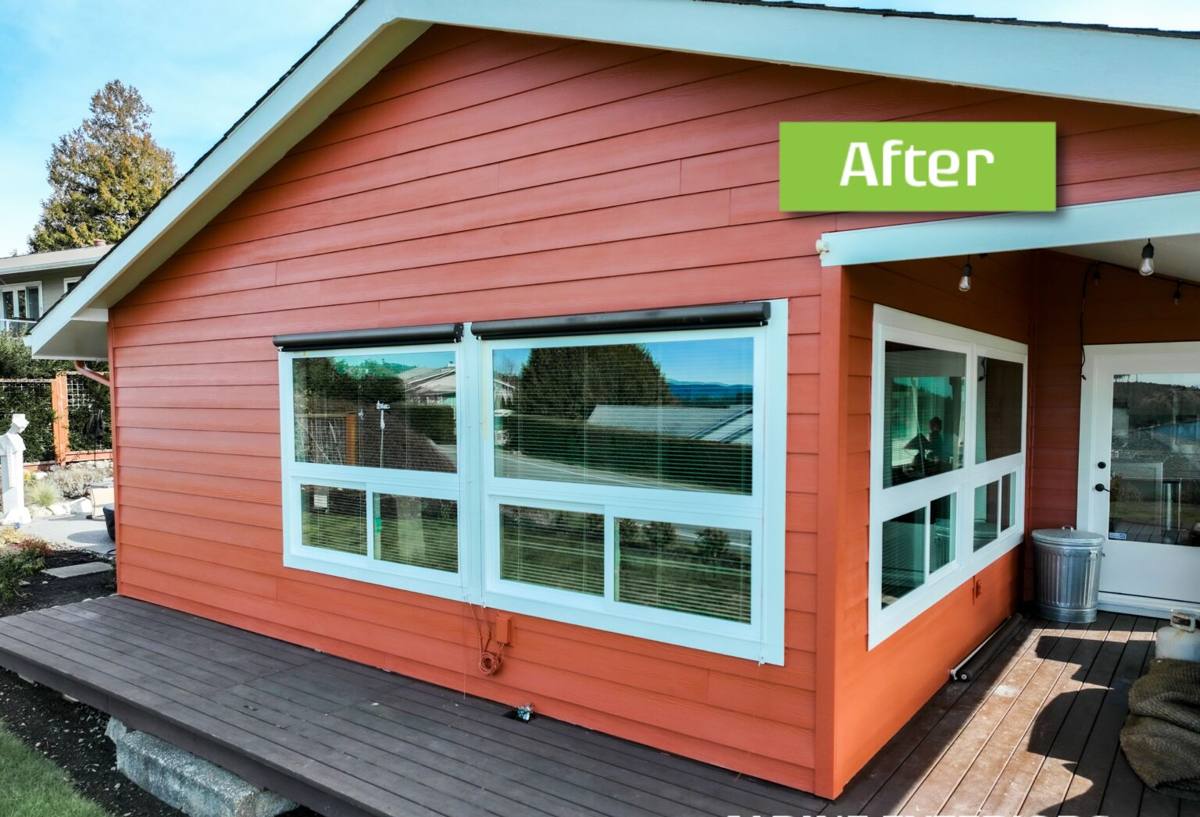
The factory-applied ColorPlus finish is the other piece that matters under Bradenton sun. It's baked on in a controlled environment with a finish designed to resist UV fading and chalking far longer than field-applied paint, and it carries its own finish warranty separate from the substrate warranty.
Choosing the Right Product Line for a Bradenton Property
| Product | Best fit | Why it matters here |
|---|---|---|
| HardiePlank lap siding (HZ5) | Most single-family homes, the default choice | Moisture-engineered for Florida humidity; wide color and texture range |
| HardiePanel vertical siding | Modern builds, accent walls, gable ends | Fewer horizontal laps for wind-driven rain to work into |
| HardieShingle siding | Coastal or cottage-style homes, accent gables | Decorative texture without the maintenance of real wood shakes |
| HardieTrim boards | Corners, window and door surrounds, fascia | Matches expansion behavior of the field siding, resists rot at high-exposure edges |
The right mix depends on the home's style, its exposure to prevailing wind and rain direction, and whether it's a full re-side or a partial repair matching existing siding. We walk every Bradenton estimate with those factors in mind rather than defaulting to one product for every house.
What a Correct Installation Involves
James Hardie siding is only as good as the installation behind it. The product itself is engineered to perform for decades, but a rushed or generic install can undercut that in a handful of predictable ways. A correct job in this climate includes:
- A proper water-resistive barrier installed and lapped correctly beneath the siding, not just a house wrap stapled up without attention to seams
- Correct flashing at every window, door, and penetration so wind-driven rain has a planned path out, not a path in
- Fastener spacing and type matched to the local wind design pressure, not a generic national default
- Proper clearance between the bottom of the siding and roof lines, decks, and grade, so water doesn't wick into the cut edges
- Factory-cut edges sealed where field cuts expose raw material, protecting against moisture intrusion at trim and corner joints
- Caulking and sealant used only where James Hardie's install specs call for it — over-caulking traps moisture just as badly as under-caulking
Every one of these is a place where a corner cut doesn't show up on move-out day — it shows up two or three years later as a soft spot, a stain, or a panel that's come loose in a storm. Fastening to spec is also what keeps a manufacturer's warranty valid; installation errors are one of the most common reasons a warranty claim gets denied.
Our Process for Bradenton Jobs
| Step | What happens |
|---|---|
| 1. On-site walk | We inspect existing siding, sheathing condition, trim, and problem areas specific to the home's orientation and exposure |
| 2. Product and color selection | We recommend HZ5 lines and ColorPlus finishes suited to the home's style and sun exposure |
| 3. Written estimate | Scope, product, and pricing laid out before any work is scheduled |
| 4. Tear-off and sheathing check | Old siding removed, sheathing inspected and repaired if there's hidden rot or moisture damage |
| 5. Weather barrier and flashing | Installed per manufacturer spec at every seam, window, and penetration |
| 6. Siding installation | Fastened to wind-zone spec with correct clearances and joint treatment |
| 7. Final walkthrough | We review the finished job with the homeowner before calling it complete |
Cost Factors on a Bradenton Siding Project
We don't publish flat per-square-foot pricing because it varies too much project to project to be honest, but the real cost drivers on a Bradenton job are consistent:
| Factor | Why it moves the price |
|---|---|
| Sheathing condition | Hidden rot found during tear-off adds repair work before new siding can go on |
| Home size and wall complexity | More corners, gables, and cutouts mean more labor and trim work |
| Product line and texture | Shingle-style and vertical panel work generally run more than standard lap siding |
| Trim and accent scope | Full HardieTrim replacement costs more than reusing sound existing trim |
| Access and site conditions | Multi-story sections, tight lot lines, and landscaping affect labor time |
We give every Bradenton homeowner a written estimate that breaks these out, so there's no guessing where the number comes from.
Maintenance in a Salt-Air, Hurricane-Prone Climate
James Hardie siding is low-maintenance, not no-maintenance. In Bradenton's conditions specifically, a short annual routine keeps it performing the way it's designed to:
- Rinse siding periodically to clear salt residue and airborne grime, especially on homes closer to the water
- Inspect caulking around windows, doors, and trim joints once a year and re-seal any cracked or missing sections
- Check for debris buildup where siding meets the roofline or a deck, since trapped organic matter holds moisture against the panel
- Walk the exterior after any major storm to check for lifted panels, damaged trim, or exposed fasteners
- Keep sprinklers and irrigation heads angled away from siding to avoid constant wetting of one section
None of this is heavy labor, but skipping it is how even a well-installed exterior develops avoidable problems in a climate this demanding.
Why a Local Sarasota Crew Matters for a Bradenton Job
Siding installation isn't a one-spec-fits-all-country job. A crew that works Sarasota County regularly already knows the wind design pressures that apply to Bradenton addresses, has already dealt with the humidity and moisture issues common to this area's older sheathing, and understands which flashing details actually hold up against Gulf Coast storms versus which ones are just checking a box. That local repetition is what keeps callbacks low and keeps warranty coverage intact, because the install matches both the manufacturer's spec and the conditions the home actually faces.
It also means a real person is nearby if a storm comes through and you need someone to look at a section of siding — not a national installer working out of a different region with no ongoing presence here.
Why We Only Install James Hardie
We don't offer vinyl, LP SmartSide, or other fiber cement alternatives, and that's a deliberate standard, not an oversight. In a climate with this much heat, humidity, and storm exposure, we've found the long-term performance, factory-cured finish, and moisture engineering of James Hardie's HZ5 product line hold up better than the alternatives we'd otherwise be installing — and we'd rather stand behind one system we trust completely than offer several we have reservations about.
If you're weighing a full re-side or a repair on a Bradenton property, we're happy to walk the house, look at what's there now, and give you a straight answer on what it needs. Reach out for a free, no-pressure estimate using the form below.