 Sarasota Roofing
 Why Siding Choice Matters More in Bee Ridge Than It Does Inland
Bee Ridge sits close enough to the Gulf that homes here take on a different kind of weathering than a house forty miles inland. Between hurricane-force wind events, near-constant UV exposure, wind-driven rain that gets pushed sideways into wall assemblies, and a steady dose of salt air working on fasteners and trim, exterior cladding in this part of Sarasota County ages faster than the manufacturer's glossy brochure implies — unless it's the right material, installed the right way. Siding here isn't just a cosmetic layer. It's the first line of defense for the wall assembly behind it, and it has to hold up to conditions that most siding products elsewhere in the country never see.
That's the lens we bring to every siding installation in Bee Ridge: this isn't a generic install, it's an install for a specific climate with specific failure points we've seen play out on real homes.
What Bee Ridge's Climate Actually Does to Siding
Wind and Wind-Driven Rain
Sarasota County sits in a high-velocity hurricane zone, and Bee Ridge is no exception. Wind doesn't just threaten to tear siding off the wall in a storm — it drives rain horizontally into every gap, seam, and fastener penetration in the cladding system. A siding job that looks fine on a calm day can leak badly the first time a tropical system pushes rain sideways at 60+ mph. Fastening pattern, panel overlap, and flashing detail all matter more here than they would in a drier, calmer climate.
UV and Heat
Florida sun is relentless, and it's on your siding twelve months a year, not just in summer. UV breaks down pigments, softens some plastics, and accelerates the failure of caulk and sealants long before their rated lifespan. Siding that fades, chalks, or warps within a few years of installation is almost always a material or finish problem, not a "just how siding ages" problem.
Moisture and Humidity
Sarasota's humidity keeps wall assemblies damp longer after every rain event than they'd stay in a drier climate. Any siding material that's sensitive to swelling, rot, or trapped moisture behind the panel is working against the local climate from day one.
Salt Air
Even set back from the immediate coastline, Bee Ridge gets salt-laden air carried in off the Gulf. Salt accelerates corrosion in fasteners, trim, and any metal component of a siding system, and it's part of why fastener selection and flashing material aren't places to cut corners.
Why We Install Only James Hardie Fiber Cement
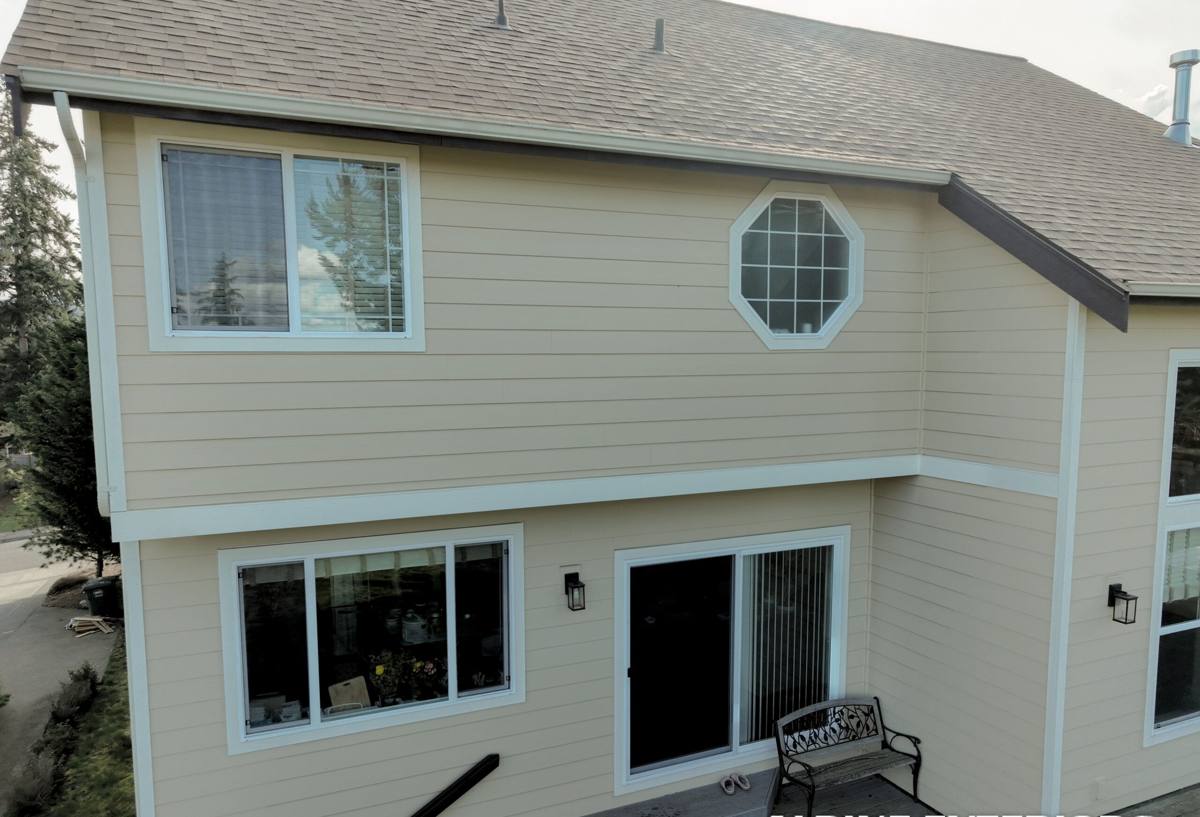
We standardized on James Hardie fiber cement siding for every home we side, including in Bee Ridge, and we don't install vinyl, engineered wood siding, primed spruce, or cedar. That's not a marketing position — it's a decision based on what actually holds up under the conditions described above.
| Factor | Fiber Cement (James Hardie) | Vinyl | Wood / Engineered Wood |
|---|---|---|---|
| Wind and impact resistance | Rigid, dense material engineered and rated for high-wind regions | Can crack, warp, or blow off in sustained high wind | Vulnerable to impact damage and wind-driven debris |
| UV and fade resistance | Factory-baked ColorPlus finish resists fading and chalking | Color is molded into the plastic and can fade or chalk over time | Paint/stain requires regular reapplication as UV breaks it down |
| Moisture behavior | Non-combustible and dimensionally stable; does not swell or rot | Doesn't rot, but trapped moisture behind panels is a common issue | Prone to swelling, rot, and moisture-related decay without diligent upkeep |
| Salt air / corrosion exposure | Cladding itself doesn't corrode; correct fasteners protect the system | Cladding doesn't corrode, but is more prone to brittleness over time in sun | More upkeep needed to protect against coastal air and moisture combined |
| Long-term maintenance | Repaint cycle is long; no caulking-heavy seams | Low maintenance but limited repair options if damaged | Regular painting/sealing required to keep ahead of the climate |
Every material on that table has legitimate uses somewhere. In Bee Ridge's specific combination of wind, UV, humidity, and salt air, fiber cement is the one that consistently gives homeowners the least maintenance and the fewest surprises over the life of the siding. That's the whole reason we build our business around it instead of offering a menu of options.
What a Correct Siding Installation Actually Involves
The material is only half the equation. James Hardie siding installed poorly will still fail in this climate, and a lot of the failures we get called out to inspect trace back to installation shortcuts rather than the product itself. A correct install includes:
- Inspection and repair of the wall sheathing and water-resistive barrier before any new siding goes up — covering rot or damaged sheathing with new siding just hides the problem
- Proper weather-resistive barrier and flashing at every window, door, and penetration, lapped correctly so water sheds outward, not into the wall
- Fastener spacing and placement that meets James Hardie's published installation instructions for the local wind zone, not a generic national spec
- Correct panel gaps and clearances at the ground, roofline, and adjoining trim to allow for material movement and drainage
- Use of corrosion-resistant fasteners and flashing appropriate for coastal air exposure
- Factory-applied ColorPlus finish handled and cut correctly on site to avoid exposing raw edges that can wick moisture
James Hardie publishes detailed installation requirements specifically because the difference between a siding job that lasts decades and one that fails in five years usually isn't the product — it's whether every one of these details was followed.
Our Process for a Bee Ridge Siding Installation
1. On-Site Assessment
We start by walking the exterior with you, looking at the current siding, trim, and any visible signs of moisture intrusion, rot, or wind damage. This tells us what's happening behind the current cladding, not just what it looks like from the curb.
2. Removal and Substrate Inspection
Old siding comes off and we inspect the sheathing and framing underneath. Any rot or damage gets addressed before anything new goes up — this is the step that gets skipped most often on rushed jobs, and it's the one that determines whether the new siding actually lasts.
3. Water Management Layer
We install or repair the weather-resistive barrier and flashing at every penetration, window, and door before the first piece of siding goes on. This layer is what actually keeps wind-driven rain out of the wall — the siding is the second line of defense, not the first.
4. Installation to Spec
James Hardie panels or plank siding go up following the manufacturer's fastening and clearance requirements for our wind zone, with corrosion-resistant fasteners throughout.
5. Trim, Finish, and Final Detail
Trim, corners, and transitions get finished and sealed correctly, and we do a final walkthrough with you to confirm everything meets spec before we call the job done.
Why Local Experience in Bee Ridge Matters
A crew that mostly works inland or out of state doesn't have the same working knowledge of what Sarasota County's wind zone requirements and permitting process actually demand, or how quickly Gulf Coast humidity and salt air expose a shortcut. Crews that regularly work Bee Ridge and the surrounding Sarasota area know:
- What Sarasota County's permitting and inspection process requires for a siding replacement
- Which fastener and flashing materials actually hold up against local salt air, versus what's rated for a milder climate
- How area homes were originally built, so substrate issues get caught instead of covered up
- What real wind exposure looks like on this stretch of coast, not just what a spec sheet says on paper
That local pattern-recognition is the difference between a siding job that's built for Bee Ridge's actual conditions and one that's built for a national average that doesn't apply here.
What to Ask Any Siding Contractor Before You Hire
- Are you pulling a permit for this job, and do you handle the Sarasota County inspection process?
- What fastener and flashing materials will you use, and are they rated for coastal salt air exposure?
- Will you inspect and repair the sheathing and water-resistive barrier before installing new siding, or just install over what's there?
- What does your installation crew's actual experience with wind-zone fastening requirements look like?
- What warranty coverage applies to both the material and the labor, and who backs each of them?
If a contractor can't give you clear, specific answers to these questions, that's worth treating as a warning sign — vague answers on any one of them usually shows up later as a leak, a warranty denial, or siding that doesn't survive the first real storm.
Cost Factors for a Bee Ridge Siding Installation
| Factor | Why It Affects Cost |
|---|---|
| Home size and number of stories | More surface area and taller walls mean more material, labor, and equipment time |
| Condition of existing sheathing | Rot or moisture damage found during removal requires repair before new siding goes on |
| Amount of trim and architectural detail | Corners, dormers, and detailed trim work take more time to finish correctly |
| Siding profile and color selection | Different Hardie plank widths, textures, and ColorPlus finishes carry different material costs |
| Removal and disposal of old siding | Tear-off and haul-away of the existing material adds labor and disposal cost |
We won't quote a number without walking the property, but these are the factors that actually move the price on a real Bee Ridge job — and any estimate that skips over them isn't giving you the full picture.
If your Bee Ridge home is due for new siding, or you're not sure whether what's on the walls now is still doing its job, we're happy to come take a look. A free, no-pressure estimate gets you a straight answer about the condition of your current siding and what a correctly installed James Hardie system would involve for your home — just fill out the form below to get started.