 Sarasota Roofing
 Why Decks in Bee Ridge Wear Out Faster Than You'd Expect
Bee Ridge is inland enough that most homeowners don't think of their deck as living in a coastal environment. It is anyway. Sarasota County sits close enough to the Gulf that onshore breezes carry salt-laden air well past the beaches, and that salt settles into fastener heads, hinges, and any bare wood grain it can find. Add in Sarasota's long, humid wet season, near-daily summer thunderstorms, and some of the most intense year-round UV exposure in the continental United States, and you get a deck that ages differently than one built in a drier, milder climate.
Wood fibers break down under constant UV exposure, drying out and losing the natural oils that keep them flexible. Composite boards fade, chalk, and can become brittle at the surface. Wind-driven rain from summer storms and the occasional hurricane pushes moisture into places a dry-climate deck would never see it — ledger connections, fastener holes, board end grain, and the underside of railings. In many of Bee Ridge's established residential neighborhoods, mature tree canopy adds another layer to the problem: more shade means decks stay damp longer after a storm, and falling leaves and organic debris collect in the gaps between boards, holding moisture against the wood or decking surface long after the rain has passed.
None of this means a deck in Bee Ridge is doomed. It means repairs and maintenance schedules need to account for a climate that never really lets a deck dry out and rest.
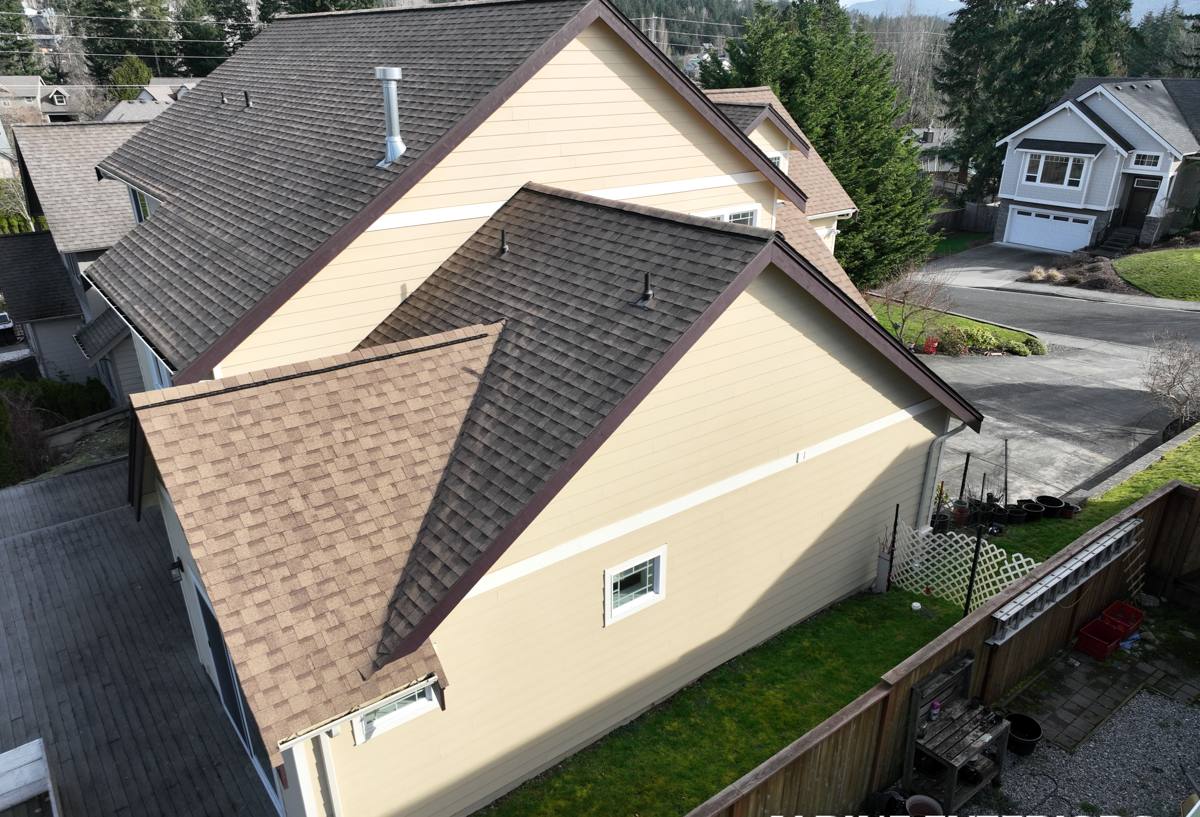
The Deck Problems We See Most Often in This Area
Wood Deck Issues
On wood decks, the most common calls we get involve soft or spongy boards, rot concentrated at the ledger board where the deck attaches to the house, and fasteners that have rusted or corroded enough to leave streaking stains on the surface below. UV checking and splitting shows up on boards with southern or western exposure, and mildew or algae growth tends to concentrate on shaded sections that stay damp — often near tree cover or on the north side of the house.
Composite and Composite-Hybrid Issues
Composite decking has its own failure patterns. Cut edges that weren't properly capped or sealed during the original install can wick moisture and swell or delaminate over time. Intense sun exposure causes fading and surface chalking faster than most manufacturers' literature suggests for a subtropical climate. We also see board movement and gapping from thermal expansion — composite expands and contracts more than solid wood, and in Florida's heat that movement is more pronounced.
In both cases, the damage is rarely limited to what's visible on the surface. A soft board is often a symptom of a joist or ledger problem underneath, which is why a real repair starts with a full inspection, not just a patch of what's easy to see.
What a Proper Deck Inspection Actually Covers
A surface walk-through will catch obvious rot or loose boards, but it misses the structural issues that actually determine whether a deck is safe and how long a repair will last. Here's what we check on every inspection:
- Ledger board attachment and flashing condition — the single most common source of hidden water damage
- Support posts and footings for rot, movement, or settling in the soil
- Joist condition, especially near ground contact or under planters and grills where moisture collects
- Fastener condition — corrosion, popped nail heads, stripped or shearing screws
- Railings and guard posts for structural play or loose connections
- Stair stringers and treads, which take concentrated foot traffic and weather exposure
- Board-to-board spacing and drainage — tight spacing traps water and debris
- Any visible signs of wood-boring insect activity
We put this in writing before any work starts, with photos and plain-language notes on what's structural versus cosmetic, so a homeowner can make an informed decision rather than take our word for it.
Repair or Replace? How We Help You Decide
Not every damaged deck needs to come down. The right call depends on a handful of factors, and we walk through each one with the homeowner rather than defaulting to the most expensive option.
| Factor | Leans Toward Repair | Leans Toward Replacement |
|---|---|---|
| Age of deck | Under 10-15 years, well-built originally | Original construction is old, undersized, or outdated for current code |
| Extent of damage | Isolated to a few boards, one railing section, or a single joist | Rot at the ledger, multiple joists, or several posts |
| Structural framing | Framing is sound; damage is surface-level | Framing is undersized, improperly spaced, or compromised |
| Original build quality | Proper flashing, hardware, and spacing were used | Signs of shortcuts — no flashing, mismatched fasteners, poor drainage |
| Budget and timeline | Homeowner wants a faster, lower-cost fix | Homeowner wants to reconfigure size, layout, or material long-term |
Most of the decks we're called out to in Bee Ridge fall into the repair category — a rotted ledger connection, a handful of failing boards, or corroded fasteners that are staining and weakening the deck faster than the wood itself is failing. Full replacement becomes the honest recommendation when the framing itself can't be trusted, regardless of how the surface boards look.
How Our Deck Repair Process Works
Once we've agreed on scope, the actual repair follows a consistent sequence:
- Full inspection and written assessment, including what's structural and what's cosmetic
- A clear, itemized estimate before any demolition begins
- Removal of compromised boards, framing, or fasteners — only what needs to come out
- Structural repair first: ledger reattachment and flashing, joist sistering or replacement, post repair or replacement
- Installation of new boards or rail components, matched to the existing deck as closely as the material allows
- Upgrade of fasteners and hardware to materials rated for this climate
- Sealing, staining, or finishing as appropriate to the material
- A final walkthrough with the homeowner before we consider the job done
We don't skip the structural steps to get to the visible finish faster. A deck that looks new but sits on a repaired-in-place rotted ledger board isn't actually fixed — it's cosmetically improved and structurally unresolved.
Materials and Fasteners: What Holds Up Here and What Doesn't
Material choice matters more in Sarasota County than it does in drier, cooler parts of the country, and it's an area where cutting corners shows up within a couple of seasons rather than a couple of decades.
Pressure-treated pine remains a solid, cost-effective choice for framing and boards, but it depends entirely on proper end-cut sealing and correctly rated fasteners — untreated cut ends are where rot starts. Composite decking offers lower long-term maintenance and resists rot, but it costs more up front, retains heat in direct sun, and requires sealed or capped edges at every cut to avoid moisture wicking into the core.
Fasteners deserve their own mention. Standard electroplated screws corrode quickly in this environment — the combination of salt air and the copper compounds in modern ACQ-treated lumber creates a galvanic reaction that eats through cheaper coatings in a fraction of the time you'd expect. We use stainless steel or hot-dip galvanized hardware rated for treated lumber and coastal exposure, and we're careful not to mix incompatible metals in the same connection, since that mismatch accelerates corrosion in both directions.
We frame these as trade-offs, not sales pitches — every material has a maintenance schedule and a failure mode, and our job is to spec the right one for your budget and your deck's exposure, not the one with the highest margin.
Permits and Local Code Considerations
Structural deck work in Sarasota County — new footings, ledger reattachment, joist replacement, or significant framing repair — generally requires a permit, even when the visible boards look like a simple swap. Guardrail height and attachment are governed by the Florida Building Code's wind load requirements, which matter here given how much wind-driven rain and storm exposure this area sees during hurricane season. Cosmetic board replacement without structural changes is sometimes exempt, but the line between "cosmetic" and "structural" is exactly where a professional inspection earns its keep.
Many of Bee Ridge's residential neighborhoods also fall under HOA guidelines that govern deck materials, colors, or railing styles. We factor that in before submitting anything, so you're not stuck redoing work to satisfy a covenant we should have checked first.
Keeping Your Repaired Deck in Good Shape
A repair is only as good as the maintenance that follows it. In this climate, a few habits make a real difference in how long the work lasts:
- Clear leaf litter and organic debris from between boards regularly, especially under tree canopy
- Inspect fasteners and hardware at least once a year for early corrosion
- Reseal or restain wood decking on the schedule appropriate to the product — UV exposure here shortens most manufacturer intervals
- Check ledger flashing and attachment after major storms
- Trim back vegetation that shades the deck and keeps it from drying out between rains
Why It Matters to Hire a Crew That Already Works in Bee Ridge
A deck repair done by a crew unfamiliar with this specific area often misses the details that matter most — the fastener grade that actually holds up against Gulf-influenced salt air, the drainage patterns common to Sarasota County's older subdivisions, or the HOA requirements that apply to a specific neighborhood. A crew that already works in Bee Ridge has seen how the local housing stock ages, knows what county permitting actually requires versus what gets assumed, and can spot the difference between a deck that needs a section repaired and one where the framing itself is the real problem.
That familiarity also means faster response after storm season, when ledger connections and fastener corrosion tend to reveal themselves all at once. It's the difference between a repair that holds up through the next few wet seasons and one that's back on the schedule within a year.
If your deck is showing soft spots, rust staining, loose railings, or just looks tired from the sun, we're happy to take a look and give you a straight answer on what it needs. The estimate is free, there's no pressure to move forward, and you'll get a clear picture of what's structural, what's cosmetic, and what it will actually cost to fix it right.