 Sarasota Roofing
 Why Siding Choice Matters More in Bee Ridge Than Most Places
Bee Ridge sits inland enough from the Gulf to feel a little removed from beachfront weather, but don't mistake that for protection. Homes here still take the same tropical storm bands, the same wind-driven rain that finds every gap in a wall system, and the same relentless Florida sun that most of Sarasota County deals with every year. Add in salt-laden air that drifts well past the immediate coastline on a breeze, and you've got a climate that is genuinely hard on exterior building materials — not in a dramatic way, but in a slow, cumulative way that shows up as cupped boards, peeling paint, and rot nobody notices until it's expensive.
Siding in this neighborhood isn't just a cosmetic layer. It's the primary barrier standing between your home's structure and a climate that works against wood, moisture-sensitive materials, and cheap coatings every single day. That's the lens we bring to every Bee Ridge project: what does this specific product, installed this specific way, actually do when a named storm rolls through or when it's been baking at 95 degrees for a week straight?
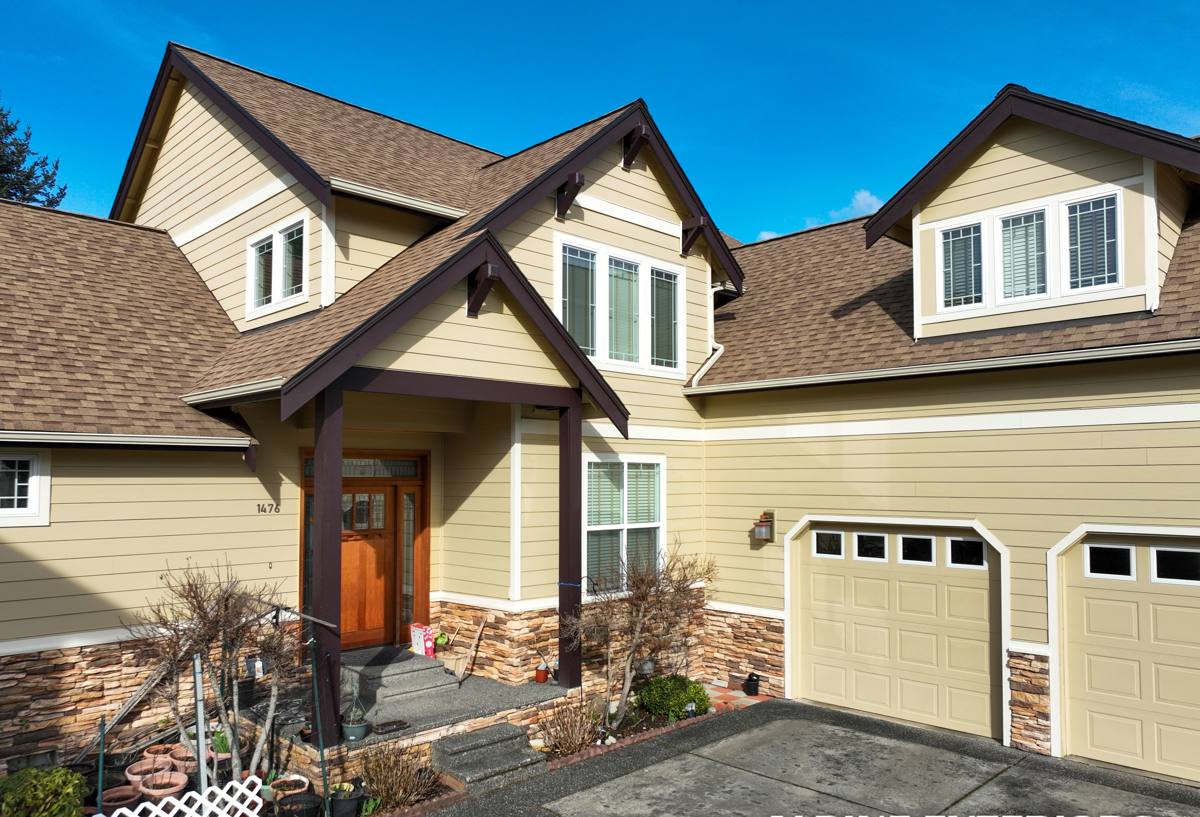
Why We Only Install James Hardie Fiber Cement Siding
We don't install LP SmartSide, vinyl, Cemplank, Allura, or primed wood siding, and we're upfront about why. Each of those products has legitimate uses and reasonable price points — this isn't about pretending they're worthless. It's about what we've decided we're willing to put our name behind after years of siding work in coastal and near-coastal Florida conditions.
Vinyl softens and warps under sustained heat and direct sun exposure, and it can crack or blow off in high wind if it's not rated and installed correctly — a real concern given how consistently Sarasota County sees tropical-storm-force gusts. Engineered wood products like LP SmartSide rely on a treated wood substrate and an intact factory coating; once that coating is compromised by a scratch, a poorly sealed cut edge, or age, moisture intrusion and swelling can follow. Primed wood and cedar need active, ongoing maintenance — repainting, caulking, moisture monitoring — that most homeowners don't sign up for and few contractors are honest about upfront.
James Hardie fiber cement siding is non-combustible, doesn't expand and contract with humidity the way wood-based products do, and holds its factory-applied ColorPlus finish far longer than field-applied paint on other substrates. It's engineered specifically for high-humidity, high-UV climates like ours, with a product line built for exactly this kind of exposure. That's the whole reason we standardized on one manufacturer instead of offering a menu of options — we'd rather do one thing exceptionally well than spread ourselves across five products with different failure modes.
What Correct Installation Actually Involves
Fiber cement siding is only as good as the install behind it. James Hardie's own warranty terms hinge on installation following their specifications — this isn't a product you can nail up like standard lap siding and expect full performance from. A correct install in a Bee Ridge home includes:
- A weather-resistive barrier (housewrap) installed and taped correctly behind the siding, not just stapled up as an afterthought
- Proper flashing at every window, door, and roofline transition — this is where the vast majority of water intrusion problems start on any home, regardless of siding brand
- Correct fastener type, spacing, and penetration depth per Hardie's written specifications, not generic siding nail patterns
- Minimum clearance gaps maintained between the bottom of the siding and grade, roofing, decks, and patios so water has somewhere to go
- Properly sealed and caulked joints using compatible sealants, not whatever's on the truck
- Field-cut edges treated or sealed where required so raw cut faces aren't left exposed to moisture
Skipping any one of these doesn't necessarily cause an immediate problem — it causes a problem two, five, or ten years down the road, usually hidden behind the wall until it's a repair job instead of a maintenance item. That gap between "looks fine at handoff" and "performs correctly for decades" is where a lot of siding jobs quietly go wrong.
Fastening and Wind Performance
Wind is the variable that separates a coastal Florida installation from a siding job anywhere else in the country. Fastener schedule and type directly affect a wall assembly's wind resistance, and Hardie publishes specific fastening requirements tied to exposure category and wind zone. We fasten to those specifications rather than a generic "close enough" pattern, because in a storm, the difference between the two is the difference between siding that stays put and siding that peels off the wall.
HZ5 and Why the Product Line Matters, Not Just the Brand
James Hardie doesn't sell one universal product — they engineer regional formulations under their HZ (HardieZone) system, and the version appropriate for Southwest Florida is built to resist the moisture and humidity cycling our climate produces. Using the correct HZ line matters as much as the installation quality itself. A product engineered for a dry climate and installed here would be working against its own design from day one. Part of what a Sarasota County-experienced crew brings to the table is simply knowing which product configuration is correct for this zone, rather than installing whatever's in the warehouse.
ColorPlus Factory Finish vs. Field Painting
One of the most overlooked differences in a fiber cement job is the finish, not just the board underneath it. James Hardie's ColorPlus technology is a baked-on, factory-applied finish — a different process entirely from painting siding after it's on the wall.
| Factor | ColorPlus Factory Finish | Standard Field-Applied Paint |
|---|---|---|
| Application process | Baked on in a controlled factory environment | Rolled or sprayed on-site, weather-dependent |
| Coating consistency | Uniform thickness and cure across every board | Varies with technique, temperature, humidity on install day |
| UV fade resistance | Engineered specifically to resist fading | Depends entirely on paint quality chosen |
| Touch-up system | Matched touch-up product available from the manufacturer | Requires custom color matching later |
| Typical repaint interval | Significantly longer than field-painted surfaces | Shorter — Florida sun is hard on field-applied coatings |
In a climate that runs intense UV exposure essentially year-round, that difference compounds. A finish that resists fading and chalking for longer isn't a luxury upgrade here — it's the more sensible baseline.
Our Process for a Bee Ridge Siding Project
We keep the process straightforward and communicate at each stage, because siding replacement disrupts a household and homeowners deserve to know what's happening and when.
- On-site assessment — we walk the exterior, check for existing moisture damage or rot behind current siding, and evaluate window and roofline flashing conditions
- Written estimate — scope, product line, color, and timeline laid out clearly, no vague allowances
- Prep and tear-off — removal of existing siding, inspection of sheathing underneath, and repair of any rot or damage found before anything new goes up
- Weather barrier and flashing — the unglamorous part of the job that determines whether the finished product actually keeps water out
- Hardie installation — fastened, gapped, and sealed to manufacturer specification
- Final walkthrough — we go over the finished job with you before calling it complete
Why Local Experience in Bee Ridge Actually Matters
A lot of siding contractors work statewide or move from job to job without much ties to a specific area. There's a real advantage to working with a crew that's already spent time on homes in this part of Sarasota County: familiarity with the county's permitting and wind-load requirements, an understanding of how local HOA architectural guidelines tend to run, and a working knowledge of how homes in this area were typically built — which affects what we find once old siding comes off. None of that replaces a proper on-site assessment, but it does mean fewer surprises and fewer delays waiting on someone to figure out the local process for the first time.
What Affects Cost
We don't publish blanket per-square-foot pricing because every home is different, but these are the factors that actually move the number:
| Factor | Why It Affects Cost |
|---|---|
| Existing wall condition | Rot or moisture damage found during tear-off adds repair scope |
| Home size and wall complexity | More corners, dormers, and trim detail means more labor |
| Siding profile and accessories | Trim boards, soffit, and fascia work add to the base siding cost |
| Color selection | Standard ColorPlus colors vs. premium palette options |
| Access and site conditions | Landscaping, fencing, or multi-story sections affect labor time |
We give you real numbers after we've actually looked at your home, not a phone-quote guess.
Living With Hardie Siding: What Upkeep Looks Like
Part of what we explain to Bee Ridge homeowners upfront is how little ongoing maintenance a correctly installed Hardie system actually requires compared to the alternatives.
- Rinse the exterior periodically to clear salt residue and general grime, especially on sides facing prevailing wind
- Inspect caulked joints annually and re-caulk if you see cracking or separation
- Keep an eye on grade and landscaping so soil or mulch doesn't build up against the bottom clearance gap
- Address any impact damage promptly rather than letting a chip sit exposed
- Have flashing and trim checked after major storms, the same way you'd check your roof
That's a shorter list than what wood or vinyl siding typically demands, and it's a big part of why we're comfortable standing behind this product specifically.
If you're weighing a siding replacement in Bee Ridge, we're happy to come take an honest look at your home, walk you through what we find, and put together a straightforward estimate — no pressure, no pushy sales pitch. Reach out using the form below to get started.